22 minutes ago
Norwegian Ambassador: Review details about Association, be within state structures

Periskopi(8 years ago)
(8 years ago)It is essential to resume dialogue between Kosovo and Serbia, as a road forward, for the two countries' progress. While the foreign policy leadership of a state must always have the starting point of the country's Constitution, the Constitution of Kosovo says the president is the leader to do it. So says Norway's ambassador [...]
“The constitution says the president should lead foreign policies, that Government should propose and implement foreign policy, and that the Assembly should have a supervisory function and adopt treaties, that is a good starting point and I think that in addition to seeing what the Constitution says, it is important that all try to understand that a common platform and consensus should be built as broad as possible so that these negotiations can succeed. Because otherwise it will be very difficult for Kosovo to implement any agreement. So we hope that the dialogue will resume soon and when it comes to results that will be achieved, it depends on Kosovo authorities who will decide what will be the very important platform, as well as their demands, I think these negotiations will be difficult for both for the ages and I also think both sides should be prepared to find compromise, or it will be difficult to reach a final, binding agreement. It is also important to understand that this is for a favourable situation for both countries. In my view, reaching a final, binding and comprehensive agreement will accelerate the two countries' integration into Euro-Atlantic structures. For Kosovo it means that you will be closer to the EU, closer NATO and closer to the United Nations. It remains to be seen how long Kosovo will need to join these organisations, it will not happen overnight, nor after the final agreement with Serbia, but at least it will be a very important step, in the right direction “, he has said.
According to him, the parties in the dialogue should avoid the kind of behaviour that is provocative, and that this responsibility belongs to Belgrade and Kosovo, because otherwise the chances for reaching the final agreement would be smaller than they might have been before. “No need to say this, it's very difficult to label and say if there are differences in approach between Serbia and Kosovo, I think it would be more constructive to encourage both sides to create an atmosphere and a favorable climate, and I also think it's fair to say that both countries in the past have at times had actions that are not very useful for creating a social climate, but I'm not willing to separate neither Kosovo nor Serbia and say which of the two countries has more responsibility, the ambassador said. He has also talked about transforming KSF's mandate into military, something that he says will happen, but can hardly now be talked about a date when.
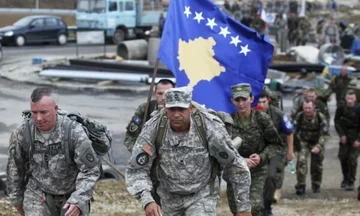
“let me first say that we for many years have supported KFOR and KFOR Chairman in Kosovo. When it comes to transforming Kosovo's security forces that will happen once in the future, it is very difficult to determine a specific date in this regard, as is clearly stated by our NATO and US partners for a long time and we believe that the best way to do so is to change the Constitution, which means that non-US communities will have to be on board and during the adoptions. Whether it gets there or not, it's not up to me to say, it seems there are some difficulties right now, maybe difficult, but access would be better. I also think it is important to understand that this transformation is a complex process, nothing prevents Kosovo from improving and strengthening its security forces within the president's mandate, things can be done, can be adopted, and Kosovo can improve its forces and standards within a measure of presidential mandate. But it is true that in order to establish the Army the law must be changed first and, as I said earlier, in my opinion this should happen with constitutional change”, he said. I
Asked about the Association of Serb majority municipalities and the obligation Kosovo has to establish and functionise it, the Norwegian ambassador has stressed that a degree of decentralisation of competencies is natural in every country, and especially those countries where there are no majority communities. When it comes to the Association of Serb majority municipalities, let me say that a degree of decentralisation of competencies is natural in any country, and especially if there are no majority communities, this was also the background of the agreement for the Association of Serbian municipalities, now we just have to wait and see what happens, the management committee, as far as I am informed, has drafted a draft statute for association and according to the media this statute is assessed by the Government and is not in line with the Constitutional Court's decision. I really hope that this question can be resolved, I know that this was an important topic for the Serbian side in the Brussels talks a few years ago, and I also believe it will be possible to fix it along the way, in the hope that soon and not later, and of course there will always be discussions on the details of AsociacioNi, and I think it is legal that this will be done in the way that it does not undermine the functionality of the state of Kosovo and that it should be carefully examined by experts, lawyers and others, to make this association within the functional structures of the state that has yet done much work for Kosovo. I think this will serve important purposes in Kosovo, and I hope it will be part of reality in the near future of”, Ambassador Strand Sjastad has said. Speaking already about the issue of visa liberalisation for Kosovo, and the possible date when this could happen, the ambassador said he is not sure of the deadline and does not think it is good time to talk about the date but to work in meeting the criteria.
“Let me say that they are EU member states that are going to decide, Norway is not a member of the EU, we are Schengen members, which means that if the Schengen countries, which are also part of the EU and have the right to vote in Schengen, decide to give visa liberalisation in Kosovo, we will do the same automatically but that when this happens, it's difficult to say, and I don't have any position on this...Kosovo will take advantage to get liberalisation, but I am certain at the same time that there are other issues that are equally important, and that, that is, the progress of the economy, that is, that is, the situation that is, that is, that is, that is, that is, that I would like, that my country's, that is, the situation that is, that is, that is, that is, that is, that I's, that I's, that I'll be able to say, that it's, that it's, that it's, that's, that's, that's, that's, that's, that's, that's, that' I think Kosovo has done a lot of work to prepare for visa liberalisation, the demarcation agreement with Montenegro has been adopted, and now the last criterion is to focus on fighting corruption and organised crime, the outcome depends on the commission and EU member states, but in my opinion Kosovo has made significant progress in these areas, what is very important for all of Europe, and I think it is legal for EU member states to assess certain criteria regarding corruption and organised crime, so we don't want these problems to increase when visa restrictions are lifted, he has said.
Asked about the effect Kosovo Specialised Chambers in The Hague will have on Kosovo politics, the Norwegian ambassador has said that the Special Court does not question the legitimacy that Albanians have fought for freedom until the late 1990s, but is also learning to prosecute war crimes that are not justified. It's not up to me to say if they're prepared to handle special court processes or not, but I hope they are. I mean, you have to remember that the Special Court does not question the legitimacy and Albanians who have fought in the late 1990s, its mandate is only to prosecute war crimes, and all must understand that a war does not justify the random killing of people, there are certain rules that should be followed when war takes place, but I think Kosovo, Parliament and Government should adopt this Special Court, the process of abolishing the Special Court has not been very helpful and we are happy that this initiative is interrupted and I am convinced that Kosovo authorities will follow the responsibilities of the Special Court's implementation, and I hope that we will soon see some active procedures in Kosovo, the St.