4 hours ago
Kremlin in 2016 in Montenegro wanted to kill Prime Minister”

Periskopi(8 years ago)
(8 years ago)On the night of October 16, 2016, Montenegro expected the results of parliamentary elections, so security, police and all other services were forced to stop the coup attempt that evening. A little over a year ago, five Serbian citizens admitted to the High Court in Podgorica that they [...]
A little over a year ago, five Serbian citizens admitted to the High Court in Podgorica that they were part of a criminal organisation that tried to enter parliament and proclaim the Prorus Democratic Front as the winner of the elections.
The Institute of Foreign Policy Research (FPRI), almost two years after trying putz, reveals the details of the investigation showing the fact that after the coup effort is a secret service from Russia and that the cause of everything was an attempt to prevent Montenegro from becoming a NATO member.
“Here we have a new member, Montenegro, who, at the time of NATO membership, did not face any kind of plastic, but that of the government of Russia. I hope this report will raise awareness that Russia is so serious in achieving its goals in the Balkans that it is ready to arrive by violent means “, said Richard Kramer, one of the authors of the FPRI report.
From Moscow's perspective, things are clear. NATO, which expanded through the countries of the former Warsaw Party and then the three former Soviet republics of Estonia, Latvia and Lithuania, pose an existential threat to Russia's ability to be the main factor in its “orof its” and in no way wants to bring the situation to NATO eventually including Ukraine and Georgia.
In addition, Mikhail Gorbachev said several years ago that the “Americans promised that after the end of the Cold War, they would not be further expanded by Germany”.
Attempting the coup in Montenegro, if it proved that the Kremlin was behind his efforts, would have meant several steps away from what happened in countries around Russia. That means authorities in Moscow organised an effort to overthrow the government immediately after parliamentary elections and the physical liquidation of the legally elected prime minister.
Earlier it was reported that the two members of the Russian secret services -- Edward Shishmakov and Vladimir Popov -- were responsible for that part during the coup. Media in Serbia specifically writes about Shishmakov, a Russian intelligence officer from GRU who was in 2014 as a military-deitary attaché in Poland.
Shishmakov and Popov from Montenegro managed to flee to Serbia, and from there to Russia before being charged in absentia. In Montenegro, a total of 12 people have been tried.
Report The FPRI now cites data from investigations in Podgorica that in addition to the above-mentioned Russian agents, nationalist extremists from Serbia and the opposition-right-wing people in Montenegro, about 50 GRU agents participated in the coup attempt, which reportedly broke into the former Yugoslav republic from neighbouring Serbia on election night.
In the months leading up to the 16 October 2016 parliamentary elections, Russian agents, Serb extremists and leaders of the Democratic Front prepared the violent collapse of the democratically elected government on election night, aiming to provoke political conflicts so that protests could erupt throughout the country and the government of the Democratic Party of Socialists and Prime Minister Milo Djukanovic collapse. According to an official report, Serbian citizens have been preparing the action since early 2016 under the leadership of Russian GRU and FSB operatives “, the report said.
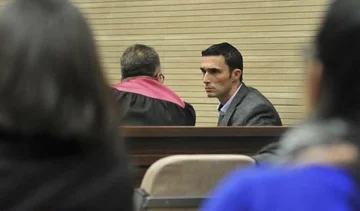
As leader of the group, former commander of Serbia's gendarmerie, retired General Bratislav Dickic, who was on trial for terrorism in Podgorica, admitted part of the charges, such as the plan to attack parliament.
He defended himself that one of the leaders of the coup attempt had deceived him about the nature of the action. Dickic fought in the Kosovo war in the late 1990s and Presevo Valley, while the gendarmerie led him from 2009 to 2013.
He is accused of leading a group of about 20 rebels disguised as police officers in Montenegro to enter parliament and open fire on protesters on an election night. According to the same charge, Popov and Shishmakov for the purchase of weapons and equipment, such as safe mobile phones, have given Dickic off less than 200,000 dollars.
Conflicts that would erupt would lead to the announcement of a state of emergency in Montenegro, in which pro-Russian local politicians opposing Montenegro's NATO membership would have an open way to take the government.
During this chaos, the report says, and that is the most explosive part, it is suspected that conspirators will liquidate the then prime minister and today the republic's president, Milo Djukanovic.
He is a person who has led Montenegro since declaring independence, and according to some sources was once close to former Moscow President Yuri Luzkov, and through that connection they agreed to numerous Russian investments in Montenegro. He was a man who cared deeply about the privatisation of the aluminum factory and sold it to Russian oligarcher Oleg Deripaska, while he hired consultant Paul Manafort to help him in his political career.