5 minutes ago
KFOR does not have mandate to set Kosovo border, it exists prior to its arrival

Periskopi(8 years ago)
(8 years ago)The Kosovo demarcation -- Serbia -- is expected to be the next condition the EU will set the two countries on integration processes. Days ago it was reported that KFOR placed the Kosovo border Serbia in Karacheva in Kamenica, though it was rejected by residents. Time.net has contacted the head of the State Commission for the Mark and Preservation of [...]
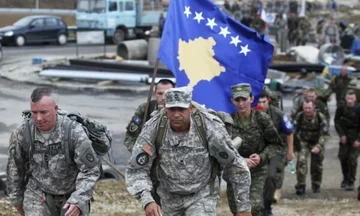
Days ago it was reported that KFOR placed the Kosovo border Serbia in Karacheva in Kamenica, though it was rejected by residents.
Time.net has contacted the head of the State Commission for Kosovo's Mark and Maintaining of the Border, Speed Bulqi, politicologist Belul Beqaj, Avni Arifin from the Kosovo government and with Kamenica chairman Standin Kastrati. All of these have given their marks on the issue. Meanwhile, the portal has also been directed to KFOR to comment on reports about the shift of the border between Serbia and Kosovo to Karacheva. They have said they will return as soon as they can while still waiting for their answers.
For setting the border in Karaceca of Kamenica, the mayor of this municipality, Central Kastrati, said it has been a disturbing act for all residents, even the municipality itself, as it said, happened without their knowledge and without warning.
We have a meeting with KFOR on the issue tomorrow. I believe tomorrow we'll be even clearer with our positions”, Kastrati said.
Politologist Belul Beqaj explained that placing KFOR signposts is linked to the issue of territorial division, despite the fact that it has not been publicly adhered to so far.
Because of Kosovo's ignorance and ignorance, it has been constantly present in the minds and calculations of Serbian power, but this is a matter known to NATO military strategists. Karacheva will be one of the open issues that will include citizens in the Tower and Cackor... which will end according to NATO strategic assessment”, Beqaj says.
He says that if Kosovo demarcation is not politicised, then it is an easy issue to resolve.
“The decades-old problem of demarcation with Montenegro is a very bad example that can be used as a ominous model for resolving even this border. We are hoping that the political leadership has drawn any positive experience from the opposition with Montenegro”, Beqaj told Koha.net.
So do the Government of Kosovo. Avni Arifi, chief of negotiations with Serbia, in an answer to the Koha.net portal, says he expects this issue to be resolved and previous problems not to occur.
The demarcation issue must be resolved before Kosovo and Serbia enter the EU. Kosovo does not want to export problems to the EU, nor does the EU want to import problems from Kosovo”, he said.
Arifi said this is the issue that expects Kosovo to face in the near future. However, Kosovo is understood to make mistakes like the previous”.
Whether the issue of demarcation with Serbia will bring problems to the country, Arifi says it will have to happen.
This shouldn't have happened, because everything is now clear. However, it is up to experts to talk about the matter more. Limits are known to be defined. I think it's strange that São has in the past the problem of Kosovo's demarcation with Montenegro, but I believe and I wish that we could get over this matter as well”, Arifi told Koha.net.
Politologist Beqaj, says the legally binding comprehensive agreement also means resolving the issue of demarcation with Serbia.
“Demarkation with Serbia will be even more difficult than the one with Montenegro, due to the not too distant past, even more because of ethnic residents along the border generation, separately if used as an instrument to remain or come to power”, Beqaj said on the further.
The head of the State Commission for Kosovo's Mark and Control of the Border, Speed Bulqi, told Koha.net that the issue of demarcation between Kosovo and Serbia should be closed.
<x0) One thing has been proved, Kosovo's EU has unfairly set conditions on a continuous basis, while for other states it has looked through its fingers. Should the border issue with Serbia be defined or closed, the answer would be yes. Of course, this issue must be concluded whenever there is will and opportunity. I believe the conditions would have to be applied to Serbia, as Kosovo does not have territorial claims on it, while in terms of integration processes, Kosovo is also discriminated against in relation to Serbia and others. The EU has been more liberal towards Serbia at each stage”, Bulqi told Koha.net.
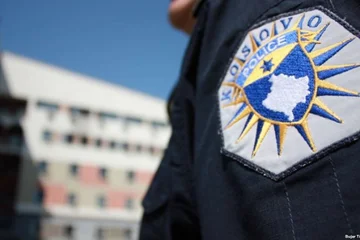
As for setting up signs in Karace, Bulqi thinks that KFOR, as a respected international mission in Kosovo, would have to save itself from these kinds of problems, as their mandate is known.
“Kosovo has had territorial border/administration lines with all neighbouring republics in the former Yugoslavia, including Serbia”, Bulqi said further.
He says that in relation to Serbia, for any change that has taken place, regardless of whether in favour or disparity of Kosovo it may have been, it is documented by the political decisions of the time, so, according to him, there are facts about what happened and when it happened.
“KFOR has until recently had a mandate even inside Serbia's territory (earth security area and air and security zone), their mission is clear, so it is not the location of the border line. No matter what graphic technical details Serbia has imposed on the Kumanovo Agreement in 1999, they ( KFOR in Kosovo should consult with local institutions about this issue, not make unilateral decisions that cause tensions and frustration. They should not give Serbia material pretext that everything is right, the line is where KFOR is saying, because Kosovo's border was not born with KFOR's entry into Kosovo, the border has been there and is documented”, clear this issue for Koha.net away.
Bulliqi says the problem is that with Serbia, as he says, we have a political problem, imposed by them, not definition/demarketing of the line has remained a hostage of Serbia, as they still have territorial claims on Kosovo in two aspects, one that considers Kosovo part of Serbia, and the other that is trying to at least break up territory from Kosovo”.
Bulliqi says the international community in this case should condition Serbia to sit down and accept the existing border/border.
“I think that the International Community should facilitate this process, though not with conditioning towards Serbia, they do not find it difficult because they have access to”, he said.
As for technical realisation on the ground, Bulqi says there must be co-ordinated actions between the locals and internationals for this process to go as well.
There are materials in local institutions, but there are also in Serbia, which attest exactly where the border line is. It only takes will and pressure (from internationals) for Serbia to bring those things to the table. Kosovo is the most co-operative in this process, requires nothing new, requires respect for the borderline, deliberately or unwittingly set by Kosovo and Serbia institutions during the time of the former Yugoslavia”, completed its clarification of the Bulliqi for Koha.net.
Meanwhile, reactions to the issue were also made by the Serb side.
Serbian Defence Minister Aleksandar Vulin has said that for Serbia a compromise solution with Kosovo is “demarkation and the ban on the extension of Greater Albania”.
Volin has said he expects Kosovo to continue provocations and attempts to stop dialogue.
“They know that negotiations with Alexander Vuciqi are not good for them, and that they hardly accept”, Voulin said.