7 hours ago
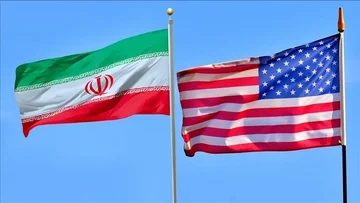
Erdogan criticises America due to sanctions on Iran

Periskopi(8 years ago)
(8 years ago)Ankara has criticised Washington's hardline policy towards Tehran. In conditions where Turkey's co-operation is viewed as vital in implementing US sanctions against Iran, analysts say a new confrontation may appear on the horizon. “The implementation of sanctions against Iran will have a negative impact on all [...]
The implementation of sanctions against Iran will have a negative impact across the region and is extremely dangerous”, Turkish Foreign Minister Mevlut Cavusoglu said on Friday in an interview with the Turkish state news agency Anadolu.
A senior adviser to Turkish President Recep Tayyip Erdogan, speaking on condition of anonymity, said that “Turkey will implement only UN and other sanctions. Turkey will not be used for agendas of other countries. ”
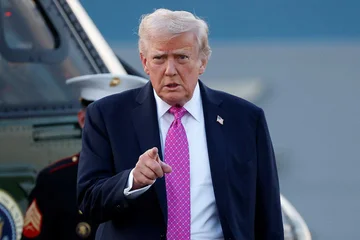
US President Donald Trump earlier this year pledged to implement severe economic sanctions against Tehran after withdrawing from an international agreement on Iran's nuclear programme.
Analysts say that while Turkey and Iran are historically regional rivals, Ankara is careful not to engage in any confrontation between Washington and Tehran.
“Turkey has common borders with Iran and has had difficult relations with Iran over many centuries”, says Sinan Ulgen, head of the Edam Institute in Istanbul. “But at the same time it is known that it will continue to live side by side with Iran and recognise Iran's role in the region. Therefore, Turkey does not want to participate in a conflict between Iran and the United States,” added Ulgen.
Turkish-Iranian relations are often marked as an unstable mix of co-operation and rivalry. Poor Turkey's energy resources rely on Iran's oil and is the largest importer of Iranian natural gas. But this week, Brian Hook, director of US Policy Planning, said there will be no concessions for any company doing business with Iran.
Analysts stress Ankara has sabotaged previous sanctions against Iran. “Since the beginning, Ankara has benefited greatly from sanctions, especially under the regime of former Iranian President Ahmadinjad. Turkey was one of two or three countries that helped avoid sanctions,” says Iran expert Jamsid Assad, of French Burgundy Business School.
“But Turkey is more isolated internationally than it was in the past and may be willing to bypass sanctions. But I think this will be harder, she should think twice before challenging Washington; Ankara is not in good relations with Israel and the European Union,” adds Assad.
Washington maintains a strong pressure mechanism on Ankara. US authorities are considering possible multibillion-dollar fines against Turkish state banks. A New York court sentenced a senior Turkish Halkbank employee for violating US sanctions with Iran.
“Taking into account the already weak state of the Turkish economy, if the US decides to impose heavy sanctions, it would further jeopardise the economy's health,” warns analyst Ulgen.
Halkbank case is one of many issues that are burdening Turkey- USA. Over the past few months, however, there has been progress in resolving certain disputes.
Turkey's location on the border with Iraq, Iran and Syria makes Washington strategically important. US Assistant Secretary of State Wes Mitchell described Turkey as “an ally and important partner”.
On Monday, Mr. Erdogan will announce his new cabinet, which will now report to him directly under Turkey's new executive presidency.