6 hours ago
Pay hikes take place on the shoulders of poor taxpayers

Periskopi(8 years ago)
(8 years ago)The Government of Kosovo's decision to raise salaries for the government cabinet, by representatives of the workers and legalists of social policies, is being described as discriminating, scandalous and abuse of public money. According to them, this increase creates a large margin of wages, not only in the report to the private sector, but also within the public sector itself. Union of Unions [...]
According to them, this increase creates a large margin of wages, not only in the report to the private sector, but also within the public sector itself.
The Union of Independent Trade Unions of Kosovo has voiced opposition to the decision to raise salaries for the government cabinet, recalling the Government that it is creating large wage divisions among employees.
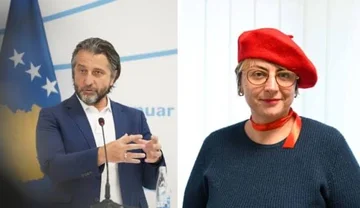
Avni Aydin, chairman of this union, told Radio Free Europe, that wages should be raised for both public and private sector employees. He said the difference created between wages is disturbing, and in this way workers of other sectors feel discriminated against.
If a selection is made, then there is a degradation and humiliation of the rest of the workers, which we cannot accept. But, overall, a common parallel must be drawn and wages increased for all without discriminating anyone”, Aydin says.
On the other hand, Artan Mustafa researcher and legalist of social policies, says these payments and privileges of top state officials are being financed by the overall budget.
And about 85 percent of Kosovo's budget, he says, consists of consumer taxes, which is that the poor contribute more to the national budget than the people who are in a more favourable economic position.
Mustafa says that based on the property declared in 2017, Kosovo Prime Minister Ramush Haradinaj accepts monthly income of about 114 times higher than the value of social assistance. Only the prime minister's salary is 28 times higher than the value of social assistance.
If we count the Kosovo prime minister's salary, it will be six times the average monthly income of a family in Kosovo. So this decision will increase poverty and inequality in Kosovo from a relatively point of view”, Mustafa says.
Under the decision taken in December, which has been abolished Tuesday after the Constitutional Court did not name it contrary to legal acts in force, the prime minister's salary of 1,500 euros will rise to 2,950 euros, while deputy prime ministers from 1,300 euros to 2,500 euros.
A minister's salary has been around 1,200 euros, meanwhile, under that decision, will now be 2,000 euros. However, over 70 deputy ministers, appointed at the Haradinaj government, will accept monthly salaries of 1,150 euros.
The decision is also favourable for 600 judges and prosecutors, who will benefit the salary of more than 3,000 euros, from about 1500 euros as they currently have.
On the other hand, the average public sector salary, according to official data, is 525 euros, 371 euros in the private sector, while the minimum wage continues to remain from 130 to 170 euros per month.
University teachers receive salaries of over 1,000 euros a month, health professionals of all legacies are paid at about 600 euros a month, while teachers in primary and secondary education are paid between 400 and 450 euros.
Retirees receive between 158 and 240 euros, social assistance accounts for between 50 and 150 euros depending on the number of family members, while age pensions are 80 euros a month.
The rise in monthly salaries for state officials, according to Artan Mustafa, in a chain manner will dictate other benefits.
This growth contributes to the continuation of privileges, in the sense that they automatically receive more from pension savings, guarantee through health insurance, and benefit more from the leukemia rest scheme. It means, each decision in a chain-like way is going to these bureaucratic differences”, Mustafa says.
Kosovo accounts for the poorest country in Europe. The unemployment rate is 30.5 percent, while about 17.6 percent of the population live in total poverty at only 1.82 euros per day per adult, while 5.2 percent of the population live in extreme poverty at $1.30 a day.