2 hours ago
Kosovo recognition failure, diplomacy or propaganda

Periskopi(8 years ago)
(8 years ago)A fierce diplomatic battle is under way between Serbia, which is lobby for the obstruction and annulment of Kosovo's state recognitions and Kosovo diplomacy, aimed not only at increasing the number of recognitions but also at Kosovo's membership in the United Nations Organisation. The cooler case was with [...]
A fierce diplomatic battle is under way between Serbia, which is lobby for the obstruction and annulment of Kosovo's state recognitions and Kosovo diplomacy, aimed not only at increasing the number of recognitions but also at Kosovo's membership in the United Nations Organisation.
The freshest case was with Liberia, for which information was broken out from Belgrade that it has cancelled Kosovo's recognition and then exposed this information not only from official Pristina, but also from the Liberian government itself.
Kosovo's Ministry of Foreign Affairs says Pristina continues to have excellent relations with all states, which so far have recognised Kosovo's independence.
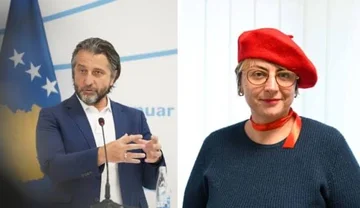
Jelir Zyberaj, adviser to Kosovo Foreign Minister Behgjet Pacolli, tells Radio Free Europe that Liberia was one of the first countries to recognise Kosovo's sovereignty after declaring independence, and as he puts it, both states remain committed to communication and diplomatic relations.
Zuberaj emphasises that Serbia's actions for attracting Kosovo recognitions are nothing more than a propaganda for domestic consumption in Serbia.
Serbia actually makes fakes in this direction, primarily to manipulate its public opinion. As you know, there's media in there too, but unfortunately, sometimes even our public opinion. But we, as institutions, are determined not to succumb to the provocations of this nature, not only to the state of Liberia, but to every country that has known it, but also to those that have not yet known the Republic of Kosovo, have permanent contacts”, Zyberaj explains.
Moreover, Zyberaj says that with the state of Liberia, Kosovo has extremely good relations and is soon expected to accredit Kosovo's ambassador to that state.
On Wednesday, Serbia's Foreign Minister, Ivica Dacic, has said he has received a note from Liberian counterpart Gbehnar Milton Findley, with whom, as it has been expressed, it has been reported that Liberia has cancelled Kosovo's recognition.
News has been denied on the same day by Kosovo Foreign Minister Behgjet Pacolli.
Foreign Minister Zyberaj's adviser says the Ministry of Foreign Affairs is focused on increasing the number of new recognitions and consolidating relations with states that have recognised Kosovo's independence.
Our “Pokus is the connection to diplomatic relations. In Africa we have accredited the non-resident ambassador in many countries so far and this process is running according to schedule. As for your question, Serbia has launched an aggressive campaign aimed at attracting Kosovo recognitions, even though there is no such concept at all”.
“has been and continues to be a propaganda of the Serbian state with the aim of removing the focus of the Kosovo state, which has priority. Actually, they never happened. As an example, the case of Guinea Bisau, which the state has been launched as news from (Serbia's) Foreign Minister, Daciq, who has drawn recognition of Kosovo. It was launched with pomp and noise in this direction, while Kosovo accredited its ambassador, Mr Ramadan Gashi, as ambassador to Guinea Bisau. And the other case was that Ghana supposedly withdrew recognition, while the Republic of Ghana accredited its ambassador to Pristina”, Zyberaj adds.
Politologists and international relations connoisseurs say Kosovo institutions should work harder on Kosovo's affirmation, improving image and bringing new recognitions.
Ramush Tahri, a politician, says Serbia is making a tough propaganda against Kosovo in all the states that have recognised and have not recognised Kosovo's independence.
The “Loja that is taking place between Serbia and Kosovo, in this case, to reduce the number of recognitions or withdrawal of recognitions, is being used politically and politically for certain political forces. As for Kosovo, there is no consequence, because Kosovo with those states that have recognised it, has international relations and it is not an issue that the withdrawal of a recognition from a designated state is due to hostility, or because of misunderstanding or poor reporting between Kosovo and that state”.
“simply, it is a powerful propaganda of the Serbian state, which affects and exploits dialogue in Brussels as a national dialogue and not as technical dialogue and arguing that until the issue is resolved in the dialogue, states should at least suspend recognition of Kosovo”, Tahiri estimates.
Kosovo has not yet secured its seat in the United Nations organisation, as well as has not won the unique support of the European Union, because five EU member states do not recognise it as a state.
Tahiri says Kosovo is a small state and cannot have bilateral relations with all states of the world.
The Republic of Kosovo has exceeded more than half of UN member states in recognition. For the state of Kosovo it is important to recognise given that there are differences with the state of Serbia and given that Kosovo has obstacles to membership in the UN and other regional organisations because of vetoing Serbian state allies”, Tahiri points out.
On February 17th, Kosovo has marked the first jubilee of independence. For 10 years of citizenship, Kosovo has recognised 116 states.