8 minutes ago
Before final agreement, Serbia to discuss disappearances

Periskopi(8 years ago)
(8 years ago)Kosovo politics is aiming to reach consensus about the platform for the final phase of dialogue between Kosovo and Serbia, which is under way in Brussels with the European Union's mediation, the process which is being sought to conclude with a binding legal agreement for the parties, which would ensure mutual recognition. But before [...]
Kosovo politics is aiming to reach consensus about the platform for the final phase of dialogue between Kosovo and Serbia, which is under way in Brussels with the European Union's mediation, the process which is being sought to conclude with a binding legal agreement for the parties, which would ensure mutual recognition.
But before that happens, one of the main issues in this phase of dialogue is required to be that of over 1,000 missing persons whose fate is not known until 19 years after the war ended with Serbia.
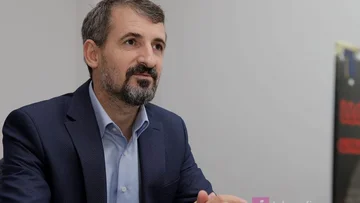
Criminal Law Professor Ismet Salihu, who is also a leading official at the Institute for Investigation of War Crimes, has told Online Economy that it is necessary to get this issue involved in dialogue with Serbia.
According to Salih, the Serbian state has killed Albanian civilians with a programme plan and that for all missing persons, it has information.
The object that involves dialogue is that of missing persons. This is one of the most serious crimes Serbia committed during the war. This issue, however, should be put on, because all missing persons are buried and re-crown on the basis of a Serbian plan. Serbia's regime has all the location records where missing persons” are buried, Salihu has declared.
Therefore, according to him, it should pressure Serbia to provide information about locations where it has buried Albanian civilians from Kosovo.
Salihu estimates that the issue of compensation for damages caused by Serbia should also be raised in this dialogue because the burns and plunder are war crimes.
The “for this reason was needed even before, but now it has to become persion and require that the sites where Albanian civilian war victims are buried should be shown anyway. Regarding the compensation of damage caused by Serbia during the war at the time of the war, this issue has not been cleared, but this does not rule out the possibility that in a nearer or a bit distant future it will be sustained, because even injuries, burns, plunder are war crimes”, Salihu points out.
The genocide indictment
Criminal Law professor estimates genocide is the worst crime in the midst of all crimes considered war crimes and which means the disappearance of a nation or ethnic group.
According to Salih, there are many elements of this crime that Serbia committed in Kosovo, but despite that Serbian state cannot be indicted by Kosovo for genocide, even if it was a member of the United Nations.
“Even if we were members of the United Nations Organization, according to The Hague Tribunal's current judicial establishment and other conventions, the state cannot be indicted for genocide, but the persons that have planned, organised, ordered and committed crimes. Milosevic has killed no one, but he has planned”, he has told EO.
To make this indictment, Salihu estimates that a team of experts must be formed who will work two years on elaborizing elements of genocide crime.
To indict Serbia for genocide in our Kosovo, a team of 6 or 7 experts must be formed, work one or two years, all aspects of the genocide crime to be released and proven by fact and evidence and indicted, otherwise there will be nothing”, Salihu has said.
According to him, the Serbian state could be indicted for compensation for the damage, in this case of billions of euros of wealth that has destroyed and robbed Slobodan Milosevic's regime.