29 minutes ago
Dialogue without consensus risks ratification of agreement

Periskopi(8 years ago)
(8 years ago)The lack of political consensus about the final phase of dialogue with Serbia could produce an agreement in Brussels that would have the fate of the demarcation agreement with Montenegro, for which the Kosovo Assembly spent three years on ratification, say connoisseurs of political developments in Pristina. While the opposition continues to dispute [...]
The lack of political consensus about the final phase of dialogue with Serbia could produce an agreement in Brussels that would have the fate of the demarcation agreement with Montenegro, for which the Kosovo Assembly spent three years on ratification, say connoisseurs of political developments in Pristina. While the opposition continues to contest President Hashim Thaci's role in the dialogue process in the first place. Kosovo and Serbia have entered the final phase under the dialogue process in Brussels, which is being eased by the European Union.
Kosovo President Hashim Thaci and Serbia's Aleksandar Vuciq have talked Sunday in Brussels about a framework that would send to reaching the final agreement on normalising relations. While President Thaci has expressed optimism as far as the end of this process is concerned, Serbian President Vucinq has called the process difficult. EU High Representative Federica Moghrini called the meeting difficult, but hopeful Thaci-Vucciq.
In Pristina, the last meeting between the two presidents is being assessed more by the aspect of the lack of internal political consensus in Kosovo. Organisation director “Arise”, Arton Demhasaj, says the final agreement on dialogue with Serbia can have the same destiny as the agreement for demarcation. “In terms of reaching such an agreement, the final, is problematic for the fact that what agreement is reached, then must be ratified in the Kosovo Assembly. And if there is no broad consensus between political parties in office and opposition to an agreement and such a negotiation, then there is the danger that that agreement that can be reached in Brussels is not ratified in the Kosovo Assembly”, Demhay points out. As far as the final agreement is concerned with Serbia, Demhaja says it must be achieved, unlike any of the states involved in the talks cannot move forward in the European integration process. Meanwhile, Life Krasniqi from the Kosovo Democratic Institute says without initial consensus, Pristina risks slipping back to the problem of ratification of agreements. Political “Consensus must be built, so for the platform, Kosovo's position in these talks and to ensure that the state of Kosovo in these talks is defending its interest.
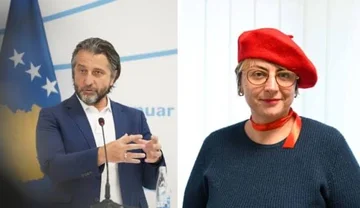
Even the agreements should be ratified in the two-thirds framework, and the consensus must be reached to avoid precisely the repetition of the demarcation agreement when an agreement is reached and cannot be ratified in the Assembly”, Krasniqi said. Access to the final phase of talks without a consensus is being criticised by the opposition in Pristina. Once, the opposition is also countering Kosovo President Hashim Thaci's role as chairman of the talks. The Democratic League of Kosovo considers the Assembly to be the only body to decide who represents Kosovo in dialogue with Serbia. Kosovo's “Assembly has not yet decided on the issue, as the platform for dialogue with Serbia, which was in order day in the Assembly, withdrew from the Government. Meanwhile, the 2011 platform authorises Government to dialogue with Serbia”, the LDK Parliamentary Group chief Avdullah Hoti has declared. “Consequently, President Thaci has no authorization to negotiate on behalf of Kosovo citizens. Therefore, any agreement reached in Brussels can only be his private agreement, but not on behalf of Kosovo”, Hoti stressed. Even the Vetevendosje Movement considers that without consensus it is impossible to continue dialogue. Fatmire Kolcak, deputy chairman of the Vetevendosje Movement, says no one from Kosovo currently has the mandate to go to Brussels' talks. “If you look at the history of the talks, it is very clear that Serbia consistently benefits, while Kosovo has no benefit, but only now alone is implementation of harmful agreements that Serbia does not even respect other agreements”, it stresses.
Dialogue between Kosovo and Serbia takes place at two levels -- the political one, where delegations are represented by the presidents of states or prime ministers -- and the technical level, developed through teams of experts, ministers and representatives of institutions from both states. Talks started in 2011 and since then a lot of agreements were reached, but not all are being implemented. (REL)