15 minutes ago
Invulnerable Deputy Ministers

Periskopi(8 years ago)
(8 years ago)The large number of ministries and sub-ministerial positions will not send Kosovo Government in a process of restructuring or internal restructuring. From the cabinet of Kosovo's prime minister, they say the government is functioning well and is currently not seen as necessary to have any change. Kosovo Prime Minister Halil's adviser [...]
From the cabinet of Kosovo's prime minister, they say the government is functioning well and is currently not seen as necessary to have any change.
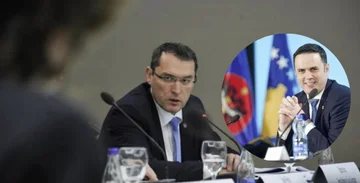
Kosovo Prime Minister Halil Matoshi's adviser to Radio Free Europe said that with the composition of the Haradinaj Government, it is functioning well and will continue the same way.
Kosovo's “government is carrying out its legal and constitutional obligations with full capacity, and there is no discussion of the possibility for reshaping of the government and we will move away with this” formation, Matoshi said.
On the other hand, by international officials in Kosovo, the issue of the large number of deputy ministers has often been raised. Over 70 deputy ministers are estimated to currently have the Kosovo government.
The head of the EU Office in Pristina, Natalia Apostolova days earlier, had stressed that with better management, wages spent on such large numbers of deputy ministers could be guided for development and deep reform in education.
But, Mattosi on the other hand says that the first monitoring and reports of deputy ministers' work, according to him, notes that the same ones are doing well and no irregularities have been noted.
Also under way is drafting and adopting the Law for Government, but it is not believed to be empowered during the mandate of this government.
The first reports are impressive, so each is engaged in its own task. The law for government is under way and I don't expect any changes to this mandate to take place. The law until it is passed in the Assembly takes a time of”, Matosti said.
Meanwhile, MP Haxhi Shala, from the Social Democrat Initiative party this part of the Haradinaj government, says he sees no need for the government's restructuring. But according to him, this government and others would have to function by law.
We need to extract the Law on the post of government and under the law to think about what and how many ministers and deputy ministers and so on. This has had to be done earlier and not the forms of governments to be placed in the hands of coalitions that are formed and they to appoint unnecessary deputy ministers and ministers”, Shala said.
“This government is good to bring the law<x1 into the country as soon as possible, Shala said.
The large number of ministers, and especially of deputy ministers, has been constantly criticised by civil society representatives with the findings that unless Kosovo's budget is damaged, it makes government work disfunctional.
In the nongovernmental organisation, speak, they say any reformation of this government does not change the state of government in the country.
Zulfay programme manager in this organisation lives on the note that the current government lacks the majority or numbers in the Assembly, which he says is even more disturbing.
“Reformation probably wouldn't have been the solution until the legitimacy in the Assembly is very controversial. The government does not have the numbers in the country to refresh the government through reshape”.
According to Zulfaj, when a government loses the majority, there is also the need for election organisation.
“If a parliamentary majority can be achieved even without going to the elections, then that leads to a new situation. However, reshaping into a government when 80 deputy ministers are close to it would not change the governance model”, Zulfaj said.
The current ruling coalition consists of the Democratic Party of Kosovo, the Alliance for the Future of Kosovo, the Social Democratic Initiative, the New Kosovo Alliance, the Serbian List, which only partly participates in the executive work and several other smaller parties.
The Kosovo government has been criticised by civil society for having many ministries, leaving behind not only the countries of the region but even wider.
According to civil society representatives, this cabinet number is considered unnecessary luxury.
The government cabinet so far consists of Ramush Haradinaj prime minister, five deputy prime ministers and 21 ministers, who also have their deputies.
It is believed that the government cabinet with such a large number of ministers and deputy ministers has been created because of meeting the many parties' demands the current coalition has.