an hour ago
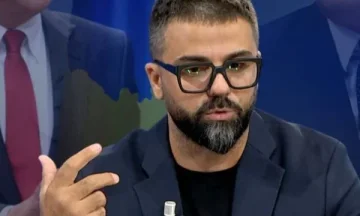
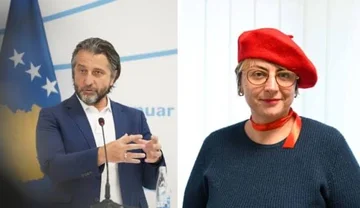
Gorani shows when new party will be officially formed

Periskopi(8 years ago)
(8 years ago)The political scene in Kosovo, by the middle of this month, is expected to be added to a new Social Democrat-wing party. It is the group of 12 deputies and former Vetevendosje Movement officials who have already resigned and function as Independent Group. This party, which is expected to register under the name Social Democrat Party [...]
This party, which is expected to register under the name of the Social Democrat Party of Kosovo, will be formed soon. MP Dukagjin Gorani, in an interview for Radio Free Europe, has said the Social Democrat Party of Kosovo will be tomorrow's party. Gorani has mentioned that the country's newest subject will have many differences with existing parties in Kosovo, without excluding the Vetevendosje Movement as well.
Radio Free Europe: Mr Gorani, when the political spectrum in Kosovo is expected to add a new political subject. Are we referring to the Group of Independent Deputies and other officials already removed from Vetevendosje?
Dukagjin Gorani: It is estimated to be the middle of this month. Maybe the third week of May. But at that time, I believe we will be willing to also expand our program and organization structure, which is naturally under construction. It's taken a long time to this day, but we're at the bottom. This is the final stage of the structure's assignment as well as the publication, actually of the expansion.
Radio Free Europe: What will be the main programming points of this political subject?
Dukagjin Gorani: I believe that the new subject, which is probably called the Social Democrat Party of Kosovo, I think what will characterize us is the way we define the citizen or subject of the republic, and what is that parties like us are parties that always stress the experience of society, but also citizens as exclusively social and economic categories.
I think that this will distinguish us or distinguish us from other subjects of the fact that the inherited aspects of society's interpretation have cultural, often ideologically charged ethnic prisms, they have not offered a path to living together even for social functionality after the outcome of important political processes in the region. What we want to do is try to establish and maintain a political subject for tomorrow, for the future when our country will face challenges, but other nature.
Radio Free Europe: It is cited that this party will differ with other parties. What will be the party's difference with Vetevendosje Movement?
Dukagjin Gorani: The emphasis on a social and economic experience of our society will probably distinguish us more from the Vetevendosje Movement, the fact that the programming and ideological aspect will not be overloaded with ideological and ethno-cultural interpretations. I think that the Vetevendosje Movement had considerable emphasis on what I could define as identity policy. We will try to make this political subject, to be as specialized in a developmental approach, in social and economic aspects. So the way the institution or state camera treats the citizen and the way the state had to rethink its role in a new social and economic reality. These will be the points in which we will try to put an expertise and try to offer a way out.
Radio Free Europe: Actually, you're part of the opposition. Meanwhile, there are initiatives for power and opposition to build consensus on some of the issues described as major, such as talks with Serbia, forming military or electoral reforms. Where will your political grouping be in this? Are you willing to cooperate with other ruling and opposition parties?
Dukagjin Gorani: Of course, in the overall context, political parties exist to co-operate, but the principles of co-operation must be negotiated. I don't think you can have automatic cooperation. I don't think it's automatically needed in any situation and whatever text or platforms the impression of a willingness to cooperate.
I think our group is willing to discuss, it is willing to evaluate and analyse and naturally try to find ways of co-operation and assistance that it can offer in building an absolutely necessary consensus in the face of the political process and its final phase. However, what we've seen on the platforms offered today is not very clear documents. The past carelessly, for the fact that they're partly conspiring is partly imposing.
Radio Free Europe: Has any possible name for chairman been mentioned to lead the expected party?
Dukagjin Gorani: Not yet. I think that at least, this group, not only the MPs, but the collaborators of this group, who are long-standing political activists, I think consists of a considerable organisational quality, but also ideologically, and I think it's a relatively large number of people from whom the leader, the new leadership, can be elected. But these are now part of the process of discussions within this entity, and I think that a solution, which will also be consistent with the situation within the group, but also in harmony with the demands of time.
Such a solution, of course, will be found and I am personally convinced that it will be also a personality, but also an accomplice, who will be thought of as well as shot, but also functional in the current political situation, as it is important that at the time the right person works, be found and supported.