4 minutes ago
EU-Balkan summit under Trump shadow

Periskopi(8 years ago)
(8 years ago)Europeans will try to give a new boost to relations with the Western Balkans during a summit Thursday in Bulgaria, which risks being overshadowed by debates on US President Donald Trump's diplomatic challenges to the EU. Meeting European leaders with counterparts of six states, Albania, Bosnia and Herzegovina, Serbia, Montenegro, Macedonia [...]
The meeting of European leaders with their counterparts of six states, Albania, Bosnia and Herzegovina, Serbia, Montenegro, Macedonia and Kosovo aims to establish close ties with this region, where Russia is trying to expand its influence.
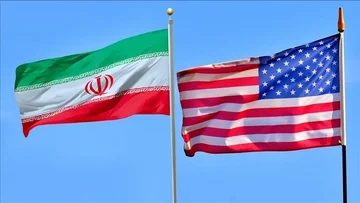
But, initially, the 28 member states are scheduled to discuss among them in Sofia on Wednesday evening, for response to the US's response following decisions it made to withdraw from the Iranian nuclear agreement and not grant the EU permanent exemption from the steel and aluminum customs fees.
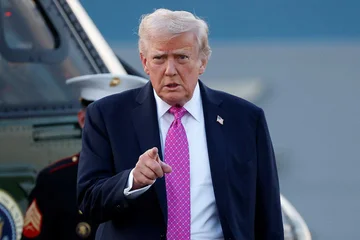
Donald Trump's” policies for the Iranian agreement and trade will face a common European stance. EU leaders will focus on two issues in Sofia, European Council President Donald Tusk announced after the very divisive American decision regarding Iran.
While the deterioration of transatlantic relations is disturbing, their future with the Balkans also epitomises key challenges for the Old Continent.
The Balkans desperately need a European perspective, otherwise we will experience all the bad we've been through during the 1990s, bloody by the wars in the region, European Commission President Jean-Claude Juncker warned on Friday.
The European executive presented in mid-April the strategy to give these states a reliable perspective for enlargement, while membership talks have so far started only with Serbia in 2014 and Montenegro in 2012, while Juncker is faithfully expressed to become Union members by 2025.
- Tommy's missing-
Brussels already proposes that member states accept the official launch of membership negotiations with Albania and the former Yugoslav Republic of Macedonia to reward their progress in the fight against organised crime and corruption.
On the other hand, the Commission's positions for Bosnia and Herzegovina, and especially Kosovo, are less positive. The EU is concerned about continuing deadlocks in the process of normalising relations with Serbia and Kosovo.
The Kosovo issue is particularly complicated for the 28th. Five of them (Spanja, Greece, Cyprus, Slovakia and Romania) do not recognise its declaration of independence in 2008. On the other hand, the head of the Spanish government, Mariano Rajoy, will be missing at Thursday's summit to display his anti-resident stance.
Generally, some states, including France, do not want to accept new EU memberships of Balkan countries very soon.
In the draft summit conclusions, consulted by the AFP, EU member states express their clear support for the European perspective of Balkan countries, but they carefully avoid using the words” as a member of” or”
The text stresses the need to improve ties through investments in transport infrastructure, cultural and educational exchanges, as well as strengthening ties in the face of common challenges such as security and migration.
- Aggressive Russian-
The findings prepared by the 28 do not mention even the issue of Russian influence, if this is an indirect way of working with Balkan states against mismanagement and other hybrid activities.
In the face of European reluctance, leaders of the region warned that Russia, like China and Turkey, would benefit from a very long period in the EU's waiting room to better anchor their interests in the region.
The long-standing” interests of the West and Russia are led here, as in the Cold War period, but Russia aims to expand its influence in the region in a much more aggressive manner, according to Aleksandar Popov, director of the Centre for Regionalisation of Serbia, an NGO.
Russia has increased its media presence in the Balkan region in recent years, but its influence has not yet been concreteised on the political or economic plan.
Pro-Russian candidates failed to take power in Montenegro, which joined NATO last year despite Moscow's opposition, as well as in Macedonia, where a Moscow-backed nationalist lost the election in favour of a pro-Western, Atsh follows.
As for Serbia, Russia is always considered an important ally, but the level of Russian investments remains symbolic compared to those of the EU and its member states.