an hour ago
The audience's scandalous finding of air quality

Periskopi(8 years ago)
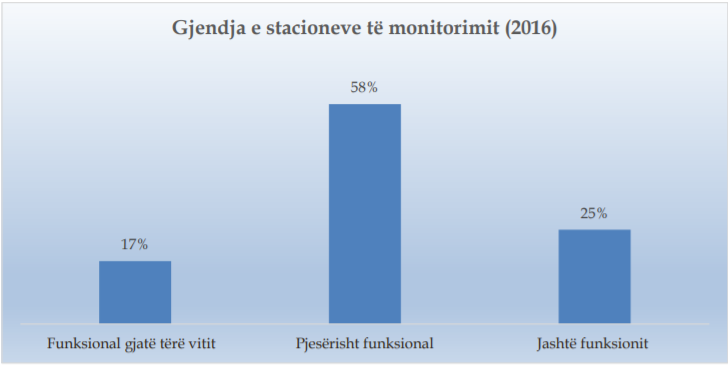
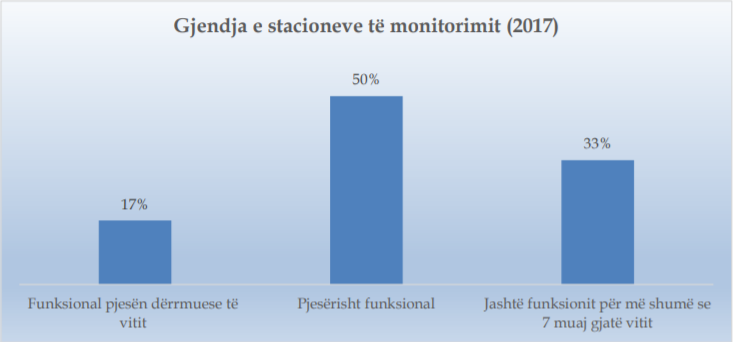
(8 years ago)Only two of the 12 air quality monitoring stations have been operational throughout 2017. The rest of the stations have problems or have not worked at all. The National Audition Office has even found that some of the stations that are in the most polluted areas in Kosovo have not worked in the months [...]
These are part of the performance auditing report. “institutional mechanisms for legal regulation, monitoring and air quality reporting”. During 2016 and 2017, human health parameters such as PM dust particles, says the report10 and PM2.5 , not reported for months, especially during winter months, when these parameters reach maximum value.
According to an audit report during 2017, there have been monitoring stations that have been located in areas marked by high air pollution (such as Palay in Obilic, Hani of Elez, Gjilan), who have lacked data for some of the more than 6 months during the year.
“The station located in Palaj, Obilic, is important for having data reported throughout the year, as it is located in a close proximity to air polluting Thermo power plant B. While both in 2016 and in 2017, this station has been marked by major shortcomings in data reporting”, it is highlighted in the audience's report.
Despite poor monitoring and reporting, in those cases when it was reported, alarming PM parameters have been recorded10 That's up to 400 percent over.
Dust particles are very dangerous to human health because they are tiny particles in diameter and as such can travel deeper into our lungs and cause harmful effects on our health. The potential effects of these particles are an increase in the number of bronchial asthma patients, chronic bronzes, chronic lung diseases in procrastinated ages, increased number of cardiovascular and respiratory diseases, cancer, and life cuts, as well as an increase in the mortality rate”, says the Performation Survey report.
The application auditing report has found that such monitoring and reporting system, managed by the Ministry of Environment and Spatial Planning and its mechanisms, does not offer Kosovo citizens a real mirror of the state of air quality, especially not in real time.
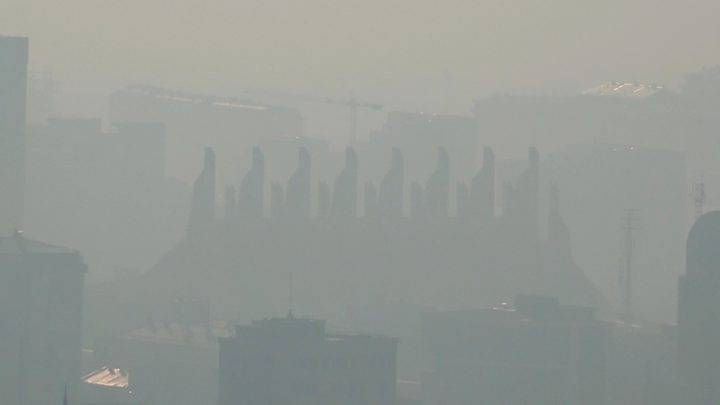
This system of monitoring and reporting poses the risk of being out - of - date, especially when air pollution is very serious and citizens are not aware of the right time to take necessary measures to avoid exposure to air pollution.
“The Ministry of Environment and Spatial Planning has also not completed all necessary legal and physical infrastructure for air quality management, as well as has not updated all existing legal infrastructure under the current state of air quality”, the audit report noted.
Faithful Osmani, the General Auditor, in this report has indicated that: “The air rate in Kosovo is disturbing to the health of citizens, and even more disturbing is the fact that citizens are not informed over time and how properly for this problem”.
The process of monitoring and reporting data has made it even more difficult to make a malfunction, frequent shift, security and damage to stations that are monitoring and reporting air quality data.
Through this audit, several problems have been identified that have characterised the location of some of the air quality monitoring stations. Officials of the Agency for Protection of the Environment of Kosovo (AMMK) and the Kosovo Hydrometeorological Institute (IHMK) also acknowledge that regardless of those based on the European directive at the moment the location of the stations is located, there are monitoring stations which fail to meet the station's criteria where it should, or just as it is envisioned with the EU directives.
“Managimes have to do not only with setting the original location, but also with their dislocation (the moment it is set to do so). It should be noted that beginning with the above-mentioned problems in December 2015, with MMPH initiative proposed becoming “Review and Reinsation of the State Air Quality Monitoring Network in Kosovo”, and the task force assigned by this minister has compiled the document to address the issue”, the report says.
Targeting problems have had at air quality monitoring stations in Mitrovica and Gjilan.
The monitoring station in Mitrovica is estimated to be appropriate to be located at the site of this municipality's meteorological station, but in 2013 this station has been dislocated from this location, as it has been the request of the Mitrovica municipality that the aforementioned location be released because it has been proven private property.
Furthermore, the IHMK has received permission of the municipality to place the station in the primary school yard “Eqrem Vofij” after its location is estimated to meet the required criteria. The current position of this station is reportedly located near the previous location and that it meets the required criteria under the European directive.
The air quality monitoring station in Gjilan since April 2012 has been located in the courtyard of the municipality where population frequency and traffic is high, but in 2013, the municipality has demanded that the station be removed from its object's courtyard, and in this case it is located in the city park on “land Serferi”.
Other problems identified by the auditing report that have influenced the failure of monitoring stations have to do with damage or stealing stations from one factor.
The station located in Dardhisht in the Obilic municipality has been out of office because the most vital part of the station has been stolen. The same has been true of the Mitrovica station, where the damage to the air conditioner from the human factor has not generated any data for 2016.
According to IHMK officials, the main factors that have contributed to the damage and theft of stations are the lack of maintenance and service of stations. In November 2016, IHMK signed contracts with the selected economic operator for “maintenance of the network stations for monitoring air quality”.
The report reportedly said that IHMK in the absence of sufficient budgets for the service of all stations has been forced to prioritise only four stations, the Dardhista station, Elez Hani, Drinas and Mitrovica, respectively.
“Arsyet of selection has to do with the assessment that the IHMK has made and which has resulted in more problems during the period when the contract is bound, and because the locations where the stations are located are industrial zones and present problems in terms of air quality”, the report noted.
Intensives from the Audition Report are also included at the local level dealing with the failure of local environmental plans, the failure to report the implementation of these plans, as well as not to update plans when they are not valid.
The National Audition Office has provided its recommendations, aimed at ensuring that the responsible authorities -- the Ministry of Environment and Spatial Planning, the Environmental Protection Agency, the Hydrometeorological Institute, as well as the Communists -- intensify their efforts to create a complete legal and physical framework, as well as sustainable monitoring and reporting mechanisms. Improving identified impasses will help identify concrete measures to be undertaken to improve the state of air quality.
Currently, 12 air quality monitoring stations are located in Kosovo. Three of these stations are located in the Obiliqi municipality in the courtyard of the Family Medicine Center, Dardhisht in the courtyard of an elementary school, and Palaj ú at the KosovaMont park. These stations are influenced by pollution fired from thermal power plant A and B, traffic, burning heating materials, explosives from the coal mine, etc. These stations have been donated to the Ministry of Economic Development from the World Bank, while this ministry in late December 2012 has been passed to MMPH and to AMK management/ IHMK.
Two stations for monitoring air quality are located in the town of Pristina. One of these stations is located in the courtyard of the Renaissance building because the population frequency is higher, while the other is located in the courtyard/location of IHPC. These two stations are influenced by various air pollutants caused by KEK, traffic, burning fuel for heating, etc.
Other stations are located in Drenas, Hani of Elez, Mitrovica, Gjilan, Prizren and Peja.