6 hours ago
38 years from his death, but who really was Josip Broz Tito?

Periskopi(8 years ago)
(8 years ago)Josip Broz Tito, the only president of Yugoslavia's Socialist Socialist Republic, a prominent war commander and one of the founders and leader of the Communist Movement, died on that date 38 years ago. He was born in Kumrovec, Zagorje, in a mixed Croatian-Slovenian family on May 4th, 1892. As a commander [...]
He was born in Kumrovec, Zagorje, in a mixed Croatian-Slovenian family on May 4th, 1892.
As an Austro-Hungarian military commander, he has participated in World War I and in the Serbian front. He was injured and captured in Galatia, on the Russian front in 1915, and spent some time in that country as a prisoner.
In his official biographies, he was quoted as participants in the October Revolution. In the Kingdom of Serbs, Croats and Slovenians, he returned at the end of October 1920, when he became a member of the Communist Party. In 1937, he became the secretary general of this party after the dismissal of Milan Gorkiq, former leader of the communist party, reports “Danas”, the Periscope broadcast.
He worked and studied in 1936 and 1937 in the Commentern in Moscow. He was a revolutionary man and a Yugoslav Communist statesman who performed various state functions from 1943 to his death in 1980.
As leader of Yugoslavia's Communist Party, the Partisan Movement (the People's Liberation Army) led World War II, and by war it emerged as a legendary leader. He was at the helm of Yugoslavia for 35 years.
During his political career he was an extremely popular person both in the country and abroad.
He died on May 4th in Ljubljana at 15:05. The same day, at 18 o'clock, the RSFJ presidency had held a session in Belgrade, and in this case had adopted an announcement on Tito's death case. A day later, on a special train from Ljubljana to Belgrade, a suitcase containing Josip Broz arrived one afternoon.
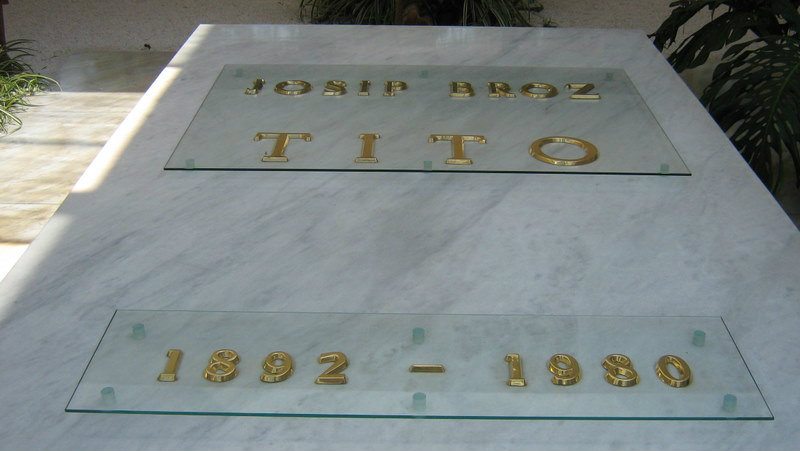
Tito was buried on May 8th at the Dedinje House of Flowers in the presence of 209 delegations from 127 countries, 700,000,000 people, four kings, five princes, six parliamentary heads, 31 heads of state, 22 prime ministers and 47 ministers, including Saddam Hussein, Yaser Arafat, Margaret Thatcher.../Periscopi/