an hour ago
New York Times: Special Actacs Come Soon

Periskopi(8 years ago)
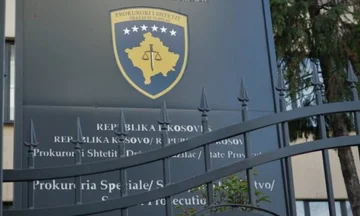
(8 years ago)The prestigious American newspaper New York Times has conducted a reportage concerning the Special Court for War Crimes in Kosovo. Attention to the American newspaper is Fetah Rudi, former professor and political activist, who was injured 18 months after the war ended. He had taken 14 bullets in his stomach and on his shoulder Fetah Rudi, a former teacher and [...]
The prestigious American newspaper New York Times has conducted a reportage concerning the Special Court for War Crimes in Kosovo. Attention to the American newspaper is Fetah Rudi, former professor and political activist, who was injured 18 months after the war ended. He took 14 bullets in his stomach and shoulder
Fetah Rudi, a former political teacher and activist, uses a wheelchair now 17 years, since still unidentified armed men had fired 14 bullets into his stomach and shoulder, in an incident near the village of Rud.
He has lost hope of being brought back to his feet, but thanks to a new war crimes court, his hope has finally been restored.
After 10 years of state, Kosovo will face a taboo theme -- why ethnic Albanians like him continued to be the target of attacks and in some cases were killed even after Serb invaders had fled Kosovo.
Rudi had lost hope in recent years, as the United Nations and later the European Union failed to establish justice for a wave of violence that followed Serbia's withdrawal from Kosovo.
In an interview with the prestigious American newspaper New York Times, the former teacher says the bullets that almost killed him in December 2000 after the end of the war had been fired by the same weapon that had been used a month earlier to kill journalist Xhemajl Mustafa.
In an article published today, titled “after the war in Kosovo, the attacks continued. A court now promises justice”, New York Times writes that both attacks occurred despite the presence of more than 45,000 NATO troops in Kosovo, a force that did little to stop the post-war conflicts in Kosovo.
Both Fetah Rudi and Xhemajl Mustafa were supporters of the Democratic League of Kosovo, a pacifist group led by Ibrahim Rugova.
Warning of the first indictment by the Special Court for War Crimes has delighted Fetah Rudin, who was held in a secret KLA prison and was violently beaten at the end of the war and, after the end of the conflict, he says he was in the KLA target.
He said he would leave Kosovo and go west of Europe with his wife and four children if the Special Court were abolished.
The court, Rudy says, is the last “opportunity to free our people”.
The Democratic League of Kosovo Activist has told the New York Times that he has thought “legally differently” Postwar Kosovo. He says he had thought that justice would be imposed in Kosovo.
“thought it would be completely different”, Rudi says. “We thought we would have a functional country with laws, institutions, security and a developed economy. We never thought there would be murders and theft”.
The US newspaper article closes, explaining how two top state leaders -- President Hashim Thaci and Prime Minister Ramush Haradinaj -- had attempted to break up the Special War Crimes Court on 22 December last year.