2 hours ago
WP: Six basic war questions in Syria

Periskopi(8 years ago)
(8 years ago)The Syrian war has been a slow - paced catastrophe that has swept across the world. Below is a Washington Post analysis, how it started, why it got so complicated and what could happen next. How did war begin in Syria? In March 2011, peaceful protests erupted throughout the country [...]
The Syrian war has been a slow - paced catastrophe that has swept across the world. Below is a Washington Post analysis, how it started, why it got so complicated and what could happen next.
How did war begin in Syria?
In March 2011, peaceful protests erupted throughout the country as part of the Arab Spring uprisings. Organisers urged Syrian President Bashar al-Assad to make democratic reforms, but his government responded violently. In response, some of the protesters joined several military forces to form the Syrian Free Army, a rebel group that wanted to overthrow the government. By 2012, this armed struggle had been transformed into full civil war.
What is Russia doing in Syria?
Russia has long supported the Assad government. Russia helped build the modern Syrian army and Assad is one of Russian President Vladimir Putin's most powerful allies in the Middle East. Russia has often blocked international intervention over Syria by vetoing proposals at the UN Security Council, and Moscow changed the course of war in favour of Assad with a military intervention in 2015.
Why the United States of America?
The US has been reluctant to intervene in Syria, but has acted for two main reasons.
First, I SIS began to develop and conquer much land in Syria in 2013. A year later, the US launched air strikes against the terrorist group. He has recently sent nearly 2,000 ground troops to war.
Second, the United States has acted to punish the Assad government for using chemical weapons, such as sarin and chloride gas on the Syrian civilian population.
What specific actions have been specific?
In 2012, President Barack Obama called the use of chemical weapons a <x0-line red” that would promote military intervention. A year later, a sarin gas attack in eastern Ghoutan killed some 1,400 people, according to US assessment. Obama sought to intervene, but could not get the approval of Congress.
Instead, he came with a diplomatic solution. The UN Security Council ordered Assad to destroy chemical weapons reserves and sign the Chemical Weapons Convention, which prevented him from producing, amassing, or using chemical weapons.
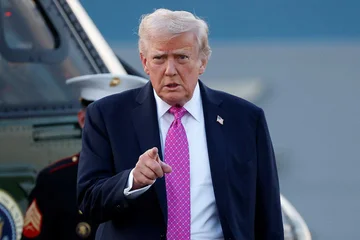
And from that point on, there have been reports of chemical assaults. On April 4th 2017, nearly 100 people were killed in the northern city of Khan Sheikhoun in a sarin attack. The “event seized the headpieces of the world as well as the attention of President Trump, who expressed horror at images of innocent “innocent children, innocent babies” poisoned by a nervous agent. Just days after the attack, Trump authorized a missile bombing on a Syrian air base. It was also the first direct US attack on the Syrian regime in war.
Who are the main supporters in the region helping Assad?
One of Assad's main allies is Iran. The latter needs Syria to move its weapons and army across the Middle East. So when Assad seemed threatened, Iran came to his aid. So did Hezbollah, the Lebanese political party and militia, which is a close ally of Tehran.
This upset Iran's rivals in the region, such as Saudi Arabia and Turkey. So they started sending weapons and money to anti-Assad rebels, including extremist militia. While Israel has begun to attack Assad's bases from the air.
This means that today there are some wars under way within Syria. The Syrian government is still at war with the rebels. Israel is at war with forces backed by Iran and the United States of America are trying to eliminate I SIS.
What has life been like for the Syrians?
Horrible. Syrian families often fail to meet even the most basic needs - food, housing, and medical care. Kids can't go to school. War is under way in cities and roads.
Since the beginning of the war, more than 465,000 Syrians have been killed, another 1 million have been wounded and 12 million more than half of the country's population have been forced to flee their homes. More than 5.5 million have fled abroad and registered as refugees.