5 hours ago
Millions of tax evasions in the north damage budget

Periskopi(8 years ago)
(8 years ago)Fiscal evasion in Kosovo by business representatives is considered to have taken on disturbing proportions, in particular in the country's north. As such, this phenomenon is said to have damaged Kosovo's budget for millions of euros and at the same time has created unfair competition in the market. To investigate and identify all cases of [...]
Fiscal evasion in Kosovo by business representatives is considered to have taken on disturbing proportions, in particular in the country's north. As such, this phenomenon is said to have damaged Kosovo's budget for millions of euros and at the same time has created unfair competition in the market.
To investigate and identify all business cases, which in a sense try to avoid taxes, authorities in Kosovo say they have increased their activities.
Representatives of the Kosovo Tax Administration say tax evasion on all sides of Kosovo, but, according to them, is thought to be mostly extended to four municipalities in northern Kosovo, inhabited by Serb majority.
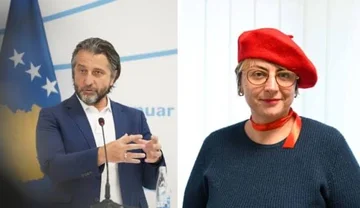
Kosovo Tax Administration Deputy Director Hamdi Hoxha, in a conversation for Radio Free Europe, shows that for the first time they have conducted an investigation of the size of the tax investigation in Zubin Potok, north of Kosovo, where they have also identified a case of tax evasion, while several other cases are under investigation.
We have added activities to investigate and identify all cases affecting tax evasion. Based on the prosecution's authorisation, we had an activity last week. Out of that activity, material evidence allegedly for tax evasion has resulted, with the value of extinguishable transactions thought to have occurred only in this case, is about 4m euros. Tax investigators are doing their job and once we have a final report, the opinion” will be informed.
This case has had to do extinguishable transactions that mean is is is is issuing bills without the flow of goods and payments, so just is issuing bills without economic activity”, Hoxha points out.
Businesses that are mostly involved in tax evasion, Hoxha says, are commercial businesses and businesses that deal with various activities but aim to provide non-valid documentation to avoid taxes.
Hoxha says they are very active in the field to prevent and fight the informal economy, which, as such, harms the public and private sector. He says that over the years there has been a decline in tax evasion, and that, according to him, is best reflected in tax revenues.
We have high tax revenues progress from year to year. While in the January-March 2017 period we have had 94m euros of access to the same period this year we have over 108m euros of tax revenues”, Hoxha suggests.
In ongoing local and international reports, it notes that the illegal economy in Kosovo is more than 30 percent gross local product, translated into numbers, is around 1.8 billion euros annually.
Business representatives say that some businessmen in Kosovo, in particular in the country's north, continue to avoid tax obligations, creating tax evasion, organised crime and damage to Kosovo's budget, simultaneously Kosovo free market disorder.
The chairman of the Kosovo Economic Ode, Safet Gerjaliu, in a proposal for Radio Free Europe says tax evasion is on disturbing proportions, in particular in the country's north.
Kosovo's economic watch has alarmed for this phenomenon. The fiscal output is unfortunately rising. The biggest challenge is northern Kosovo and the partnership of companies from the north with those inside Kosovo. And, in this direction, right competition in doing business is being damaged, and above all, the possibility of increasing Kosovo's authenticity for foreign investors” is being undermined, Gerjaliu says.
On the other hand, Economy Professor Berim Ramosaj says the Kosovo Tax Administration lacks capacity to increase the level of fighting tax evasion. Even according to Ramosj, tax evasion is present in nearly all parts of the country, but mostly in the north.
The fiscal subx0sion in northern Kosovo is high. There are high levels of informality, high rates of corruption and organised crime. There are many businesses, both Albanian and Serbian, that are connected and do such tax evasion actions, in particular when it comes to oil derivatives”, Ramosaj says.
Ramosaj adds that the biggest challenge of the financial system in Kosovo is the informal economy.
“Taking into account these and many other problems, I think the therapy lies also in fighting corruption, but also the strict regulation and clear definition of tasks, whether at the level of ATK, whether at the procurement level or at the centre level, because it's seen that big businesses are mostly running out of taxes”, Ramosaj estimates.
Business representatives in Kosovo, meanwhile, criticise authorities for failing to afford all fiscalally charged businesses.
Safet Gerjaliu says that the very fact that even further the process of establishing fiscal crates, the process launched in 2010, is not complete testifies to once again how high the informality in Kosovo can be.
We have alarmed Kosovo institutions. We have shown that if you talk to the Economic Analyses of counterparts in the region and beyond, it turns out that the evidence of exports and imports entering Kosovo is in huge disrepute, and all of this proves that it is working on double paper. Kosovo's north, which has become a black hole not only for Kosovo but also for the Balkans, is being manipulated with data, the budget is being damaged, and all of this has directly stifled economic development and the evidence sector”, Gerjaliu says.
The introduction of fiscal crates, by the Kosovo Tax Administration, was meant to avoid tax evasion, as the potential of this system is to register all entrances and sales at the store.
Kosovo Tax Administration Deputy Director Hamdi Hoxha says the fiscalisation process is a process that has marked progress and that it is a large number of businesses that have already been equipped with fiscal crates.
We've had good progress in taxing businesses, in particular businesses dealing with the fuel sale trade. For the most part, these businesses have been taxed by 90 percent of the total circulation, a number of businesses in rural areas have remained. Over 35 thousand fiscal crates have been installed, until the number of fiscalized businesses totals 27 thousand. There are also some businesses which by the Law do not submit to fiscalisation”, Hoxha explains.
The Kosovo Tax Administration and Customs are the main contributors to the state budget, which this year totals around 2 billion euros.