2 hours ago
“Formula” KDI at 15 points in fighting corruption

Periskopi(8 years ago)
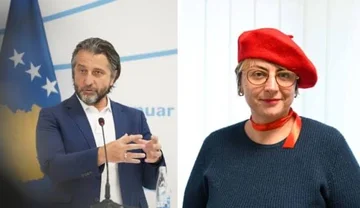
(8 years ago)Kosovo Democratic Institute (KDI) /Transparency International Kosova (TIK) today, held a media conference in which KDI concrete proposals for institutions are presented regarding steps to be taken in the fight against corruption. In this case Diana Metushi-Krasnici by KDI TIK has stressed the issue of corruption and fighting [...]
In this case Diana Metushi-Krasnici by KDI The ICTY has stressed that as regards the issue of corruption and combating this phenomenon, the Kosovo state is displaying a kind of disinterest vis-à-vis this issue and taking concrete steps in this direction. “We are all witnesses to corruption and lack of concrete state actions in the fight against corruption. For years citizens have heard nothing more than corruption will be fought or we are fighting corruption and we have taken all actions in the fight against corruption. However, when you look at specifically what has been done to combat corruption, you see that our country is somewhat uninterested in this important matter”, it has added, stressing that this issue remains even a criterion for visa liberalisation.
And Florent Spahija from KDI. TIK has introduced the points which KDI proposes, that Kosovo institutions should focus on reaching concrete results in the fight against corruption as follows:
The quickest possible outcome of major cases such as Rusty Stenta, the case of Lipjan's former leader Shukry Bouya, the case of former Scithwright Chairman Sami Lushtaku, Arben Djukka KEK director and former OSP leader Hysni Hoxha etc. The Constitutional Court in Pristina as the largest in the country has most of the cases targeted, including those cases. The progress report for Kosovo last year has ruled as a obligation that these cases should be tried and completed for Kosovo to mark progress in the fight against corruption. The conclusion of these subjects is also criteria for visa liberalisation. Courts should give priority to these cases and in the long term as the verdicts end. The KDP must be willing to assist the courts and meet any requests they have in cases of corruption and organised crime. The outcome of such cases is also respect for the rights of the accused in such cases, fair judgment, and reasonable times. KDP in co-operation with courts should enable the public, media and civil society access to these judgments for monitoring and conveying them.
Instant action by the State Prosecutor, the launch of investigations or the completion of investigations into cases suspected of corruption such as building highways, selling KEK, penalty payment of 60m euros for Bectel & Enka, failure to privatise Kosovo Post and Telecom, privatisation of public enterprises by the Kosovo Privatisation Agency, etc. The prosecution and trial of powerful people suspected of corruption and organised crime should be the priority of the State Prosecutor. The outcome of investigations and the collection of professional evidence, as well as sending it before the court of these cases, would positively influence and increase citizens' confidence in the fight against corruption, and cases reported by citizens for corruption and organised crime would increase.
The State Prosecutor must make sure that he seized as many assets as possible from those suspected of corruption and the Court after he declared a lawsuit if he found them guilty, then seized as many assets as possible acquired by criminal acts. Confiscating property has been cited as Kosovo's continuing failure in the Progress Report.
The criminalisation of police and the accountability of all police officials involved in corruption and organised crime, with an increased transparency of cases which have been made public in the media.
The obligation of political subjects to submit professional reports with precise data about their financing and spending during election campaigns, as well as strict controls in statements that present them.
The obligation of central and local public enterprises to be transparent and accountable to the public. Depoliticisation of all the boards of these public enterprises.
The closure or unification of certain independent agencies that have no functions except to waste public money and opportunities for corruption.
Kosovo's Assembly should see to depoliticise the institution of the Procuration think tank ( OffP as well as Public Procuration Regulatory Commission ( KCPP's) under recommendations issued by the Progress Report on Kosovo. The Kosovo Assembly is tasked with selecting OSEP members as soon as possible, since the OSP has long been operating with three members out of five. The lack of choice of OSEP members has directly affected the normal functioning of this tender court, as all decisions are now made by only these three members. The Kosovo Assembly, conform legal procedures, must choose independent and not political professionals for these two positions.
State institutions should begin the property process for all procurement officials in all contracting authorities who spend public money. The property found to be evidence for the State Attorney to initiate criminal procedure against persons does not exceed the property.
The National Auditor Office should be obliged to present to the State Attorney all cases of violations found by auditors during auditing of state institutions. The government and the Kosovo Assembly in this case should act quickly in the proposal, respectively, to adopt new regulations that would impose ZAK on the issue of presenting criminal charges to persons who have committed violations during carrying out their duties.
Kosovo's Penal Code should envision as a criminal offence the loss of money and public property for the purposes of private benefit of public officials.
The Procurement Monitoring body should be obliged to place all violations found during the examination and deployment of tenders different from the contracting authorities or parties in the procedure, which should automatically be criminalised along with evidence to present the case to the State Prosecutor.
Opening all public cash contracts and payments. Allowing strict control of the tender procedures by changing the approach of the bidding assessment.
Relief access to information for journalist/civil society and interested citizens.
And last, we invite the Anti-Corruption Agency not to make partial closure proposals for the property declaration to senior officials, but to deal with strengthening mechanisms for verifying declared property and producing material evidence for the state prosecutor.