8 hours ago
The change in Cuba ends the period of the Castro brothers

Periskopi(8 years ago)
(8 years ago)When Cuba's president, Raul Castro, leaves this week, will be the first time in nearly six decades the island will be led by someone whose name is not Castro. The Cuban National Assembly meets today to elect the next president, who is expected to be the current vice president, Miguel Diaz-Canel. Surrender [...]
When Cuba's president, Raul Castro, leaves this week, will be the first time in nearly six decades the island will be led by someone whose name is not Castro.
The Cuban National Assembly meets today to elect the next president, who is expected to be the current vice president, Miguel Diaz-Canel.
Surrender will mark the end of an era: Cuba saw Castro, which has been a dream to all Cuban exiles living in Florida, and a policy strongly followed by many American presidents. But even though on the eve of such a change, the streets of Havana feel indifference, not hope.


(Rial Castro and Miguel Diaz-Canel)
There's no poster or sign for the new leader. The identity of this latter is not a topic of conversation, and no one doubts the existing political system will remain intact. As a Cuban saying goes: No one can fix it, but no one can take it down”.
A new president won't change anything, so it's not important to me. I think everything will remain the same.” ) Says Shuga Victoria Esteves, 27, on his way to buying bread.
Yadiel Sintra, 30, a construction worker working in Cuba's private sector, said he was unaware that the country would have a new president. I just heard I spoke to you” ) He said it.
Diaz-Canel is widely expected to represent the continuation of this system, and few Cubans expect any dramatic change. Rafael Hernandez, a political analyst and member of the Communist Party, feels that way.
There are no direct presidential elections in Cuba. All 605 lawmakers making up the National Assembly of Cuba were elected this March without opponents.
If a new president represented a substantial change in people's lives, Cubans would be very focused. But, Cubans don't see that.” ) Rafael Hernandez expressed himself.
Although far from the presidency, 86-year-old Raul Castro will remain very present in Cuba's politics. The brother of former President Fidel Castro will continue to be the First Secretary of the Communist Party by 2021.
The new president will have more everyday powers. But whenever there may be major crises or problems with the United States, foreign policy or the economy, Raul's word will be the last word.” ) Hal Klepak, author of Raul Castro's biography, said.
Diaz-Canel, a cautious reformist elected by Raul Castro, is expected to develop reforms oriented towards free market, but without sacrificing Cuba's social policies in any case.
Health and education remain free in Cuba. The country has more doctors per capita than any American country and life expectancy is 79 years old. While Cubans working in the country are a little discouraged when they have to buy meat and vegetables, essential foods are guaranteed by the State.
Human rights groups say the government continues to punish the dissatisfied, or those who make public criticism.
The number of long-term political prisoners in Cuba was significantly reduced by Raul Castro as president. The government moved from prison sentences to arrests and short-term releases, which are in only a few hours. But the Cuban Commission for Human Rights announced that again, last year, more than 5,000 persons were arrested for political reasons.

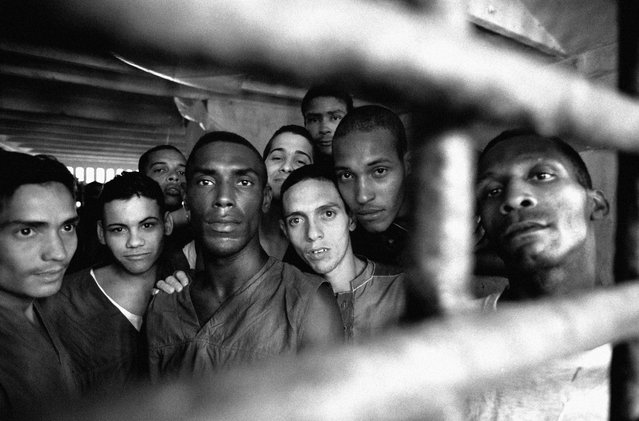
(political prisoners in Cuba)
Even though it has been part of the government for more than a decade, Diaz-Canel policies are unknown to most Cubans. Its secrecy tells a lot about how public affairs work on this island, where there is only one political party known by the law, and any other political campaign is prohibited by law.
As former Minister of Higher Education, Diaz-Canel has been criticised for his harsh appearances in the media. But again, his image is fundamentally different from Fidel Castro and his brother Raul.
As First Secretary of the Communist Party in the Villa Clara province in the '90s, he was known for his long hair and bicycle riding short pants through Bermuda. Diaz-Canel was also a strong lawyer for LGBT rights, at a time when homosexuality was sentenced by many party members in the Villa Clara province.
But most importantly, Miguel Diaz-Canel was born after the Cuban revolution (1953-1959, led by Fidel Castro and Ernesto “Che” Guevara) . If elected, he will also be the first non-military leader to lead the nation since 1959.
It's helpful to have a leader who's gone through the system, but doesn't run the country using weapons” ) Hal Klepak, author of Raul Castro's biography, said.
The Guardian, adapted to Albanian © LAPSI. AL