2 minutes ago
The Syria War: Seven years without eye contact

Periskopi(8 years ago)
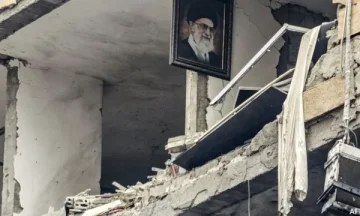
(8 years ago)Syrian civil war is entering the eighth year, leaving 465,000 Syrians killed and half of the population displaced from their homes. On March 15, 2011, peaceful protests broke out in Syria after the uprisings in Arab summer had engulfed Tunisia and Egypt that brought down authoritarian presidents. Peaceful protest had become a [...]
On March 15, 2011, peaceful protests broke out in Syria after the uprisings in Arab summer had engulfed Tunisia and Egypt that brought down authoritarian presidents.
Peaceful protest had turned into a civil war where President Bashar al-Assad's government had killed hundreds of protesters and tortured many prisoners.
While the lack of freedom and economic difficulties sparked the Syrian government's discontent, while the severe crackdown on protesters sparked public outrage, reports “Alzeera”, Periscopi broadcast.
Arab wine: In 2011, peaceful protests erupted in Syria after 15 teenagers were arrested and tortured after writing several X - rays in support of the Arab Wine. One of them was killed by the torture he had received.
The Syrian government, led by Assad, responded to the protests by killing hundreds of demonstrators and detaining many of them.
Syria Free Army: In 2011, fugitives from the military declared the formation of the Syrian Free Army, a rebel group aimed at overthrowing the government, and Syria began to slide into civil war.
While the protests in 2011 were largely non-sectal, the armed conflict displayed the most severe sectarian divisions. Most Syrians belong to the Sunni sect of Muslim faith, but the Syrian government's security is dominated by the Alwitt sect, where Assad also belongs to this sect.
In 1982, Assad's father ordered the army to take action against the Muslim brothers in Hama, killing thousands of young men and destroying most of the city.
Global warming has also reportedly played a role in promoting the 2011 uprising. Heavy droughts ravaged Syria from 2007-10, causing more than 1.5 million people to migrate from villages in the cities to worsening poverty and social unrest.
Foreign support opened the intervention of large players in Syria's civil war. Russia came into conflict in 2015 and has been the main ally of the Assad government ever since.
Regional actors: The Syrian government had the backing of Iran's Shia sect, Hezbollah of Lebanon, while states led by the Sunni sect, including Turkey, Qatar and Saudi Arabia, supported the anti-Assad rebels.
Since 2016, Turkish troops have launched military operations against Iraq's Islamic State and Lavent ( ISIL also known as I SIS) near its borders, as well as against Kurdish armed groups from the United States.
Coalition anti - ISIL: The United States has armed the anti-Assad rebel group and was the leader of the international coalition in shelling I targets SIL since 2014.
Israel has carried out air strikes within Syria. Hezbollah and pro-government fighters were part of their attacks. The first time the Syrian defense forces dropped an Israeli plane was February 2018.
The US has repeatedly voiced its opposition to the Assad government backed by Russia, but has not been involved in deep criticism.
Red chemical line: Former US President Barack Obama had warned that using chemical weapons in Syria would force his state for military intervention.
In April 2017, the United States undertook its first military action against Assad's forces, attacking Tomahawk 59.
CIA Training: In 2013, The CIA began covering weapons programmes, financing and training of rebels fighting Assad, but the programme was closed later after it was found that the CIA had spent more than $500m on training 60 fighters.
In September 2015, Russia bombed against groups that it called a “terrorist group” in Syria, which includes I SIL. Russia has also established military advisers to protect Assad's defanizive system.
The Syrian Free Army was a conglomerate of former military brigades attended by Syrian soldiers and civilians supported by the United States and Turkey and by several Gulf countries.
In December 2016, the Syrian army marked a great victory against the rebels in the strategic city of Aleppos. Since then, the Syrian Free Army has had a restriction on control in areas of northwest Syria.
The other groups fighting in Syria are Jabhat Fateh al-Sham, Iran-backed Hezbollah and Syria Democratic Forces (SDF) dominated by the Kurdish People's Protection Units (YPG).
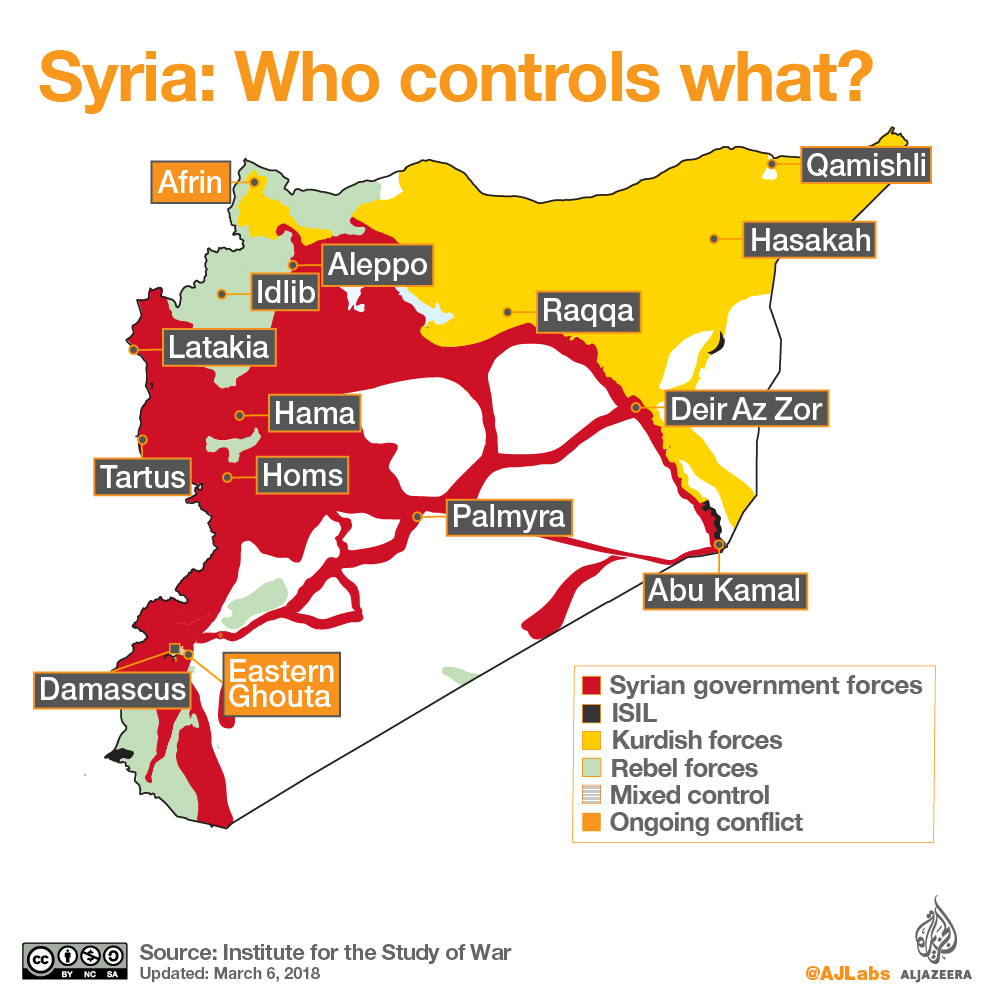
The Situation Today
The Syria war is continuing on to the two main fronts:
East Gun: In February 2018, the government of the Syrian forces supported by Russian warplanes has left shelling eastern Gutan, a town in the suburbs east of the capital, Damascus, which has resulted in the death of hundreds of civilians.
The eastern gun has been under siege since 2013 and is being held by rebels.
Africa: Turkey and the Syrian Free Army (FSA) have launched their joint military operation in January 2018, in battle against YPG's. Pro-government forces are also involved in this war.
Since February 2018, the United Nations refugee agency (UNHCR) had registered over 5.5 million refugees from Syria and estimated that there are about 6.5 million displaced persons within Syria's borders.
Lebanon, Turkey and Jordan have sheltered many Syrian refugees, while many have turned to Europe./Periscopi/