2 minutes ago
Germany for abolishing EU unanimousness, that's who benefits

Periskopi(8 years ago)
(8 years ago)Germany supports Jean Claude-Juncker's proposal that on foreign policy issues the EU does not get caught up in the principle of unanimity. This reform could also affect EU enlargement with Balkan countries. European Commission President Jean-Claude Juncker has recently called for strengthening the EU's position on policy issues [...]
Germany supports Jean Claude-Juncker's proposal that on foreign policy issues the EU does not get caught up in the principle of unanimity. This reform could also affect EU enlargement with Balkan countries.
European Commission President Jean-Claude Juncker has recently called for strengthening the EU's position on foreign policy issues in the world.
“We have been long not capable of world politics. But the current circumstances make us try harder for our ability to make world policy”, Juncker said.
Europe must do more to maintain its interests, the EC head seeks. Concretically Juncker intends that, in the future, the EU, in the matter of “soft external policy”, not to fix on the principle of unanimity, so that all EU countries agree to a certain issue.
According to Juncker, the <x0.0th of unanimity makes us fail to reach the world's foreign policy capacity”.
Germany for Juncker
Meanwhile, on Saturday (24.03) Germany is also promoted on this Juncker proposal.
The German Foreign Ministry supports Jean-Claude Juncker's proposal for foreign policy issues, State Minister for Europe at the Foreign Ministry Michael Roth (SPD) for the magazine “Spiegel”, reports DW.
Roth has said that the unanimity progress makes it easy for those who want to take out a microb split into the EU”.
Roth's support gets from Union CDU's spokesman for foreign policy issues. CSU in Bundestag, Jürgen Hard (CDU), which acknowledges such reform.
“The majority decisions would be a wise extension of European foreign policy, and would increase the EU's operational capacity”, Hardt said of “Spiegel”
Juncker, who made this proposal for the first time at the Munich Security Conference in February, has demanded instead of unanimous a majority named for foreign policy decisions.
Reform Could Touch Western Balkans
While EU Enlargement Commissioner Johannes Hahn can imagine practicing this change in membership negotiations. In the course of membership negotiations, not necessarily all decisions should be made unanimously in the EU, he has said, but for the magazine “Spiegel”
With the abolition of the unanimous principle could “ease the technical path”.
According to him, only the <x0-> finalization” -- that is membership, “that is so fundamental -- would have to remain the unanimous” decision.
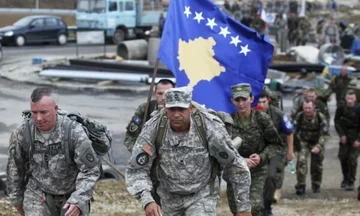
The EU has recently presented the new strategy for the Balkans, offering Serbia-Montenegro a concrete year for membership, in 2025, but has opened the prospect of faster membership for Albania, Macedonia, Kosovo, Bosnia and Herzegovina, if appropriate conditions and reforms are met in these countries.