5 hours ago
EU delivered clear messages for Kosovo

Periskopi(8 years ago)
(8 years ago)The visit of the European Union's top delegation to Pristina, which was in the wake of visits by this delegation to the Western Balkan countries, gives clear signals that the enlargement policy continues to remain a priority for the European Union, recognises connoisseurs of political developments and European integrations. According to them, the visit and delegation [...]
The visit of the European Union's top delegation to Pristina, which was in the wake of visits by this delegation to the Western Balkan countries, gives clear signals that the enlargement policy continues to remain a priority for the European Union, recognises connoisseurs of political developments and European integrations.
According to them, the visit of the EU's top delegation, led by European Commission President Jean-Claude Juncker, High Representative, Federica Moghrini and Enlargement Commissioner Johannes Hahn, is the first of this level to visit Kosovo.
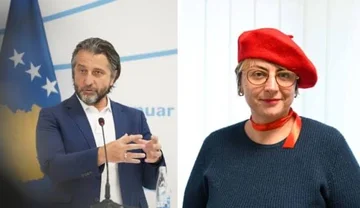
Political Affairs Analyst Artan Muhhaxhiri tells Radio Free Europe that European Union delegation orders were extremely clear and direct regarding the two criteria related to the removal of the visa regime for Kosovo
There are two obligations Kosovo must complete. So it's the issue of demarcation (with Montenegro) and it's fighting corruption. Crossing the demarcation is a more measurable criterion and there is no movement forward towards integration into Europe and towards visa liberalisation without exceeding that criterion. That was the order, which was said and since Wednesday, there is no longer any chance to interpret the Brussels orders, because Brussels itself spoke from Kosovo”, Muhramiri says.
But, Avni Mazrek, professor of European Law, speaking of Radio Free Europe, says the visit of the European Union's top delegation to Pristina and other centres of Southeast European countries, which is known as the Western Balkans, except that the European Union is seriously interested in their integration, has provided clear orders for the commitment institutional leaders must make to meeting the conditions for such integration.
It's the first criterion called the political criterion that means, in simple terms, political stability for these countries. The second is the economic criterion, meaning the construction of competitive capacities enough to cope with competition within the European Union. And the third is the legal criterion, or as we know it, here in Kosovo and the region, rule of law and order. Therefore, responsible for meeting these criteria and making what is called enlargement policy possible is the work of these political elites, respectively, institutional in meeting these three” criteria, Mazreku said.
He adds that Kosovo still has some open and unresolved problems, which, in addition to the conditions that must be met for European integrations, also enter the country's state-building function and that both should be synced.
The “It agenda for Kosovo is building good neighbourly relations, and since in this case, Kosovo has not had the political need for the problem to be so open in ratification of the agreement on demarcation with Montenegro. The other very important issue, which requires national consensus, is the establishment of the multi-Serb municipal association. Normally, there should also be national consensus on dialogue with Serbia, because dialogue between Kosovo and Serbia is viewed by the European Union as a way or an instrument for resolving open regional problems. Open and unresolved regional problems are reports between Kosovo and Serbia”, Mazreku points out.
Meanwhile, analyst Muhhaxhiri emphasises that dialogue for normalising relations between Kosovo and Serbia, as who for European integrations, has two components -- political and symbolic.
By means of it, it is intended to witness a kind of alienation from the bloody Balkans past and a vision of reconciliation among nations that have fought between themselves. That is also the idea, which the EU wants to convey through dialogue between Kosovo and Serbia, because the EU has always said it does not accept conflicts within aspiring countries for EU integration. So, countries that have existing conflicts have to resolve them before they can integrate into the EU”, Muhramiri has indicated.
Recognitions of political developments and European integrations estimate that the European Union from Kosovo has sought the development of institutional capacities -- meaning institutional stability -- in order to deal with topics, the solution of which paves the way for European integrations. According to them, the impasse or success in implementing these policies would be attributed to the country's political leadership. / REL