2 minutes ago
How does the Special Court and The Hague Tribunal stand out?

Periskopi(8 years ago)
(8 years ago)Suspected war crimes cases in Kosovo, from 1999 onward, have been handled in different forms by justice organs, mainly international ones. Initially, the United Nations administration has been taken over by UNMIK, which had extended after the last war its justice system in [...]
Initially, the United Nations administration UNMIK, which had extended its justice system in Kosovo after the last war, and the International War Crimes Tribunal in the former Yugoslavia, headquartered in The Hague of the Netherlands, founded by the United Nations.
Later, these cases were also handled by European Union justice through the EULEX mission. Meanwhile, these cases have currently taken over the Specialised Chambers and the Specialised Prosecutor's Office, also known as the Special Court.
These Special War Crimes Court rooms in Kosovo are expected to investigate the alleged crimes of members of the former Kosovo Liberation Army, which reportedly committed to members of minority communities and political opponents from 1998 until the end of 2000, as Senator Dick Marty described in his report to the European Council.
The innovation of dealing with suspected cases now lies in the fact that specialised rooms, even though made up of international judges and prosecutors and headquarters at The Hague, will operate with the Criminal Code and Kosovo's applicable laws.
Special Court officials have declared that the work is continuing in line with the mandate of these Kosovo judicial institutions.
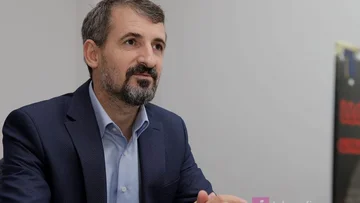
International Criminal Law Professor Ismet Salihu, speaking of Radio Free Europe, says the Special Court's intelligence, competence and jurisdiction compared with the International Criminal Tribunal for the former Yugoslavia is the same. But there are differences only in the form of establishment, which also determines which laws this court will act on.
The essential, cruise, crucial, “is that this court is founded by the Assembly of Kosovo with the law of Kosovo. This is the first difference in comparison to the previous Tribunal. This court will judge under the approved law and criminal laws that have been and are in effect in Kosovo. Otherwise, other differences are that it is founded in Kosovo, but the headquarters is at The Hague. In contrast, competencies and jurisdictions are the same as that of the previous Hague Tributal court of”, Salihu explains.
He says even the eventual sentences will be pronounced according to laws that have been in force at the time of the conduct of eventual crimes.
“According to those laws, on one condition, whether these laws are softer or more favourable, will be judged according to Kosovo laws, but are no longer softer. They are even the previous ones have been softer than they are now”, Salihu considers.
In contrast, Constitutional Affairs Professor Riza Smaka considers that the differences between these two courts that the International Criminal Tribunal for the former Yugoslavia and that which have established Kosovo institutions are great and incompatible and unprecedented.
According to him, the International Criminal Tribunal for the former Yugoslavia has addressed all cases suspected of the entire territory of the former Yugoslavia, while the current Specialised Chambers will deal mainly only with alleged war crimes cases committed in Kosovo.
And our case, in these judicial colleges and prosecutors, is that here it refers to the territory of Kosovo, but it's a clause, which does not match the fundamental principles of International Criminal Law, nor to doctrine, Judicature, which means legal acts in force. Here a law that is a general legal act has been referred only to Kosovo Albanian members, but not to others, for example Serbs and others, which are the case of an unprecedented”, estimates Smaka.
Professor Smaca does not see at all as positive that such a court applies only to a specific territory.
The “is unprogressive and has cohesions with criminal law doctrine as far as this criminal court refers to handling the cases mentioned”, Smaka says.
He stresses that Specialised Chambers and Specialised Prosecution have been delayed to become operational.
Any delay could have implications for possible prescriptions, both for establishing and possessing criminal cases of concrete cases”, he adds.
Meanwhile, former head of the Supreme Court of Kosovo, Rexhep Hadzimusa, considers there are no major differences between the International Criminal Tribunal for the former Yugoslavia and the Specialised Chambers and the Specialised Prosecutor.
I don't know how many differences there are. The procedure if it should be developed with Kosovo legislation, it is the same. All the legislation that was built [in Kosovo] is built according to international norms, and those cases have been able to be addressed here as well. But they're going there, now where the powers of the event are. They've taken those special cases before, but they've also had the standards that have been released by”, says Haxhimusa.
The differences between the Special Court and that of the International Criminal Tribunal in the territory of the former Yugoslavia concern the structure. The court for the former Yugoslavia has been in three chambers, the Court, Appeal and the Acusa Organisation.
The Kosovo court has two institutions, specialised rooms and specialised Prosecution.
The rooms are part of Kosovo's justice system and are attached to the Constitutional Court, Court of Appeals, Supreme Court and Constitutional Court. EULEX appointed judges work in them.
The Special Court is expected to address alleged war crimes cases, as well as those of the first post-war phase.
The establishment of this trial by law court experts is considered a failure not only of local organs, but also of international authorities who for the past 18 years have worked in the field of Kosovo justice system.
Currently, the Special Prosecutor's Office has sent the first invitations to interviews to several people, mostly former members of the Kosovo Liberation Army. In these invitations, however, they have not been explained in what quality they have been invited to interview.