15 minutes ago
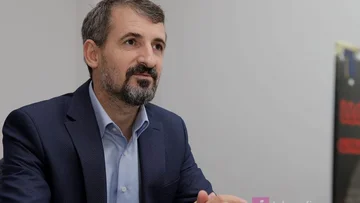
Minister Shala: Kosovo's non-recognition is the biggest non-tariff obstacle in CEFTA

Periskopi(8 years ago)
(8 years ago)Trade and Industry Minister Endrit Shala has made the opening of the “CEFTA Week 2018<18x1>, which is being held in Pristina from December 4th to December 6th. Minister Shala has thanked all institutions, adding that we will benefit from the participation of representatives of the World Trade Organisation, the International Trade Centre, GIZ, Council for [...]
Minister Shala has thanked all institutions, adding that we will benefit from the participation of representatives of the World Trade Organisation, the International Trade Centre, GIZ, the Regional Co-operation Council, U n NNCTAD, World Bank/ The IMF, representatives of CEFTA countries and the business community.
Shala has estimated that as the overall target of economic policies, the Government of Kosovo places great importance on creating and maintaining a liberal economy by respecting all WTO rules.
Kosovo is recognised as one of the potential candidate states and has been given the EU perspective by the EU Council. Kosovo has signed a Stabilisation and Association Agreement with the EU regulating not only free trade relations between Kosovo and the EU, but also establishing the principles of association between the EU and Kosovo. Kosovo has signed the Transport Community Treaty together with the EU and five other Western Balkan states. This is an important positive step for liberalising transport markets and implementing EU directives, including road transport in a non-discrimination manner”, the minister stressed.
The minister has said Kosovo has been implementing CEFTA since 2006 and also obligations that have emerged from this agreement. He also disclosed the fact that three of the seven CEFTA countries do not recognise Kosovo.
Kosovo has been implementing CEFTA since 2006. Kosovo has respected its obligations stemming from the implementation of CEFTA. Therefore, we have a full right to enjoy success achieved so far in CEFTA along with other countries. Three of the seven CEFTA countries do not recognise Kosovo, and two of them are the first and second largest regional trade partners in CEFTA. Kosovo is a state that has no sea exit and has a long border with Serbia, like the largest economy in CEFTA, which does not recognise Kosovo. Despite this fact, official delegates and public servants of all CEFTA countries, including Serbia, Bosnia and Herzegovina and Kosovo, have shown considerable flexibility and understanding for each other in order for the CEFTA process to be kept on track. Kosovo and the CEFTA countries that have not recognised Kosovo have used creative and innovative tools with articulant diplomatic acrotums, such as adopting the State Protocol 5 or using personal-name signs at meetings. Before you, I want to thank all these professionals for their courage and flexibility”, Shala said.
According to the minister, there are several issues in CEFTA that public servants cannot choose.
For example, our imports or exports that go through our neighbour, who does not recognise our country, stop and are required to hand over the national export or import certificates of that country. That's because they see our country as part of their internal market. Or the fact that that country does not recognise the car signs or accepts our country's export certificates because those documents bear our constitutional name and flag. Can such problems be solved by public servants? No. Are these problems breaking the deal? Yes”, Shala said.
The minister has sought to focus on negative influences and obstacles, which are being caused by Kosovo's non-recognition and cannot be solved by public servants. Shala has stressed that Kosovo's market is wanted by neighbours who do not recognise Kosovo state.
“The percentage of EU imports for all CEFTA countries except Kosovo is 60%. For Kosovo that percentage is 40%. The percentage of exports to the EU for all CEFTA countries except Kosovo is 40%. For Kosovo this percentage is 20%. Please show how Kosovo's economy would be competitive, since it has consistently harmonised its legislation with the EU's Acquis, while its market is dominated by neighbours who do not recognise Kosovo”, the minister has said.
Shala has also raised the issue of not allowing Kosovo companies to access foreign markets.
Would you please tell me how companies from Kosovo can access EU markets equally if the shortest transportation corridor is blocked because of these political issues? How can they be priced competitors? In the end, how can Kosovo prepare under these circumstances for its possible EU membership”.
Minister Shala has indicated that despite all these obstacles, Kosovo has raised these issues before CEFTA.
“However, neither the mechanism for resolving disputes nor its structures have been able to provide a friendly solution. Still, the main reason for this failure is the same as the main cause of the problem. Be honest with ourselves. Kosovo's non-recognition is the biggest non-tariff obstacle to CEFTA, and is also the biggest barrier to the relief of transport”.
The minister has stressed that the Government of Kosovo, with all its capacities, is committed to contributing to transforming our regional aspirations into a reachable reality.
There have been obstacles in the past, and likely in the future, we will have to face them together and individually, with other difficult obstacles. But possible temporary difficulties and obstacles will not divert us from our journey, and we will not compromise our legitimate aspirations. We need to find the way to constructively work together so that we can facilitate the way to a promising future that our people expect and rightly deserve. We cannot disappoint, and we will not disappoint”, he said.
The minister has said he strongly believes that regional political dialogue will help overcome these problems, as we have done in many other cases. /Periscopi