29 minutes ago
Visa liberalisation is political issue more than technical

Periskopi(8 years ago)
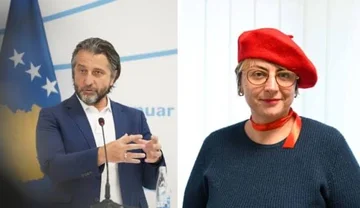
(8 years ago)The issue of visa liberalisation, for more than political matters, remains a political issue, whose fate the European Union states decide separately. Thus, they have praised European integration connoisseurs Albana Rexha from the Group for Jury and Political Studies (GLPS) and Taulant Kryeziu from the Epic Institute. Rexha has stressed [...]
Thus, they have praised European integration connoisseurs Albana Rexha from the Group for Jury and Political Studies (GLPS) and Taulant Kryeziu from the Epic Institute.
Rexha has stressed that Kosovo has fulfilled all technical criteria, and according to her, if only those criteria are taken into account then visa liberalisation should already be a reality.
According to her, the problems that they are now searching for are with the political aspects of the process.
The latter faces numerous problems such as increasing Euroscepticism and migration, numerous problems with key EU values; such as the rule of law in Poland and Hungary, problems which even make EU countries more skeptical in adopting visa liberalisation for Kosovo”, have added Rexha.
It has clarified to the Telegrafi that visa liberalisation at the point where it has interstate access, which means it's the states that will decide separately.
Kosovo's “government will have to focus on direct lobeing to the heads of EU states and on the interior ministers of these states. On the other hand, unfortunately we have not seen this happen lately, and it seems that the heads of state in us feel comfortable starting with that we have met the technical criteria of this process”, Rexha stressed.
According to him, the Government of Kosovo will have to focus on direct lobbies with the heads of EU states and on the interior ministers of these states.
On the other hand, Rexha has stressed leaders and institutions are feeling comfortable that the criteria have been met and they have not undertaken intensive lobby initiatives.
I think it's very important that there be inter-institutional coordinates and intensive lobes to the heads of these states, who are individually responsible for making the decision. In contrast, the numerous and different statements on the part of government on this process include a lack of co-ordination in this process, as well as a vagueness or discussion in dealt with the” decision, Rexha added.
Taulant Kryeziu from the Epic Institute, has stressed to Telegrafi that the best lobby Kosovo institutions can do to obtain visa liberalisation is to carry out, according to him, homework.
He has stressed that the country's institutions must have political will to fight crime and corruption, building, efficient and independent justice from political parties.
This is the leva through which we have to lobby to EU countries. If we show will and work in this direction, then we can knock on the doors of EU states and convince them that we deserve visa liberalisation. We are dealing with political decision-making that can also have their internal elements, such as migration”, Kryeziu added.
He has stressed that no Kosovo institutional representative dares blame the EU for the visa liberalisation problem.
“As far as visa liberalisation is concerned within this year, no EU institution has said free movement will take place this year. Which institution or EU member state has said visa liberalisation will happen this year. The commission has recommended legislative troops ʹ Parliament and the Council, now member states each separately deploy”, Kryeziu stressed.