2 hours ago
Khashoggi most often interviewed bin Laden about his murder

Periskopi(8 years ago)
(8 years ago)On 28 September, Saudi journalist living in the United States Jamal Khashoggi entered the Saudi Arabia Consulate in Istanbul to get some documents he needed to marry his fiancée and has not left her. Her fiancée waited for hours and [...]
While Turkey summoned Saudi Ambassador and Heritage Prince Mohammed bin Salman, ready to co-operate with any investigation concerning this event, and Saudi authorities issued an official statement suggesting that Khashoggi might have disappeared after leaving consulate, began to issue disturbing news: According to Turkish media, on the day of the journalist's disappearance, the Turkish staff of the Saudi consulate was reported to stay at home and from Riyadi came a private plane with a board of 9 intelligence officers, who would follow the consul.
In time it had become increasingly clear that both things were connected, until October 8th an anonymous source of Turkish intelligence has told the Washington Post that Khashogg had been killed within the Saudi consulate. In the hours and days ahead, voices have begun to circulate, have become more and more persistent and have been enriched by details: Khashoggi has been torn apart and removed from the consulate with a black van, there's a video of torture and murder, there's been a vicious kidnapping attempt. It was then that what looked like a complicated thing was transformed into an international circle.
Initially, through its minister of interior, Saudi Arabia has been positioned, denouncing the false “around the media” against it for the disappearance of Khahoggi and calling it speculation about his murder “lies and baseless accusations against the Kingdom government”. But then it had to face the international pressures especially of Turkey and the United States: On the night of October 15th, Turkish police have checked the consulate, revealing that the interior of the building was just completely painted (and virtually a video presented by al-Jazeera shot a few hours ago shows the entrance to a cleaning company building). Meanwhile, the New York Times, after consulting Turkish intelligence sources, wrote that films and audio in possession of Turks demonstrated that Khashogg has been tortured, cut off his fingers and then beheaded and torn to pieces.
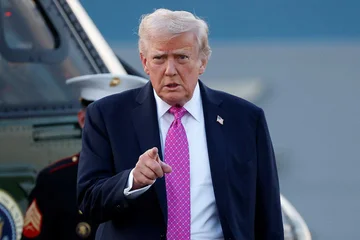
Of the recent developments, it seems virtually certain that Khahogg has been killed within the Saudi consulate: quite eloquently, having suspected about 20 days, the Washington Post has decided to publish the last article written by journalist for the column it carried. While Trump was at first downplaying that, while the journalist was not an American citizen, he would not interrupt supplies to Saudi Arabia's weapons, he had to admit that Khashogg seems exactly dead, and if it was discovered that the responsibility is Saudi, then they would have serious consequences.
Meanwhile, in Western newspapers, the sentry that is being forwarded reduces everything to the murder of a journalist and Saudi dissident - a superficial and wrong synthesis, which causes us to misunderstand the extent of this story and what's going on backstage.
Who was Jamal Khashoggi?
Jamal Khashogg was 60 years old and was the most famous journalist in the Arab world. He had worked for various Arab world newspapers as well as foreign correspondents. He was twice editor-in-chief of al-Watan, the Saudi progressive newspaper and director of the Bahrain-based al-Arab television. Part of his reputation is that back in the 1990s, he was a journalist with the closest contact with Osama bin Laden, who followed him closely and interviewed him several times in both Sudan and his Tora Bora raid in Afghanistan.
For his activities, Khashogg has been silenced many times by Saudi censorship.
In 2003 he had lost his job to al-Watan from a critical article on Ibn Taymiya, considered the founding father of wehabism. In 2016, after criticising Donald Trump, Saudi authorities had banned him from writing in newspapers and showing up on television. More recently, he had criticised the military campaign against Yemen and the very powerful heir prince Mohammed bin Salman: following these positions and feeling threatened, he had decided to leave Saudi Arabia for Washington.
Despite his highly critical positions on the Saudi government, however, Khashogg remained a prominent member of the Kingdom elite. His grandfather Muhammad Khashoggi, of Turkish origin, was the personal physician of King Abdulaziz al-Saud, founder of Saudi Arabia. His uncle was very famous and the very powerful arms dealer Adnan Khashoggi. In the years of the '90s, he had collaborated with Saudi secret services with the task of trying to persuade Osama bin Laden to give up violence, and in the years of 1,900, he had been responsible for communications by Prince Turki al-Faisal, Saudi ambassador to the United States.
In short, not exactly the dissident and political opposition presented in many Western newspapers. And that's why his murder is extremely important: it's a message to the real dissidents to say that if one like Khashogg is eliminated like this, then they can only hope for worse.
What is happening between the United States, Saudi Arabia and Turkey?
Although apparently in conflict, in reality what is going on between Washington, Ankara and Riyadh is a complex diplomatic game, whose goal is to enable all to preserve their faces. No one, in the first place, wants to be truly opposed to Saudis, who are a strategic ally for different motives: from oil supplies to arms sale, from military bases to the centre of a diplomatic network to curb Iranian influence in the Middle East. As far as Trump originally said that, since he was not an American citizen, he didn't feel at all about his disappearance, but even when he corrected the target, it has been to charge stray parts of the secret services.
According to the daily Foglio, it is Turkey's true winner of this story. Turkey's behaviour, which says it has in its hands overwhelming evidence made up of film footage and audio recordings made within the consulate, that would demonstrate that Khahoggi has been tortured and killed is ambition.
“E have built the case without reaching the final stage, modified news leaks and, however, not showing the crucial video. It's like they had a gun pointed at Saudis and they probably made a lot of demands”, writes Foglio.
In reality, neither should they oppose Saudis -- it's all a diplomatic ballet. In fact, it is clear what is the perfect solution for all three parties involved: an investigation to state that Khashogg was practically killed in consulates, but that clears up the high levels of Saudi government, placing responsibilities on any Turkish head, namely, limited secret services that Trump was talking about, to enable Turkey and the United States not to pass through countries that allow their allies to unwittingly and unwittingly violate human rights and kill journalists in light of the sun, but also allow the government of Saudi Arabia to come out of some relatively clean Ankara and France.
What will be the effect of this situation?
Even if the operation succeeds, the disappearance and murder of Khashogg will have a long-lived impact: it will weigh heavily on the image of Mohammed bin Salman, the Saudi heir prince.
Over the past few years, this prince has made great efforts to build the image of the young prince “formative” both in the economic framework, where he launched Saudi Vision 2030, an ambitious programme in order to remove Saudi economy from oil and attract international investment, as well as in the social framework.
The decision to allow women to drive cars and allow them after 35 years of movie reopening in the country has been initiative taken in this direction and for a period have even worked: virtually all Western newspapers have echoed his propaganda, talking about “the Saudi” coming with the new prince.
In fact, it was about cosmetic operations that did not change the civil rights situation in Saudi Arabia at all and that proved to be a credit to the prince's opening of his mind that, in fact, were the achievements of Saudi protest movements: for example, the decision to allow women to drive the cars came shortly after the arrest of various activists who have long struggled with this objective.
Since last November, the image of the young prince was damaged when he had undertaken a police operation to consolidate his powers that had led to the arrest of dozens of elite and Saudi royal exhibitors at Ritz-Carlton Hotel Riyadi. But then he was through talking about “anticorruption measures”.
However, this time the prince seems to have exaggerated and killed a well - known and still a little dangerous journalist like Khahoggi, especially the brutality and the above - mentioned modalities: the victim has been trapped into a diplomatic representation in a third country, certainly there will be a stain on the image of the reformer, which the prince has devoted so much to building it up.
More than that, it can cost much more than one's reputation. Soon will launch Futuration Initiative Investment, an economic summit organised by the prince and dubbed “desert Davidos”, but sponsors, different partner media like the New York Times and guests as CEO of JP Morgan Chase, Ford, Uber and Virgin Group have already announced they will not take part in protest of Khasogg's disappearance and murder. There are even voices in recent hours asking Saudi King Salman to replace him and appoint another heir instead.