8 minutes ago
Behind JP's Divided Student Organisations

Periskopi(8 years ago)
(8 years ago)Often accused of politicisation and apathy, student organisers are trying to find their way as leaders and hope to improve student life at the largest university in Kosovo. Five years ago, Palushi Freedom left the comfort of the parental home in a Suhareka village for the first time in life [...]
Five years ago, Freedom Palushi left the comfort of the parental home in a Suhareka village for the first time in her life to move to the Kosovo capital, nervous but willing to start a new life at the University of Pristina “During those first days, freedom was overwhelmed by a lack of support that would only grow during four years of high school, and continue in master's studies.
I was totally lost on the first day. All the information I received was informal, from friends, or by asking people I didn't know,” she remembered at dinner right after a day full of speeches and jobs.
She began speaking passionately (without stopping to eat a bite of her food, despite admitting she was starving), for her student life at the largest institution of higher education in Kosovo. The first area of her complaints: lack of clubs, campus activities, and even a small detail - the university's lack of logo sweaters.
We literally don't have student life. Student life only happens outside campus,” she said.
Palushi had heard of the student parliament when she was a brunette, but her colleagues told her that the student leaders were “essentially politicised and working for their own interests”. As a political science student, Palushi was interested in the student organisation, but had not seen himself adapt to any of the nine registered groups in the recent student elections. In fact, she never voted in a student election.
Palushi's the only one. A poll by BIRN prior to the student elections of 2016 found that students lacked enthusiasm and confidence in student representation. In general, Pristina University students often complain that their interests and needs are completely ignored.
Student leadership is divided: Although some groups have selfish initiatives and intentions to make student life better, students elected to parliament nearly never meet as a group.
Student leadership is also a divisive topic in itself: critics accuse student organisers of seats in the university's highest decision-making body working in the interest of politicians, a problem that concerns student leaders themselves.
Student representation
No matter whether you talk to students, professors, or civil society, anyone will tell you that the best way to understand student representation at the University of Pristina is to imagine it as parliamentary policy.
According to Muhamet Hamzaj, a member of the Independent Union of Students and former president of the Student Parliament, there are about 30 student organisations at the University of Pristina, but only seven are currently represented in the Student Parliament.
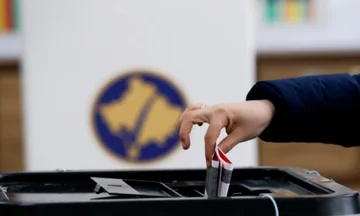
Every two years, student organisations that should register at the Ministry of Public Administration to be able to compete go to the polls during the spring semester. First, they hold internal elections to decide on their representation and the governing structure. Then, organisations enter student body elections, where their colleagues vote for student representatives through faculty councils, described as “local government”, and representatives in the Student Parliament, described as the central “government”.
Faculty councils are composed of deans and other faculty leaders, professors, assistants, a non-academic staff, and two student representatives elected by the faculty student council.

On the other hand, the Student Parliament is meant to serve as the main representation body for student problems. The university statue envisions that parliament must have 17 members, high-level students or master, who serve two-year mandates and cannot be re-elected.
After being elected, the Student Parliament sends seven of the most voted students to represent in one-year terms, the entire student body into the university Senate's top academic body.
The Senate is responsible for academic issues, from ratification of the content and quality of the curriculum, to the approval of proposals from the Council of Facults to academic staff advancements.
Most importantly, the Senate has a horizontal leadership structure: student senators have the same voting rights as other senators, including the Rector, deans and university academic staff.
To increase the chances of being elected to the Student Parliament, student groups or entities, as those students often call them, even create coalitions and go to the oposite.
“is like the miniature Kosovo government,” said with smile Egzon Daku, president of the pro-European Student Union.
Drinking from a coffee in popular student cafe near the Faculty of Medicine, where Daku studies, he told me about his organisation, which he said is the <x0nd most active and largest of all student groups” with branches at other public universities in Prizren, Gjilan, Gjakova and Mitrovica.
The Daku group was once in coalition with the Independent Student Union, Independent Student Opinion, and New Student Spirit, but he said some of the members were highly politicised “” so they left the coalition. Now they are in “opposies” together with research, critics, Action, SCV, Student Reform and Peace (Although the opposition is not a unified bloc).
A major difference between student representation and parliamentary policymaking is that the seven groups represented in Parliament do not meet for life often. Some of the 17 student representatives don't even know each other.
Daku said that when he was president of the Student Parliament, parliament was met every month. But, he added, that since March 2016, Parliament has only been called at the meeting three times.
Hamzaj had served as Parliament Speaker until mid-November, when he had passed his position to another member of Independent Student Union, Arieta Bajrami, as a result of a rotating presidency agreement among student groups.
When Hamzaj was in the last days of his term, we visited the Student Parliament, a closed building next to a small courtyard behind the philosophical faculty. The city's central warming was not yet on, so we stayed there with our jackets fighting the cold air. But Hamza's office was quite attractive, there was a large round table and some meeting chairs. A portrait of national hero Adem Jashari Hamzaj is from Svaneraji.
Hamzaj acknowledges that his parliament had not met so often, because seven senators meet at the Senate's monthly meetings. He said student representatives reported regularly to him on issues addressed at those meetings.
Hamzaj speaks with praise for student representation in the Senate; he sees this as a symbol of democracy at the university.
“Everyone can say what he wants and has the same rights as deans and professors,” he said.
But Ed Cooper, senior consultant for World Learning in Kosovo, an organisation that advises Pristina University, disagrees.
In modern universities worldwide, students have always had some kind of representation. There is a European aspect of trade unions, under which each group has the right to vote, but very few of this legacy has survived in modern universities,” he said. He explained that in various countries where he worked in Europe, in America, Asia, students usually have representation, but not a vote.
“Universities should be inclusive and student representation should have power, but they are not experts, they are receiving lessons. So there are specific points at the level of boards or supervisors, where they are usually required to leave the hall. ”
Cooper's colleague, Carl Hammerdorfer, chief of the World Learning programme, said the student vote is particularly problematic when it comes to staff advancements.
We [World Learning] don't believe it's appropriate for students to vote on academic advancements in the Senate. Students simply don't have enough knowledge of what makes up high performance in research, teaching, or in some other aspect of the professor's work,” he said. “In past polls, students seem to have supported candidates who do not meet the advantage criteria. We don't know the reasons. It could be student ignorance. It could be political reasons. ”
Cooper even goes a step further, and he says he seems to have direct connections between political groups and student groups.
“We must work on the fact that these people are politically connected, and the blocks that have been created around students are often contrary to the general benefit of the institution and community,” he said.
Political body (student)
An article by Edona Maloku and Venera Demukaj on the perception of corruption in higher education, published in 2013, points out that student leaders have sometimes served as mediators between students or professors or administrations in bribery scandals. In the same year, the research portal Preportr had published a scripture that said student organisations worked along with political parties when convening their interests and that student leaders took political positions after graduation but seemed to be hard to prove direct connections.
Hammerdorfer stressed that although he does not suspect that the university faces politicisation, he thinks the problem is exaggerated. According to him, people sometimes simply do not want to say no to a powerful colleague because they fear they will pay for violating a cultural custom later in career.
However, there have been high profile cases that have contributed to negative perception of corruption and politicisation at the university.
Esat Bellaj, former student senator, was accused of involviting in a bribery scandal regarding the exchange of grades and student registration. In July, he was sentenced to two years and eight months in prison and a sentence of 10,000 euros for abuse of office, accepting bribes and exercising influence; another eleven individuals were also convicted of related charges. In November, however, the Court of Appeals had released the 12 accused for various reasons, including prescribing some of the charges (some of them were filed in 2010), and because the court in the first instance had not given sufficient evidence that Bellaj was operating within an official position. Interestingly, the Court of Appeals also noted that accusations of exercise were non-substantial without any connection to an influential figure and decision-making power.
Other accusations of corruptness between students and academic staff never reach this far in the justice system.
Arben Hajrullahu, professor of political science, describes himself “as a little black sheep” within the University of Pristina, as a person who raised his voice when he sees works of academic dishonesty and corruption.
In 2013, for example, Hajrullahu had reported a student to the State Prosecutor, accusing him of forging his signature. Student Freedom Avdiu, who has denied all charges, had later competed with local elections as a PDK candidate.
My <x0Ide had been to discover the networks behind this job, but since the prosecutor's office had neglected the case, nothing has happened in this respect since it happens with many similar cases in Kosovo. The institution I work for is doing very little or nothing to hold people responsible for academic offenses. Instead, they try to attack me, asking why I'm making a noise,” he said, adding that in some cases witnessed, student organisations have been the very highly involved “in manipulation of exams and corruption, in collaboration with members of the academic staff.
The students I talked to also agree that politicisation continues to be troubling.
It is no surprise that those interested in the leader of student representation would be interested in pursuing future political careers. However, student leaders try to disunit themselves from party and political interests with persistence.
Hamzaj stressed that he is not related to any political party, and that when he became president, he had told the sector that too. He added that when students work for party interests, there are usually bigger and systematic factors that are in question.
Kosovo's “Economia and essential problems cause this. I don't like the fact that to have a job when you finish college, you have to be part of a political group or party,” he said.
Arieta Bajrami, the first student president of the Student Parliament, who had taken this position in mid-November, told me that there are three student groups that have a lot of influence at the Education School, where she studies, but she has reservations about their motives.
I gave you an attachment The KSU's because their chairman was the only one who wasn't too aggressive in recruiting... and I. The KSU immediately offered me support for the problems I saw at the faculty,” she told me, adding that she had evolved to the student leadership because she wanted to solve a population problem, including lack of faculty organisation and a lack of professors in the laws.

Bajrami had then become head of the faculty council. Because she was focused on smaller organisational problems within the faculty and because she had good relations with professors, she had been able to gain the trust of the students.
I'm not trying to perform miracles, I've always tried to have realistic goals... and I like politics,” she said.
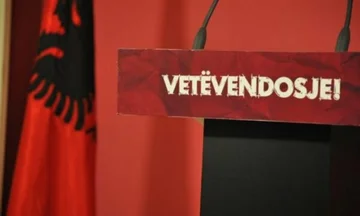
But Elona Kurti, a member of the Study, Critics, Action, SCV, stressed that being a political student is not necessarily negative. Many of the SKV members agree; although Kurti, a third year law student, says the group has no formal ties to Vetevendosje, the SCV is open that many of the group's supporters are also activists in Vetevendosje, or at least at least agree politically with this party.
Kurt had heard about the SCV before enrolling in college and joined the organisation in 2015 after it was registered.
The SKV was formed in April 2010, when the then-rector had wanted to increase the total payment of 50 euros to 90 euros. Although the Steering Council had approved the price increase, the university had withdrawn the decision one day before protests called by the SCV. The money the students had already paid me had been returned.
Many student activists were arrested in the stake and even expelled from their faculties,” Kurti said, telling the group's protest history. I saw that the SCV had the will and potential to make a difference. ”
The SKV, which positions itself as a student political movement, is in a way rising above the country's most general history, which views students as a source of activism and political change.
A story steeped in protests and politics
As a result of a decade of Albanian demonstrations in Yugoslavia for equality in education and institutionalisation of Albanian language, the University of Pristina was founded in 1969 as the first institution of higher Albanian-language education.
What arose as a result of political organisation continued to be a basin of social movements in Kosovo, becoming the nest of intellectual class and political activists, academics and party leaders who wrote about freedom of Albanians, nationalism and human rights.
In 1981, what had started as a student demonstration against poor housing conditions and low food quality dormitories turned into a protest of several thousand people who gathered to protest from the lack of technical and scientific faculties to the university to the demand for a republic status for Kosovo instead of the autonomous province.
On the other hand, student protests in 1997 - led by the Independent Student Union - became a symbol of Kosovo's political revival in the late 1990s. On one October, student leaders led professors, other students, and thousands of other Albanians on the streets of Pristina, seeking the right to equality and the right to education in the Albanian language.
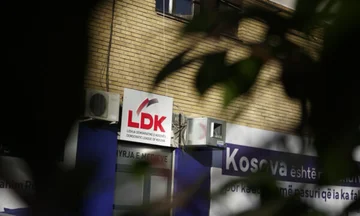
Under the surface, the leaders of the student union were part of an escape from the passive resistance of the Democratic League of Kosovo, The LDK, which was led by late President Ibrahim Rugova.
Africa Hoti, professor of international law, organisations and human rights at the University of Pristina, was one of the leaders of the Independent Student Union in the 1990s.
In my time, there was only one student organization: Independent Student Union,”, he told me in a pause between speeches at his office at the Faculty of Philosophy. Before the war, our goal was freedom from the enemy. Students weren't worried about small university policies, we had other goals of how to organise protests, and some, even the desire to organize war. Circumstances have not allowed us to talk about payment,” he said. “But after the war, the situation changed dramatically. ”
Hoti, who graduated from the University of Pristina Faculty of Jurydical in 2001, and at the moment travels between Pristina and Bologna, where she provides a human-right class and democratisation in Southeast Europe, said that immediately after the Kosovo War, as different political groups started fighting for power, student groups emerged as mushrooms, and often in line with political factions.
Postwar Student Organization
Like any other post-war society sector, the university also became a battlefield for control and power. The parties wanted to have influence on the reactors, but also to gather student voter support, Hoti said.
If the LDK, which was often associated with the urban intellectual elite during the 90s, had tried to maintain its influence at Pristina University after the 97th protests, it is a matter of debate. Daku told me that the LDK had no student group supporting the party, and that it had no interest in this job so “because most professors only support the LDK” and “students who support LDK become members of the LDK's youth forum”.
Hoti, who proved to be a member The PDK has officially become a member of the party five months ago, strongly denying that claim.
After the war, when the KLA had been transformed into different political parties, most young professors joined the PDK because they viewed the LDK as the communist party,”.
A student activist, Durim Jashari, told me that since the Kosovo war, most student groups had political connections, but that these ranks often differ and are more connected to a specific politician, such as an MP, than to the party in general.
But besides the SKV, student groups are not transparent for their audiences, official or not official.

Hoti said she did not know about any organisation that was connected to the PDK, but thinks “these are”. But according to Hoti, it is not the political ideology that is influencing the student organisation -- it is the struggle for power and to control the reactor and to collect student votes.
Students have been involved in the organisation and have participated in protests even after the 1990s: in 2003 a group of students started moving “University Otherly!” Through their website, where they published evidence of plagiarism, they tried to fight corruption and abuse at the university; yet the movement died in 2005.
In 2014, several hundred people protested in front of the university, demanding the resignation of the Rector Ibrahim Gashi after he was found to have published a suspicious magazine for advanced titles.
That winter, a student of sociologistry and literature, Roland Sylejmani, had created a Facebook venture urging his colleagues to protest academic fraud, especially in the case of the sector. Things went through violence two weeks after the first protest, when police used hot spray in the crowd and arrested about 30 people. Gashi eventually resigned because of public pressure.
Gashi had accused protesters of being politicised by NGOs and political parties. However, Gashi himself believed to be political appointment, result of a deal between the ruling party The PDK and its junior coalition partner AKR.
Some of the students accused the SCV of embezzlement. Freedom Palushi, the student from Suhareka, said she had backed the protest initiative until the moment the Star Hoxha and Ilir Deda were involved, who was still deputy of Vetevendosje.
Twenty years after the historic student protests held in 1997, student groups at the University of Pristina have a divisive problem. Daku, whose organisation Student Union Pro-European had interrupted relations with partners in the coalition due to perceived political influence, said he did not like the fact that the SKV ranks behind Vetevendosje.
“are good guys, but I don't like it when student groups are influenced by parties,” he said.
Meanwhile, Kurti said SKV also lacks adequate partnerships with other student groups.
“at this moment, neither of the organisations are adequate to co-operate with us... because they accept the current situation and comfort the personal interests of certain people,” she said.
Bajrami, the president of the Student Parliament, said some groups simply do not co-operate.
There are some organisations here that don't cooperate with us, some that are political. They try to do things themselves, without all the groups,” she said. Since Bajrami has assumed the presidency, he has still called a meeting among parliamentary groups.
This is not to say that student groups are completely inactive; they do some individual projects. As soon as Bajrami had taken office, she said that the reactor also supported her cause. She is working with Hamza in an initiative to create several student clubs, and her organisation is also involved in establishing and functioning a national student union.
Daku stressed that since USEP was established in 2010, the group organised scientific seminars, public protests annually for May 9th to seek visa liberalisation for Kosovo, and had even established a partnership with the mobile network Vala for a package for students.
Hulaj, chairman of Student Peace, acknowledged that his organisation was not at the moment as active as it once was, but says one of the biggest problems was lack of funds. It extracted several materials from 2010 -2012 from a file found in the arts faculty, pamphlets advertising the call for blood donations organised by Student Peace, a pocket guide for the student's “rights under the university statute, and an equation book for mathematics students.
I agree that student groups are active, that sí have the powers they had earlier. But for me it is important not to let bad things happen,” he said. He sees his role as a student leader to be the eyes and ears in student groups, and to raise his voice when he sees wrongdoing.

Hulaj said he's friends with Daku and Flamur Pireva, the chairman of the SKV.
The worst thing is that they're not doing anything, we're doing nothing. Nobody's doing anything. I don't know what's going on. We're trying to get the best out of this. ”
Students at faculty councils on the other hand, being concentrated in a department, may have better opportunities to be more present in a student life, but they too feel powerless at times. Hamzaj, who had been president of the medical faculty council, said he had trouble addressing even the most basic problems.
“Drites in the faculty library were broken,” recalls an example to illustrate the basic problems facing students at the university. He had told the faculty dean, he explained, and then the request was submitted to the Ministry of Education.
The Ministry changed the lights after six months. This is bureaucracy. ”
The lack of basic resources was a topic that students mentioned, from books of the library, a broader approach to affordable housing, to heating properly Bajrami said that whenever I call parliament's first meeting in the new presidency, I don't even know where they will hold it since the presidency building has no heating.
But instead of focusing on these issues, critics say, student representatives focus only on one single problem: asking the Senate to extend the number of days students take on exams.
Palushi views this as part of a vicios “<x1 systemic setting at Pristina University.
Since most college students feel they're there to get “a piece of paper”, she said, student organisations compete on the only platform to give students as much as they can get on exams when they fail the first time. Meanwhile, the professor's attitudes towards education in general are not very different, she said.
Hajrullahu, who has established an NGO at the university called the Centre for Political Courage (where Palushi works as a researcher), stressed that corruption and apathy do not define the entire staff and students.
There's corruption in college, there's no legend. But we have people who are trying to work with integrity, investigate, and teach in very difficult circumstances. ”
A time of training?
In the first days of her new job, Bajrami was part of a joint statement by the Student Parliament and the Steering Council, which demanded that Pristina Universities launch a new case against the land-built Orthodox Church that had once met the university campus
She said she had at first thought that the matter was very political for her, but after she had spoken to various acts, she had decided to interact. It is a common issue of student leaders, but even involving the issue had not been a common decision among parliamentary groups. The SKV had not been aware that there was a plan to make a statement, so they had written a statement of themselves, threatening protests whether the university would freeze new indictments (university had done so); Hulaj from Student Peace said neither had he received an invitation to discuss the issue in parliament.
Bajrami is also planning a symbolic action against the latest establishment of an hour's Coca Cola in the middle of campus. Independent Student Union views this ad specifically as offensive, because the municipality had rejected an earlier request from the student group to place an obelisk in the same place to commemorate students who died during the 1990s.
These hints of protests may be small on a scale, but they show that symbolic space issues and the past may have the potential to mobilise students again.
According to Hoti, however, real change will come to the university only when politics in Kosovo becomes more diverse.
I think we're in a transition ... and I think the situation will change in parallel with the breeding of political parties. After this transition, I imagine university is going to be different, will be consolidated without political influence. Once that happens, students will be better oriented toward academic life. But when will it happen? This remains to be seen,” said Hoti.
Article originally published in PristinaInsight