7 minutes ago
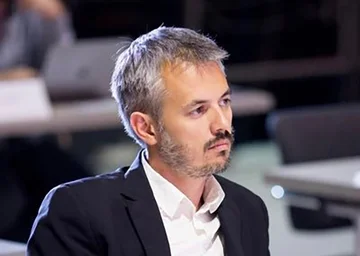
Hakki Abazi: This government needs Kosovo

Periskopi(9 years ago)
(9 years ago).
Asked by Gezeta Blic, who is most likely to form the Government of Kosovo, the coalition PAN, or LDK and Vetevendosje, Abazi gives an interesting answer.
The two options are possible, but those as such are exclusive to each other. On the other hand, necessarily none of the separate options guarantee deep reforms and confrontation with the heavy and complicated agenda of the government”, Abazi told Blic newspaper.
That, according to him, for several reasons.
“I'm talking about demarcation, association of municipalities, army creation, depletion of international isolation, economic development, reform in justice. Consequently, it is a moment that requires high-level political maturity and the creation of a national unity government”, he said.
According to analyst Abazi, which government will be created if it does not have the Albanian majority, it will be in vain, because it will not solve the many problems the country has.
Any government that will be created if there is no Albanian majority voting rate guaranteeing stable governments in the face of challenges and reforms will have a sharp situation, deepening conflict and inability to address civic problems. The country has plunged into crisis and poverty and is lagging behind regional and global processes. It's losing the weight of existence and creating a negative mirror of inability to rule with”, potential Abazi.
According to him, if this time the crisis can't be turned into an opportunity for professional government to gather and call on experts and people to testify without going through corrupt and conflicting, then we'll lose one more chance than being characterised by crisis will be impossible to get the country out of crisis.
The analyst recalled once again that Kosovo citizens have lost faith in this country, even Kosovo has lost vision.
Kosovo's “has lost its vision and people have lost confidence that it can get better, and this has created an version of institutions and a general apathy that has no doubt created parallel lives of citizens with institutions. This is not characteristic of democratic countries where the citizen is the center of gravity”, Abazi concluded.