a minute ago
The EU can't imagine Thaci and Vucci making laws for 500 million Europeans

Periskopi(9 years ago)
(9 years ago)On Wednesday (12.07) begins the Balkan summit in Trieste. Besides leaders from the Balkans, Chancellor Merkel and French President Macron also attend. Experts Tobias Flessenkemper talks about summit signals. “stepmothers” of the continent were named recently in a Spiegel article by the Western Balkan countries. Many German media write, [...]
On Wednesday (12.07) begins the Balkan summit in Trieste. Besides leaders from the Balkans, Chancellor Merkel and French President Macron also attend.
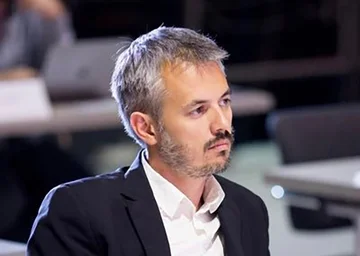
Experts Tobias Flessenkemper talks about summit signals.
“stepmothers” of the continent were named recently in a Spiegel article by the Western Balkan countries. Many German media say that the EU is losing radiation force in the region, do you share that opinion?
We must distinguish between the attractive force on the political leadership of these countries and the attractive force in the population of Western Balkan countries. If we look at the population of these countries, the opposite is true. The EU remains as an attractive model before. Just look at how much labor force moves between the Western Balkans and the EU. Despite efforts by Russia and Turkey to take their place culturally, the EU's bid, both culturally and otherwise, remains the most attractive. But people certainly see that the European economic model presented to them does not always work properly. For that reason, people are simply looking at Greece, 36 years of EU member and not always taking advantage of this model.
But how do the Balkan countries view this themselves?
The political plan is somewhat more complicated. True, there are concrete successes, for example, Croatia is a member, Montenegro is negotiating with the EU as well as successfully, now becoming a NATO member. Albania was previously admitted to NATO. So we see specific orientation to Western alliances or Western organizations. In other lands, however, we find that there are quakes, for example. in Serbia. Still there is the problem of having different agreements with Russia in a military way. On the other hand, the political leadership in Serbia is not very clear - how far it should go with the European-Western model or maybe it will stay between two models.
The Balkans thus remain a potential source of crisis, despite clear prospects towards the EU?
Certainly we have troubled countries, Bosnia and Herzegovina, Kosovo, Macedonia. In all countries where there has been conflict, the question “which state do we want to live in? ” has not yet received response. There the prospect of European integration has not done well, for example, to influence the different shoulders in Bosnia and Herzegovina to unite, or for a country like Macedonia to join the course of reforms. They say in summary: Population prefers the Western European model, the EU model, as it works, how it becomes, how it becomes an economy, how social rights are guaranteed, but at the same time it understands that there is no security, that this model will be worth it.
Can it be said that the EU is serious about membership, if we look at the populations of EU countries, there has been great scepticism for EU enlargement with Balkan countries for years?
The EU truly has clear and serious goals regarding the prospect of membership. However, concern exists in EU countries, which with these countries can be imported into the EU, even mass conflicts. Nobody wants a second Cyprus, as we currently see it, in Croatia's behaviour towards non-EU states. These countries need to solve the political problems of the 19th and 20th centuries steadily. Because creating an economic, social and political perspective acceptable to Western Balkan countries is not a bigger problem for the EU. We talk about less than 20 million people, this would be a small-or average new state for all EU countries.
So membership of Balkan countries is not a new explosive substance for the European Union...
At the end of the day, there is more of a political problem. Are these countries prepared in such a way that they stick to decisions made together in the EU? With the rise of Great Britain, there will be less differential within the EU, more unity in the system and more deals on issues requiring adjustment. This leads to the need for respect, the belief that common decisions also apply.
If we take, for example, Kosovo's relationship with Serbia -- countries that hold negotiations on normalising relations from 2013 -- we see that both sides have not made decisions reality as they have been made, there is a lack of the will to compromise and work creatively to find solutions. This should not be allowed when it comes to important decisions in the future in the EU. Because it happens that the Serbian president, Vuciq and Kosovo, Thaci remain seated in the EU Council and make laws for 500 million Europeans. Such a situation cannot be imagined at the moment, with these politicians elected in the Balkans becoming laws worth 500 million Europeans...
There seems to be a lot to do... but what you expect from the summit in Trieste. What specifically must be done to finally move forward?
It is important to speak once again at the highest level, now with the new French president, Emmanuel Macron, with Chancellor Merkel, with heads of states and governments from the region. It also sends a signal that there is readiness to work together. The signal that needs to come out of Trieste must be: The Western Balkans belong to the EU. We are trying to move this project forward, which is stuck because the EU has been involved in the crisis in recent years.
This means going beyond contractual issues, beyond trade agreements and association, beyond the policy of stability and entering a new space where joining the European Union becomes possible.
Where do you look at the summit scores?
Of course in economic development. Italians host an economic forum with small and medium-sized entrepreneurs from the Balkans. The Germans are also acting. They have launched an initiative, with which the German industry buys products from the Balkans. This should be supported by guarantees and financial instruments.
The other important move is to fight corruption and organised crime. Another important topic is bilateral conflicts in the region. Another important issue is, where the 2018 summit will be held, a cycle was scheduled, by 2014-2018, when the commemorations of the last 100th anniversary of World War I ended. It will probably take place in Great Britain, and this is the question: How Great Britain will now be positioned to further ensure peace and peace agreements in the region.
Tobias Flessenkemper is director of the Balkan Project at the European Institute, CIFE in Nice and member of the European Policy Group for the Balkans, B EPAG.