ZKA finds irregularities in northern Mitrovica, municipality lost over 25 thousand euros in revenues
 2 minutes ago
 (8 years ago)
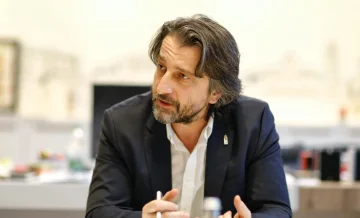
Analyst Daniel Serwer, a researcher at the Centre, told the University of Transatlantic Relations Johns Hopkins told Voice of America that it would not be a prudent decision to abolish the law on the Special War Crimes Court. Mr. Serwer also commented on Albania's vote for the UN resolution. Voice of America: What [...]
Daniel Serwer: I think Europeans and Americans made it quite clear that the consequences for Kosovo's relations with Brussels and Washington would be great. I don't think that matters to Kosovo. On the other hand, Kosovo is a sovereign state and has the right to make the mistakes of a sovereign country.
Voice of America: How would you judge this move?
Daniel Serwer: I don't think it was a smart move. Kosovo is a sovereign country, a democracy and members of parliament can raise any issues they wish for. But this does not mean that it was a wise move to raise such matters. I also think it was a highly weightless move for Kosovo to open the issue of demarcation of the border with Montenegro. But parliaments answer to the people, not before me.
Voice of America: Yes, but the United States had invested and supported the establishment of this court and supported Kosovo forever. In that sense, what does this step mean that conflicts with the American attitude?
Daniel Serwer: Yes, as the ambassador (Delawie) has said, and this would have consequences for relations with the European Union. It would be a very weightless act to change the court's mandate. Of course, we still do not know how the Court will react, but for it to start working, standards must be very high. Let's face it: The reason it exists is the shortcomings of the justice system in Kosovo. It would not exist if Kosovo had done what had to be done to establish rule of law.
Voice of America: What do you think are the reasons for this initiative?
Daniel Serwer: They try to escape responsibility and especially do not want the Kosovo Liberation Army to be contaminated by accusations of illegal acts. But the way I see it, it would be much worse for specific individuals not to be held accountable for such actions, which would make the name of this organization completely worse. If there are people who have been responsible for legalizing, they must be brought to justice.
Voice of America: But how do you respond to discussions that this issue has raised in Kosovo that this court will condemn victims rather than aggressors, since it will only address Albanian crimes? Do you think there is danger that this could set some equality in crime proportions, as critics in Kosovo say?
Daniel Serwer: In times of war, illegal acts are usually mutual and not unilateral. The fact that you have set up the flag of protecting human rights, protecting Albanians from the autocratic and vicious Serb regime does not mean that you have done nothing wrong in the way you have fought this war. This is something people need to understand. You can't take credit for the white “kaloron” just because you had a fair cause. Not only do you have to be right about the cause but the methods followed also have to be right.
Voice of America: But KLA veterans who have launched this initiative say it is discriminated against Albanians ...
Daniel Serwer: Serbs actually tell me the opposite: more Serbs are held accountable at The Hague tribunal for the former Yugoslavia than any other country. So I don't think we have bias if you look at the picture as a whole.
Voice of America: Yes, but the size of crimes is also different. The campaign against Albanians was state by Serbia ...
Daniel Serwer: I think it's right. I think that's exactly why there were more Serbs brought before the Court. But apparently there are still some crimes for which certain people were not held accountable and could not be held accountable at the Court for the former Yugoslavia, because they occurred after the fighting was formally ended. And that's what the new Special Court is doing. It is dealing with crimes that occurred after the war and some of them may have occurred outside Kosovo and Serbia, so the jurisdiction of the Court will be a problem anyway. See: Many Serbs are held accountable, relatively few Albanians are held accountable, if there have been illegal actions by KLA members and I believe there have been. There have been a number of people, including Albanians, who have been killed after the end of the war in what we can essentially call an internal struggle among Albanians. And if some of these people were civilians and not warriors, someone should be held responsible.
Voice of America: Mr. Serwer, Albania voted in favour of a UN resolution expressing opposition to the US administration's decision to recognise Jerusalem as the capital of Israel. How would you judge Albania's vote while the administration had warned there would be consequences for those countries that did not support the American stance?
Daniel Serwer: I don't think there will be consequences. I think it was an empty threat. The US provides many good results at the UN. Just last week, the US secured a very good resolution imposing new sanctions against North Korea. I don't think the UN will be punished or Albania. I think it was something that reduced the reputation of the United States administration by making such a threat. They should have predicted that there would be strong opposition to the Jerusalem decision and that they should have accepted it. This General Assembly resolution has no legal power, so there is actually no weight. It was a mistake for Americans to give her such a big accent. If they hadn't, the resolution would have been passed quietly and no one would have noticed.