2 hours ago
Fatal inaction: How did the measles come true?

Periskopi(9 years ago)
(9 years ago)Romania's failure to prevent the killing of measles is a history of excessive complacency, neglect and discrimination. It is also a warning story for Europe. Carla was never vaccinated for fruit. Her health did not allow her. Born with the esophagus interrupted, she passed [...]
Romania's failure to prevent the killing of measles is a history of excessive complacency, neglect and discrimination. It is also a warning story for Europe.
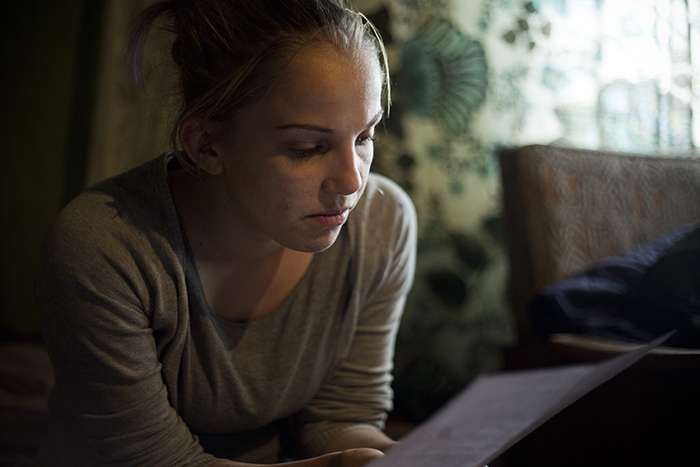
Carla was never vaccinated for fruit. Her health did not allow her. Born with interrupted esophagus, she passed her infancy by entering and out of the hospital, often with pneumonia.
During a routine stay at Louis Turcanu Emergency Hospital in the city of Timisoara in western Romania, the baby was found on the same floor as a pregnant girl. Soon, Carla went to a fever.
She moved to the other side of the city at Victor Babes Clinic for Infectious Diseases and Pneumonology. The hospital was so crowded with fruit patients that Karla was originally placed in an adult pavilion. Its temperature deteriorated, increasing to 42 degrees Celsius.
During the night of December 18, 2016, she began to groan in a way that her mother, Florentina Marcusan, had never seen before. She had irritation on her face and chest.
Shortly after 8: 00 a.m., while a nurse was giving Carla an injection, the girl's head began to tremble. As the nurse ran to get help, Marcus kept her child in her arms.
When I saw that she was not reacting, I panicked and put her in bed, because I knew she was dead... in my arms,” she remembers.
Doctors threw the worried mother out of the pavilion while trying to revive the girl. She waited in the cold in front of the building, lighting cigarettes one at a time and clutching Carla's Teddy bear.
Forty - five minutes later, at 9: 10 a.m., Carla Ismina Georgiana Popa was declared dead. She was one year and three months old.
The baby girl was one of the 10 victims of measles in Romania, which by the end of November has killed 36 people mostly babies and infected about 10,000 others since the first cases were reported in January.
This is the deadliest epidemic in this country since 2005, when the two-round regime of anti-fruit vaccines, shytches and rubella, MMR, it started to work.
The fruit-related cases associated with Romania have been spotted far away in Belgium, Spain and Ireland, but the bombings there are very small compared to the epidemic that killed Carla.
The girl's mother blames the hospital where she stayed that she didn't do enough to protect her.
“I have so much hatred inside,” said Marcusan, speaking six months after Carla's death in her village of Dubesti, about 90 kilometers from Timisoara.
I don't trust anyone anymore. ”
Lack of trust is at the heart of the measurable crisis in Romania, where trust in health services is hampered by perceptions of poor conditions and mismanagement.
Despite the availability of free MMR vaccines near family doctors, given to children in two period-long doses, vaccination rates have declined significantly.
According to data from the World Health Organization, O BSH, and according to Romania's health ministry, rates for the first dose have dropped by 11 percent over the past decade, and 29 percent have declined for the second dose.
Very quickly they accuse the epidemic of a feverish anti-inoculation movement, but doctors and health experts also point to Romanian authorities, describing a systemic failure to prevent a warned crisis.
From mismanagement of vaccine stock to warning too late, they present a picture of incompetent and self - satisfied bureaucracy with disastrous consequences.
The immunization program cannot be better than the health program that organizes it, said Edward Petrescu, a co-ordinator at the United Nations Children's Fund, U n NICEF, Romania.
Others see as a warning story of what happens when authorities fail to bring marginalised communities into this case the Roma minority under national health care.
If it doesn't consistently vaccinate, systematically and insistently, the virus fills the void immediately,” says Adriana Pistol, director of the Centre for Control and Control of Communication Diseases in Romania, part of the National Institute of Public Health and Health Ministry.
Out of system
Before the invention of the measles vaccine in the 1960 ' s, almost all children were sick of it without still filling their 15th. The highly infectious virus is transmitted through coughing, sneezing, or contacts with infected saliva.
Before massive vaccine campaigns, major epidemics erupted once every two or three years, killing an average of 2.6 million people worldwide, according to WHO. In 2016 the world's deaths fell to about 90 thousand.
Facts: The Science of Measles
Fruit is one of the most infectious human diseases. Before the discovery of a vaccine in 1963, it claimed more than 2 million lives and infected more than 30 million people each year. These are some of the key facts about the disease.
* Fruit kills one or two people for every thousand people who have contact with the virus.
* There is no specific treatment except to alleviate symptoms.
* The first symptoms often include fever, cough, inflammation, and general illness. Two to four days after contact, there is a typical immediate gravity.
* Patients tend to be contagious from about four days before the sign show until four days after their eruption.
* Fruit is the most murderous among children under five years of age. Children who are malnourished have vitamin A deficit or have immunologic disorders like HIV/ AIDS is the most endangered.
* Common complications include pneumonia, diarrhea, oth, and inflammation.
* In rare cases measles can cause brain shock, which may leave children deaf or mentally disabled.
* The World Health Organization recommends that children be vaccinated twice. Doses ' time hangs from place to place, but the first is usually done when the child is 12 months old.
* If a population is widely vaccinated, the measles have much more difficulty spreading, which means even people who are not vaccinated gain protection because the virus cannot circulate into communities. This is known as immunity in the flock.
Source Layer: WHO, Centers for Disease Control and Prevention in the United States, Romania's Centre for Monitoring and Control of Communication Diseases.
Fruit vaccines were used in Romania for the first time in 1979, but it was only in 2004 when the combined injection took place MMR became part of the national free communication programme. A year later, a second dose of MMR increased. Children are normally injected at age one and five.
MMR vaccine rates reached 97 percent for first injection and 96 percent for second in 2007, more than the 95 percent limit recommended by O YOU are like the minimum needed to keep fruit under control.
But vaccine rates have declined to about 86 percent for first injection and 67 percent for the second in 2016 when the last epidemic hit, according to health ministry data.
That figure was likely even lower for members of the Roma community, Romania's second largest ethnic minority.
According to a 2012 study by W NICEF and other organisations, 45 percent of Roma children have not received all vaccines included in the national immunization programme.
Community health workers say Roma families can be found excluded from circumstances or elections. Some have not been registered to doctors because they lack identification documents. Others have traveling life - styles.
Discrimination is also a factor. According to a 2013 WHO study, the poor “quality perceived for interaction with health professionals represents a major obstacle [to Roma] by medical aid fugitives”.
The study revealed a series of discrimination practices by the health service, including the use of abusive language, limited physical contact during medical examination, and aggregation in maternity wards.
The latest outbreak of measles occurred initially in a Roma community around the village of Reteag in northern Romania, according to health officials.
The Roma in Reteag are relatively well - being. The houses here are big and new. Some have doors decorated with lion statues.
Many children have names that sound Italian: Ricardo, Franceska, Mateo or Zoro. Mayor Vasile Cocos explained that residents spend a large part of the year in Italy, a practice of migration that is rooted in the fall of communism in 1989.
Roma merchants from the village typically travel to Naples to buy clothes and goods for family consumption, which they sell in other parts of Italy.
After such a visit, two Roma children, aged 7 and 9, brought fruit back to Romania in January 2016.
Health officials know that the virus originated in Italy because it belongs to the B3. If it had started in Romania, the virus would have had the genetic D4 trace of past explosions.
In Reteag, many parents have taken their children to Italy before they were old enough to be vaccinated, says Mihaela Catana, a nurse who works as a mediator between the family doctor for the area and the Roma community.
We still have this migration [...] I fear other diseases, like polio, which are more dangerous,” she said.
Anna Lingurar, 56, helped heal two of her eight grandchildren after they returned from Italy with fruit. The boys were not vaccinated, probably because they were abroad at the time they should have received injections, she says.
In Italy, if you're not on a family doctor's list, they're not interested in your child,” she says.
It's not a priority
By August 2016, cases of measles were being reported by more than half of the country, infecting people of all ethnicities, rich or poor.
Nothing like that came as a surprise to Adriana Pistol from the Center for Communication Disease Control and Control.
In 2015, she had spotted and alarmed the ever weaker covering of vaccines. For example, only half of the children of Timis' western district, home to about 700 thousand people, had received the first injection of MMR, the data from local health authority showed.
She sent her concerns to the health ministry, warning of an impending epidemic.
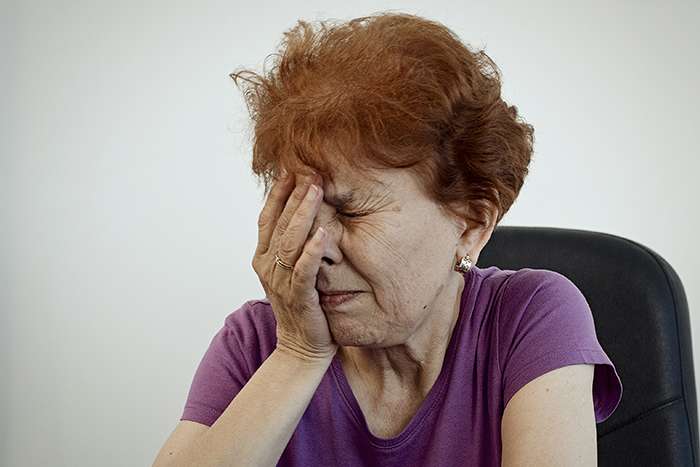
Let's say this is coming: if you have children, go and vaccinate them,” she remembers that she told officials. Say something, damn it! [...] It's not a priority. In many areas, we work as firefighters. We only do something after the fire goes off. ”
From January 2017, as the death toll in Romania reached 10, the government began to encourage parents to vaccinate their children. The health ministry decided a month earlier to provide additional injection MMR for nine months of babies as a temporary crisis measure.
But many appeared to family doctors just to be expelled.
Health ministry data shows that in April 2017, only 36 thousand MMR injections were available throughout the country -- four times less than the same month ago.
Angry doctors said the government was too late to order more stocks.
Dalida Mosorescu, a family doctor in the southern town of Craiova, said in July that she had been waiting for the handover of MMR injections for two months even though the health ministry had assured people that the stocks were available.
Some patients realized that we didn't,” she said. “It wasn't like I was taking my vaccine or injecting it to myself. But some were angry: hey, ma'am, I saw TV [that vaccines were available]. Why don't you give it to us?
Her experience was not unusual. The data provided by regional health authority in the Dolj district, where Craiova is the head centre, doctors received only 20 out of the 4,120 required injections in April. Other months also had extreme shortages.
A spokesperson for the Doyle region's Public Health Authority said it did not supply accurate information about the causes of shortages.
Meanwhile, a health ministry report shows that by the end of July, more than 224,000 children between the ages of nine months and nine had not been vaccinated against measles throughout the country. The report stresses that authorities had insufficient stock and low budgets to deal with the epidemic.
If you go to a neighborhood clinic and you want to vaccinate your child but you don't find a vaccine, you're less likely to go back next week,” says Robb Butler, Europe's program manager for preventable diseases in WHO.
Political instability also did not help. Since the end of 2015, Romania was ruled by a technocrat government following last prime minister's resignation due to public outrage by a murderous fire in a nightclub.
After parliamentary elections established a government led by the Social Democrats in January, the new Health Minister Florian Bodog criticised his technocrat predecessor, Vlad Voiculescu, that he left behind what he described as “catastrophic” in connection with the vaccine stock.
Voiculescu defended his job, saying the MMR stocks were at the right level when he left the ministry.
Bodog rejected a request for an interview, but the health ministry answered a list of questions. Ministry said there was no shortage of vaccines MMR between 2015 and 2017, but that supplementary injection of nine-month-old babies and campaigns to vaccinate unexplored children in the past years had caused pressure on supplies.
Former technocrat minister Voiculescu told BIRN that once the vaccine stock falls down a certain level, the ministry should act to get more. This is a management problem,” he said.
MMR stocks finally recovered, but only after the government signed a large new contract with a supplier in early July.
According to health ministry statistics, 338,445 doses were available across the country in July, compared to 116,193 in the same month a year ago and 227,250 in July 2015.
Angry Antiwaxers
The government is trying to pass a law to make mandatory vaccines. If the draft submitted to parliament is approved, it could enter into force in 2018.
The movement raised the vaccines. In August, about 200 people, dubbed anti-vaccinators, protested in Bucharest. One of the banners reads: “Forced value is forced death!” More protests followed in the autumn during parliamentary debates on the new law.
Some anti-vaccinators worry that the MMR could cause autism, a fear created by a search for a former British doctor, long-designed research.
For Ditta Depner, a known sceptic of vaccines in the town of Brasov, the science of vaccinology itself is wrong.
A mother of a boy and a girl both unexplored gives lessons on natural delivery and believes that illness has emotional causes.
This craziness with fruit and routing is simply the design of the pen”
-
Ditta Depner vaccine scheme
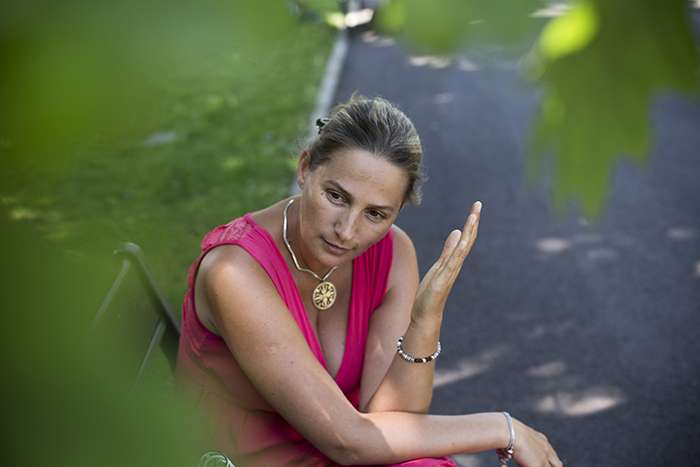
“Et means the greatest internal anger,” she said, while having a large silver medallion and sitting in a park.
Depner is convinced that the cases of fruit reported in Brasov were factories to scare people into vaccinating their children.
This measles and jimmy madness is simply a pencil's invention,” she said.
But although the anti-waste movement is noisy, their number does not generally explain the decline in vaccine rates over the past decade.
In February, the Centre for Control and Control of Communications Diseases in Romania conducted a study of over 150,000 children 18 months and more to understand why some of them had not been vaccinated.
Of the 3,690 children who were not properly immune, nearly one quarter of those studied had parents who opposed the vaccine, especially MMR injections.
This is slightly higher than the number of children found abroad at the time of the vaccine and less than 13.6 percent advised by doctors not to take the vaccine for medical reasons.
The largest group of all about 42 percent simply did not go to the doctor”, suggesting a possible indiscretion or lack of confidence in health services.
Most of the hospital-repressed patients in Brasov were from the Roma community 20km away in the village of Zizin, where local doctor Jan Badan estimates that half of the children born in recent years has not been vaccinated.
The village of Zizin is full of rough streets and ruined houses filled with garbage.
Some of Zizin's inhabitants had their own theories on the origins of measles.
Things like this come from dirt,” said Costantin Otellas, a local tattoo counselor who wasn't sure which of his nine children had been suspended or not.
A young man said he thought the virus was “, driven by an airplane”.
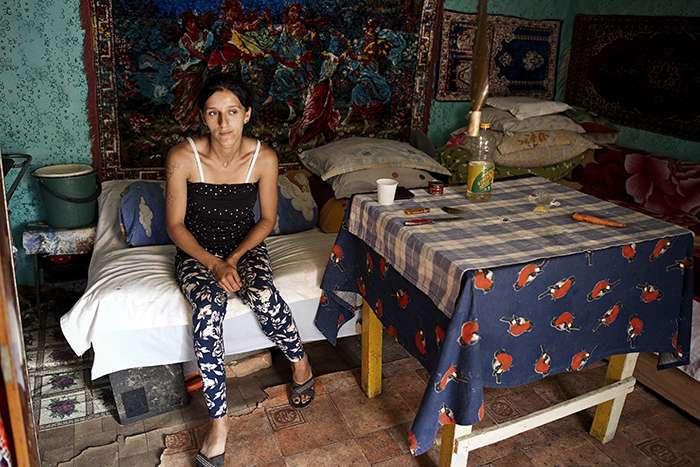
Marcela Taranu, 20, said her six-year-old unexplored daughter had taken fruit two weeks earlier. She said she had tried to vaccinate him earlier than the crisis hit but had been told that the vaccine was not available.
Speaking outside her cabin with a pig room, she expressed little confidence in the authorities' campaign for vaccination.
I don't understand that,” she said. Some of them did the vaccine, but the children from here in the Arian country again contracted the disease. ”
Only one case will suffice
Romania's failure to prevent the explosion allowed the distribution of the virus abroad, but only in countries where it found fertile ground, experts say.
Authorities in Hungary feared that measles could be distributed from the Romanian border earlier this year, when 29 cases were reported in the southeast.
A recent explosion in Serbia raised similar concerns, though authorities are more concerned about the cases coming from Kosovo, which has been facing the biggest outbreak of measles since the conflict ended in 1999.
Epidemiologist Predrag Kon from the Institute of Public Health in Belgrade said that although the virus found in Serbia had the same type of genius B3 as the one in Romania, authorities had no confirmation that these cases had come from the Romanian border.
According to the European Centre for Disease Prevention and Control, nine EU countries uncovered 104 fruit cases between them with a possible link to Romania in pre-February 2017: Austria, the Czech Republic, France, Germany, Ireland, Italy, Spain, Britain and Belgium.
“Just one chance to rekindle distribution, as the virus enters a community that is not protected,” says Remy Demestier, an infectious disease specialist at Marie Curie Hospital in the town of Sharlerua in Belgium.
You don't need illegal immigrants to bring your disease. Anyone can be the host of the pathogen agent [a virus or bacteria]”.
Sharlerua is one of the largest cities in the French-speaking region of Valonia in southern Belgium, was the centre of the fruit explosion that started last December, infecting almost 300 people.
The blast was traced to an unexplored Romanian man who lived in Belgium. He brought the disease back after visiting relatives in Romania, according to Carole Schirvel, head of the Unit for Supervising Valonia Infectious Diseases.
The virus quickly spread among relatives, friends, and neighbors.
Schirvel said many of the affected were from Roma communities from Romania or Serbia living in the region and falling into gaps in the Belgian health system because they traveled and did not keep their children in schools.
Unregistered with doctors, some were immediately sent to emergency services, infecting others. Only polio vaccine is mandatory in Belgium, although nurses in Valonia ask parents to give their children vaccines for other diseases, including measles.
“Brenda three or four weeks everything exploded,” said Schirvel.
You don't need an illegal migraine to bring your disease with you. Anyone can be the host of a pathogen agent”
Remy Demestier, infectious disease specialist
Even health - care workers got sick, making up 12 percent of the cases, although there were no fatal cases. The fruit has become so rare in Belgium that some doctors failed to identify it by delaying diagnosis.
Italy had the worst crop explosion after Romania, with 4,794 cases involving four deaths until early November this year.
Epidemiologist Adriana Pistol described a type of “virus exchange” in which measles originated in Italy, but then Romanians brought several cases back to Italy.
But for Giovanni Rezza, director of the Department of Infectious Diseases at Italy's National Institute of Public Health in Rome, the outbreak of the epidemic is a problem of prevention rather than migration.
The measles vaccine in Italy was at 87 percent in 2016, according to the health ministry. In the southern Tyrol region bordering Austria and Switzerland, the vaccine was only 67 percent.
The disease affected teenagers and adults disproportionally, reflecting low levels of vaccines in the years following the first presentation of the vaccine in Italy in 1976, according to the Italian Institute of Public Health.
Research by the institute also shows Italy's Roma population was not particularly affected, unlike the bombings of the past.
The big surprise was that health workers over 300 of them became ill.
A March study published by La Sapienza University in Rome showed that only 38 percent of the medical staff surveyed in and around Rome felt that measles should be imposed on public health workers.
The results angered Giuseppe La Torre, the person who conducted the study.
“If you are a pediatric, doctor or nurse involved in intensive care units, in an intensive neonatal care unit, you must be vaccinated for everything,” he said.
In response to the outbreak, the government adopted a new legislation, which passed to parliament in July, making it mandatory for children to be vaccinated against ten diseases, including measles, before starting school or kindergarten.
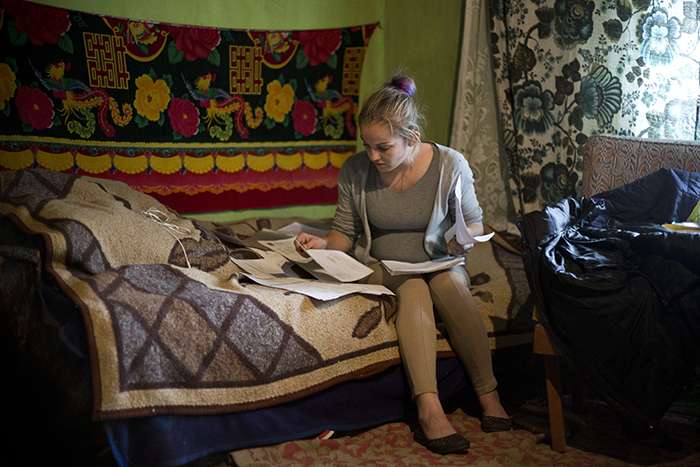
In Romania, the prospect of mandatory inoculation brings little comfort to Florentina Marcusan, the mother who lost her daughter, Carla, by measles.
At some sites she goes to Carla's grave at night with an inner desire to be with her. At other times she says that she prays that she might fall asleep and never wake up again.
She says that she learned about the dangers of measles only after it was too late.
If I didn't know, others should know. ”
Octavian Coman is a Bucharest-based free journalist. This article was established as part of the Balkan Bureau for Execent Journalism, supported by the Erste Foundation and the Open Society Foundations, in co-operation with the Balkan Investigative Journalial Network.