10 minutes ago
Sending demarcation to Arbitrazh can change the situation for liberalisation

Periskopi(9 years ago)
(9 years ago)Kosovo institutions are aware that without meeting the criteria there can be no visa liberalisation, but Kosovo is advancing in this direction, Kosovo Prime Minister Ramush Haradinaj has declared on Saturday. Haradinaj has said the issue of criteria set by the European Union, demarcation of the border with Montenegro, [...]
Kosovo institutions are aware that without meeting the criteria there can be no visa liberalisation, but Kosovo is advancing in this direction, Kosovo Prime Minister Ramush Haradinaj has declared on Saturday.
Haradinaj has said that the issue of the criteria set by the European Union -- the demarcation of the border with Montenegro -- could end in Arbitrazh, since, as he put it, in the Kosovo Assembly there is no vote for ratification of the current version agreement.
For demarcation as you know, it's not a sleeping theme, there's movement on this subject. As soon as we get the results, we move. It may end, I have said several times, in Arbitraz because the existing version does not have votes and there is no support believed to be wrong”.
So, the moment he agrees on Arbitraz, he should also be considered by the EU as a resolved issue. And I think that's what's going to happen in the not too distant future. I hold much hope that by the end of the year we will have news about visa liberalisation”, Haradinaj said until he paid a visit to the Ministry of Commerce.
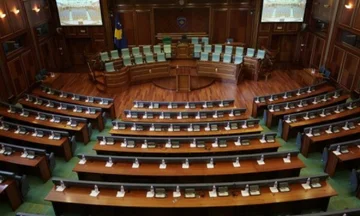
International ambition for marking the border line between Kosovo and Montenegro could be an option if Kosovo institutions ultimately fail to ratify the Agreement for Demarketing.
Labinot Greicevci, a legalist of the International Relations, has told Radio Free Europe that if the demarcation issue goes to Arbitrazh, there should be reconciliation of both states, Kosovo and Montenegro.
“I am not sure whether Montenegro will agree that the demarcation issue will be sent to Arbiraz, unless Prime Minister Haradinaj has non-public contacts with Montenegrin authorities, then the issue is different. Yes, as far as we currently know, from what Montenegrin authorities have claimed, I am skeptical that they will agree that the demarcation issue will go to the Court of Arbitrazhi”, Greicevci said.
According to him, if something like this eventually happens, things can change and create a new situation in reports between Kosovo and the EU on visa liberalisation.
“Hipotically say whether the demarcation issue ends up in the Arbitrazh Court, with the reconciliation of the two sides, then this would be a new situation and it would be possible for this condition, so ratification of demarcation with Montenegro to be negotiated even in relation to the European Union authorities to move forward with visa liberalisation even for Kosovo citizens. So, we're always talking about a hypothetical situation with very little options”, Greicevci said.
Kosovo President Hashim Thaci is taking a very severe course of political rhetoric in comparison with the European Union's approach to Kosovo, in particular to conditioning visa liberalisation and integration processes.
These days, Thaci has criticised the European Commission, labeling it unfair to set the condition for ratification of border demarcation with Montenegro with the visa liberalisation process for Kosovo.
According to him, such an approach to Brussels affects the fluctuation of confidence Kosovo citizens have in the European Commission.
Ratification of the agreement on demarcation with Montenegro remains the condition that must be met as soon as possible, so that Kosovo citizens can allow visa-free movement in the Schengen Zone, European Union officials who have visited Kosovo these days have declared.
Officials in the Government of Kosovo have told Radio Free Europe that the State Commission for Marking and Maintaining of Borders is working intensively and reviewing various documents, but have not yet submitted any reports to Government.
The work of this commission has focused on efforts to argue, reportedly, mistakes made in the work of the Parliamentary Commission, on which the Agreement for Demarcation of the Border with Montenegro was signed in 2015, but which from the Assembly of Kosovo has remained pre-represented.
Meanwhile, Montenegro's Assembly has ratified this agreement. The European Commission has conditioned Kosovo for visa liberalisation, namely ratification of the border demarcation agreement with Montenegro.