6 hours ago
One year since Astrit Dehar's death, investigations so far led nowhere

Periskopi(9 years ago)
(9 years ago)A year after Astrit Dehar's death continues to remain dilemma and uncertainty, the investigation is ahead of completion and a super-expertitis is expected to begin. Just the day the Government of Kosovo had brought the demarcation agreement with Montenegro to the country, the most important object in the Republic of Kosovo was hit with antitank. Regarding [...]
Just the day the Government of Kosovo had brought the demarcation agreement with Montenegro to the country, the most important object in the Republic of Kosovo was hit with antitank.
Regarding this attack, without a month to pass, Kosovo Police arrested 6 Vetevendosje Movement activists as suspects.
Exactly a year later, the demarcation agreement has not yet passed, 1 person has been released from suspicion of carrying out the attack, four others are being tried, while Astrit Dehari will never hear the trial epilogue for which he was arrested and sent to custody from where he emerged lifeless.
A year later, the circumstances in which Astrit Dehari died continue to remain mysteriously surrounded, investigations into his death have led nowhere, even though the prosecution released the version under which Astrit Dehari took his life.
Astrit's family and the subject he belonged to -- Vetevendosje Movement -- raised many questions about the investigation and pointed to power, even calling this death a murder.
The Agreement That Bringed the Conflict
Consistent Insistance of the then Coalition P The DK-LDK to proceed to the Kosovo Assembly with the agreement on demarcation of restrictions with Montenegro was accompanied by fierce opposition from the opposition, claiming that Kosovo loses a considerable part of the territory in favour of Montenegro.
Opposition opposition emerged with the deadlock of Kosovo's Parliament hearings through the siege of the folk, tear gas, whistles and protests that often resulted in material damage and MPs arrested for dropping tear gas.
However, according to Kosovo's Special Prosecutor, these were not the only methods to try to prevent the demarcation agreement. Without spending a month in the middle of August 4th of last year when it was attacked with antitank Assembly of Kosovo, the prosecution identified both Father and Arifin, Frasher Krasniqi, Astrit Deharin, Egzon Halitin, Adea Batush and Petrit Ademi as suspects.
On August 31st, 2016, the six suspects appeared before the judge of the preliminary procedure for appointing the security measure. While Frasher Krasniqi, Adea Batusha and Petit Ademi were released in house arrest, the detention measure was imposed on others.
While the prosecutor, his plea for detention, supported him with the claim that three of the accused had purchased the engine which was used for the attack in the Parliament and that the suspects could escape unless they were assigned custody, Astrit Dehari called “brockulla” the prosecutor's claims by inviting him to deal with “proton<3>, <x4zadnicadnica <5> of the demarcation, not with ridiculous processes with peaceful boys<6>
Death That Remains an enigma
It was the evening of November 5th last year when news of Astrid Dehar's death at the Prizren detention centre took place.
As the subject belonging to Astri called the death's early and tragic extinction at the age of 26 of Astrit, the first and counterconceptions of the police and prosecutor, since the first moments the shadows of doubt on the case were raised.
On a proposal for KALLXO.com, the commander of Prizren's Regional Police Nexmi Krasniqi, had said the cause of death was the drugs that Astriti had received.
“Based on the first information we've received from the director of the Prizren Paradition Centre, the victim used several medications and fell into a coma. On his way to the emergency room, he passed away. The emergency went without signs of life”, Krasniqi told KALLXO.com
Astri's death, suspicious, had also been called Prizren's chief prosecutor, Syla Hoxha. Hoxha even said that she noticed something else in Astri's lifeless body.
I saw the victim's body, scratched his neck and hands (but not blood). We have information that he used medication, but there's nothing in many that we can say right now. We're in expectation of forensics teams for safer details”, chief prosecutor Hoxha said.
These two statements were initial statements that preceded the launch of an investigation, which although he finally found that Astrit Dehar had caused his death, however, never dispelled the suspicion weighing on this death.
Calls for whitening this death began to rise as protests and marches were organized in memory of the late Astritis, which as the main appeal had the whiteening of the case.
Not many days after his death, the Ministry of Justice, although it announced that it has sponsored four pre-medigration centre officials in Prizren, the suspension reasoned with some negligence found by the Justice Ministry's Inspectorate.
In addition to the suspension of officials from the Centre for Pre-prisonment, the investigation into Astri's death did not cease despite calls from the Vetevendosje Movement to change the responsibility of the investigation.
Because of the police commander's incorrect information, because the chief prosecutor has been appointed to this position by the clan éproto> and because the prosecutor of the case is dependent on Sylla Hoxha, the Astrit Dehart family and VV are demanding that the investigation by this group” was the request of Vetevendosje and the Dehari family.
Despite opposition, following the late man's autopsy, Prizren chief prosecutor Syla Hoxha 15 days after his death publicly announced that according to the results of the autopsy made by legal medicine and where doctors proposed by the Dehari family had also been present, it turns out the deceased had committed suicide.
All evidence and examinations conducted during the investigation process demonstrate that this case was suicide. Death has resulted from mechanical asphyxibility, the closure of respiratory organs as a result of closing up upper breathing routes by a strong”, Hoxha had announced.
Then Prizren's chief prosecutor had also announced that 17 persons had been questioned in the case.
Constablishing the cause of death by legal medicine did not satisfy the Dehari family lawyer, Tome Gashi.
Gashi at a media conference had introduced the findings and findings of independent experts engaged by the family who, according to Gashi, had found it to be a murder, not a suicide.
“They [independent drugs] considered that we have to deal with injuries to the left arm and other parts of the body that have been the result of injuries from mechanical self-defense. That led to the conclusion that it was murder and not suicide”, Gashi said.
In order to reduce tensions and calm public opinion regarding the objective of investigations, the Kosovo Ministry of Justice also sought assistance from British Metropolitan Police “Scotland Yard”, but this request was rejected by the British.
The Dehar case also took place in Kosovo's “Life Commission”, where significant prison system problems were revealed in Kosovo.
The disturbing finding was that Prizren's Para-burging Center had no doctor to treat Astrit Deharin.
Although the controversy over Dehar's death as though it had faded, another death in custody brought Dehar's death back to the spotlight.
Also in custody, this time in Lipjan, a man who had shared the room with Astrit Deharin in custody in Prizren and the first man to find Astrit Deharin in his cell died.
Naser Makoli, suspected of a murder offense, had been transferred to the Lipjan Prosecution Centre after the case had occurred.
According to the Kosovo Corresponding Service's announcement, Makolli had been having continued health problems and was accepting medical treatment.
Doubt of this statement had raised the brother of the deceased who exclusively for the KALLXO.com had commented on his brother's death.
There's only been a cold complaint. He's never been sick in his life. Here's something we don't know. For 1 month 115 pounds [15 kg] he has now not had over 50 pounds [50 kg], the brother of the late man Naser Makoli said.
Among all these developments and severe clashes over the dawning of this case, it seems, the result of a super-expertase should be expected, which will soon take place.
With Justice Minister Abelard Tahiri's proposal, the Kosovo government allocated 50,000 euros for covering the cost of super-expertitis that would remove any doubts about the death of Astrit Dehar.
In December of last year, Parliament adopted a resolution under which Astrit Dehar's family could seek expertise from any EU or US country and the government remove all expenses.
Astrit Dehar's parents said in February of this year that they had been determined that Swiss experts from the University Law Medicine Centre in French Switzerland should conduct the expertise for Deharin.
The parallel process in court
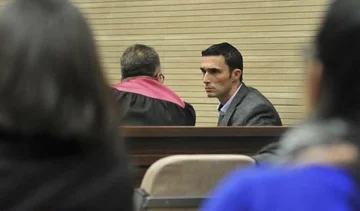
In parallel with the outside process, the harshest confrontations, and often mutual insults and accusations took place even in the judicial process, where it even began.
While investigations into suspects at Petrit Ademi had ceased and he was not involved in the Kosovo Special Prosecutor's Act in the absence of evidence linking him to the attack on the Kosovo Assembly, investigations into Astrit Dehar were completed with his death.
Unlike the two, Father and Arifi, Frasher Krasniqi, Adea Batusha and Egzon Haliti were involved in the indictment that rose against them.
The court process began in January this year, while the accused, who appear at the hearings wearing the inscription “Justice for Astriti”, consistently promote their innocence by calling the process mounted and political to them.
In the process already heard by all witnesses, clashes and insults between the accused and the prosecutor have been the characteristic element of several hearings.
All prosecution witnesses have already been heard, while the accused have chosen silence as an opportunity to grant the Code of Criminal Procedure instead of stating their protection for the charge weighing on them.
Even though the prosecutor of the Special Prosecutor at the trial at the 22-person hearing had said in the trial that the results of some photos sent to the United States will be powerful evidence to connect the accused to the attack on the Assembly at this year's 26 October session, he declared that by the results of the US Federal Investigation Bureau, and also by the results of DNA expertise and typography, the non-compacters charged with the attack on the Parliament of Kosovo.
However, the prosecutor said these are extenuating evidence and has a legal obligation to present, while citing evidence supporting the indictment, and here he cited the hearing process for the detention assignment, with which the prosecutor confirms that the accused, Father and Arifi, has acknowledged that the engine under which the attack was carried out in the Parliament was his.
All final claims by the prosecutor and the defense of the accused will be revealed at the session, where the final word of the parties -- this session is held on November 13th of this year.
A few days after that hearing will also take place in the court's judgment statement, where the court will determine whether the accused have attacked the Kosovo Parliament and Astrit Dehari will never know the epilogue of what he was accused of.
On the other hand, investigations into his death will probably be cleared by the super-expertosis funded by the Government of Kosovo, but perhaps public opinion allegations and theories regarding this case will never stop.
To illustrate, Adea Batusha's lawyer, Florije Drovija, in another trial, in which she defends an accused in connection with the murder of police officer Shemsi Gashi, requested psychiatric examination by the court to protect her.
“My spiritual and psychological state of protection from what I have experienced during his stay at the Prizren Paradition Centre [is grave] after the two persons with whom he shared the room have died under suspicious circumstances. He's seen blood and a bottled man in his throat”, Drawny said in session.