5 minutes ago
Anita Haradinaj: By Prime Minister I request visa liberalisation

Periskopi(9 years ago)
(9 years ago)Anita Haradinaj, wife of Kosovo Prime Minister Ramush Haradinaj, was invited to “Top show” where he spoke of their relationship in pairs, Ramush's arrest moments in Paris, for children, but not only. Anita Haradinaj's full interview at the Top Channel. How do you feel about the prime minister? Anita Haradinaj: With many responsibilities, with many [...]
Anita Haradinaj's full interview at the Top Channel.
How do you feel about the prime minister?
Anita Haradinaj: Too much responsibility, too much energy. Before you came to the studio, I was looking at some of your interviews. In one you say that you and Ramush have served a lot of prison together...Anita Haradinaj: Yeah, that's right.
Was it better when he was in prison?
Anita Haradinaj: No, no, no. It was a very difficult time for both of us. It has tremendous energy and potential, and it has been a shame that in these processes Kosovo has passed its potential has been untapped. Now Kosovo has a prime minister at the moment and the right place. It looks like prison brings luck, from prison became prime minister...Anita Haradinaj: Yes, he has brought us three wonderful children. I think Ramush will work well and leave the government when he decides when he gets tired. But he never cares.
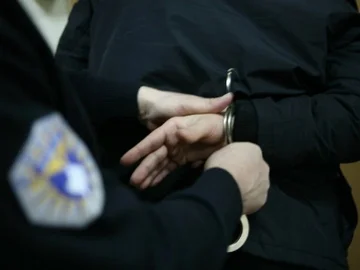
How did you experience the arrest of Paris?
Anita Haradinaj: Ramush has had several meetings with fellow countrymen, and since the children were vacations we decided to take a little break. My children and I were traveling together. When he came to the police to deliver the passports, we checked, we got our luggage. I left the airport, I was waiting but he was delaying. I called him, he didn't answer. Then only when I saw a cop come in with our passports and told me we could use him. We went to a neutral area, Ramush I met. That cop told us, ladies, get the kids out, if they're bored. We went outside, waiting. I called him, I asked him what had happened. Later he told me to pick up the kids and leave. A week passed, and when we returned the children asked why the police took him, etc.
Were you used to these stories or did you experience it worse?
Anita Haradinaj: It was the peak of all these stories, and I felt sorry for the kids that happened in a situation like this, because I would've camouflaged it better. I thank and the people of Kosovo that have manifested, the diaspora, the highest state institutions, all the Albanian people. But it does not thank Ramush's political friends, Kosovo institutions ...Anita Haradinaj: We've had a little creative government without enough energy to call me. Ramush is prime minister, he has succeeded. At home, who is the prime minister? I don't know, but I do things at home. We do dinners and chores at home. I'm a guy who doesn't stay. We have a daughter who helps us, but I don't think we're gonna need any more help. I usually make baby food. I sleep on election day.
But who brings more home, you or Ramush?
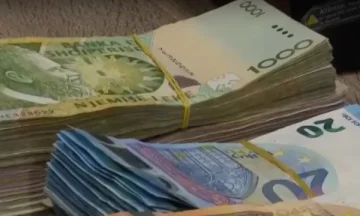
Anita Haradinaj: The same. I have my finances, I work, I have a marketing agency. Ramush has a salary of around 1,500 euros. When we combine budgets, it is enough that we live neither in Paris nor in London, but in Kosovo. Ramush is a man of custom or...Anita Haradinaj: He's very manly.
Do you fight?
Anita Haradinaj: We argue, but we don't fight. Find compromise. Were you obsessed with men with muscles, or did Ramush make exception? I have a little muscle too. But Ramush used to like me as a good guy.
Is it romantic?
Anita Haradinaj: Yeah, yeah. In Tirana I feel very good, as I grew up here, finished school, and have many friends and friends, keep in touch with them. When you go out for a nighttime, there's someone who wants a job. Unemployment is an interAlbanian problem and there are certainly such demands, but I do not take such responsibility. If I were in America or anywhere else I would have helped. Each of us must have his own will.What would you like from Ramush now that he's Prime Minister?
I would have wanted more security from the prime minister, economic development, visa liberalisation. Citizens not to remain blocked but to go abroad, to be able to move freely.