39 minutes ago
Poison alert at ʹ Sachı and Han of Elez, these are the alleged products

Periskopi(an hour ago)
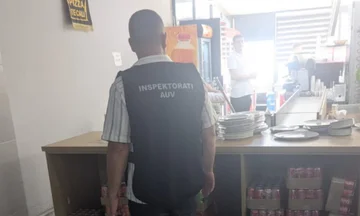
(an hour ago)The Food and Veterinary Agency, in response to cases reported on suspicion of poisoning citizens in Pristina and Elez's Han, has undertaken official emergency checks to support competent institutions in identifying potential causer and protecting public health.
According to the report, in the two locations, AUV veterinarian inspectors have conducted extraordinary inspections, during which hygieno-sanitary conditions have been checked, operators' self-control procedures, relevant documentation, traceables of raw products and materials, and official samples for microbiological laboratory tests are being taken, Periscope broadcast.
“In Pristina's case, samples have been taken from the white sos, milk and eggs, while mayonnaise samples from the service object have been taken in Han in Elesi. The samples have been sent to the Food and Veterinary Laboratory, while egg samples have been sent to the National Institute of Public Health of Kosovo, according to procedures defined”, the report said.
According to AUV, laboratory tests are under way. After completing them and valuing all the evidence gathered during official control, The AUV says it will compile the final report and inform the public of the results.
“If violations of legislation in force or risks to public health are found, administrative and legal measures against responsible operators” will be taken without delay.
AUV recalls that food safety is the first responsibility of food business operators.
“Every operator has the legal obligation to respect the terms of registration and authorisation of its activity, produce and market only safe consumer foods, implement self-control systems, ensure product detection and ensure precise, complete and compatible labels with the” legislation, the report says.
The AUV also calls on citizens to check the labeling, use schedule and conservation conditions during the purchase, as well as to provide transportation and conservation under the manufacturer's instructions.
“also, operators must rigorously respect conservation conditions, temperature defined for each product, and the constant functioning of the cooling chain, especially during summer months when high temperatures significantly increase the risk of food decay”.