2 minutes ago
Kosovo amid expensive electricity import and American gas bid
Periskopi(4 hours ago)
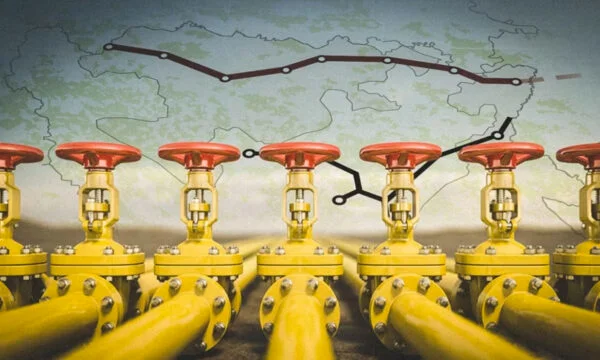
(4 hours ago)The United States of America is urging Kosovo to join American natural gas projects in the Balkans, considering this strategic issue for the country's energy and economic future. Kosovo has spent about 735m euros on energy imports in the past four years.
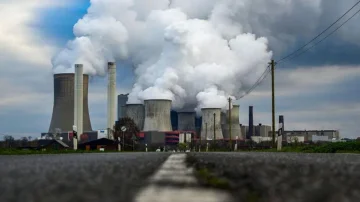
As Kosovo continues to face deep dependence on electricity imports and an energy system based almost entirely on coal, the United States of America is increasingly pushing Pristina towards American natural gas projects in the Balkans.
The message from Washington now seems clear, if Kosovo is delayed, it risks remaining outside the new regional energy map.
American Ambassador to Kosovo Annu Prattipati, in an opinion dedicated to energy security, has called for Kosovo to join regional American natural gas projects (LNG), warning that the country is entering into an ever greater dependence on energy import.
“in the foreseeable future, as prices and energy demands continue to rise, Kosovo will increasingly depend on its neighbours”.
According to the American ambassador to Kosovo, involvement in American gas projects would create diversification of the power supply and strengthen the economic partnership between Kosovo and the US.
In today's world, energy security is national security”, the American diplomat stressed.
Mrs. Prattipati has warned that Kosovo must move quickly, as the construction of gas infrastructure takes years and the region is already positioning itself for new energy projects. In this context, it has cited Gaz's Vertical Corridor, Croatia's floating LNG terminal and the link to the pipeline being built by Alexandrosis towards northern Macedonia.
The opinion also included the statement by the Special Envoy of the American Energy Department for Energy Integration, Joshua Volz, who has said that Kosovo's “energy system urgently needs modernisation and provides excellent opportunities for industry and American technology”.
Kosovo lags behind due to lack of clear gas stance
American pressure has joined Oda American Economics in Kosovo, which has demanded that gas infrastructure and access to US LNG be treated as national strategic priorities.
According to OECA, countries in the region are currently positioned within new energy corridors, while Kosovo risks staying outside a regional architecture that is becoming increasingly determining for economic competitiveness and long-term supply security.
“The challenge facing Kosovo is no longer the availability of supply, but the country's readiness to exploit it”.
OECH estimates that investment in infrastructure enabling access to LNG from the US would help reduce dependence on costly electricity imports, on easier integration of renewable energy, and on increasing competitiveness of Kosovo industries in the face of the European Union's increasingly strictest carbon emissions rules.
“Beyond strengthening energy security, gas access would help reduce dependence on costly electricity imports, offer greater flexibility for the integration of renewable energy sources and increase Kosovo industries' competitiveness at a time when European Union regulatory requirements, related to carbon emissions, are becoming more rigorous and, as such, affecting exporter”.
On the other hand, energy expert and director of the Institute for Development Policy - INDEP, Burim Ejupi, says Kosovo is lagging behind due to the lack of a clear political position on gas.
The easiest mode of energy transition is through gas, as during the burning, it names about twice as much carbon dioxide. The gas power plant is also active very quickly and has a controlled production capacity of”.
He has stressed that Kosovo continues to have problems with energy balance and that a gas thermal power plant would be very necessary, especially given the million fines the country has paid in recent years on the issue.
According to Mr. Ejupi, the basic land infrastructure for gas has existed even earlier.
The former Yugoslavia's “has existed from Obilic to Skopje and from Obilic to Mitrovica. As far as land infrastructure is concerned, Kosovo does not need expropriations, because they already exist”.
Government, with its own idea of gas, not America
An Institute Study I The NDEP, published in 2022, had found that natural gas can play an important role in addressing Kosovo's “trillation”: designation, supply security and affordable energy.
That same year, a study funded by the European Investment Bank had stressed that Kosovo could be supplied with gas through LNG terminals in Greece and Croatia.
However, the Kosovo government has maintained a more reserved approach to gas. In 2021, the Kurti Government had refused the US-backed project through the MCC, for linking Kosovo to the regional gas network through Northern Macedonia.
Meanwhile, incumbent Economy Minister Artane Rizvanolli expressed readiness for Kosovo to be supplied with liquid American gas in February 2026.
Meanwhile, incumbent Prime Minister Albin Kurti has already signalled another approach, shifting the focus from the construction of gas infrastructure in Kosovo towards co-investment at the energy terminal in Vlora.
The Republic of Kosovo is willing to invest in the Terminal in Vlora. There can be liquid gas from outside, converted into electricity and the 400 kilovolt intervention we have with Albania to bring to us”, stated Z. Kurt, reports Monitor, broadcast Periscope.
He has added that direct import of gas in Kosovo is not his government's favorite option.
We don't need to bring it to Kosovo. We bring it to Vlora and Vlora we get”.
Mr. Kurti has also mentioned the idea of “gasing local coal”, declaring that Kosovo is more interested in using coal found on the surface than in importing gas directly.
The energy strategy, 20225031, envisions the possibility that Kosovo will be linked to future regional gas networks, while coal will gradually be removed from use by 2050.
“ (Cash) Investment in natural-gas thermal power plants, for covering the system's basic demand and/or for flexibility in Albania, but also in northern Macedonia and Greece, will be considered in order to implement within the deadline of this” strategy, the document says.
Kosovo has no access to the sea, which makes it more difficult to build gas infrastructure without co-operation with neighbouring countries. One of the main options remains connection with infrastructure in Albania or Greece through gas pipeline TAP or the liquid gas terminal in Vlora. /Periscope