2 minutes ago
France closes nuclear reactors amid record heat wave in Europe
Periskopi(2 hours ago)
(2 hours ago)EDF cites environmental regulations protecting river ecosystems, while increasing water temperatures forces production reductions in countries in Sena and Ron.
France's State Energy Giant The EDF has temporarily closed two nuclear reactors as an environmental precaution, while the country faces a record heat wave that has already become deadly. At least 18 heat-related deaths were confirmed in France since Monday, and at least 40 people have been killed since June 18th.
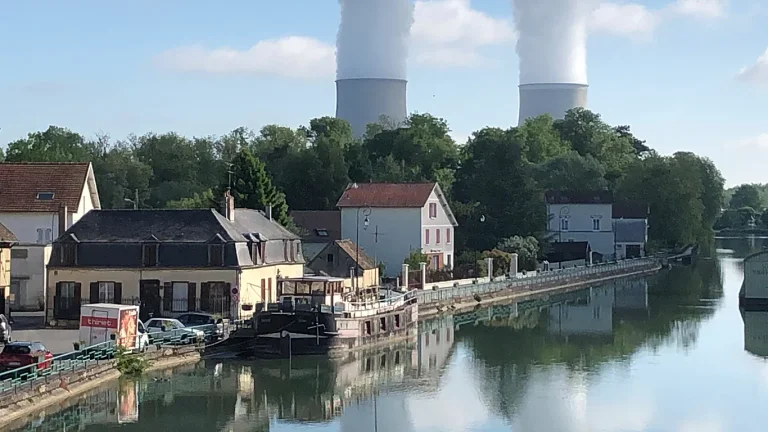
Reactors taken out of office Thursday are at the Nogent-sur-Seine plant on the Seine River in northern Paris and at the Bugey plant in Ron near Lyons in the southeast. Both of the closures were caused by rising river temperatures, which EDF is required by law to monitor to avoid water discharge that could harm water ecosystems.
Nuclear plants use river water to cool their reactors before releasing it back into the water canal, usually at temperatures ranging from several tenths of a degree to a few degrees warmer than when it was withdrawn, depending on the country. During heat waves, as rivers warm naturally, operators must reduce or reduce production to stay within the limits of the legalised discharge temperature.
Nogent-sur-Seine had already reduced production to one of its reactors earlier this week “to limit the rise of temperature between the water drawn by Sena and the water being discharged back into it, thus protecting the life of plants and water animals”, EDF said.
A reactor at the Golfach plant on the Garonne River in southwestern France was also taken out on Monday, with reduced production in a number of other countries in the entire 57 EDF reactors, which together constituted nearly 70% of France's electricity production last year.
Despite blackouts, French power grid operator RTE said on Wednesday that “France has sufficient generation capacity to meet the demand for electricity, including in the event of disruptions in some production facilities”.
France has placed more than half of its 96 departments under red alert for life, appealing to citizens avoid direct sunlight and execute absolute “ ” as the heat wave rises. Météo-French reported that Tuesday, June 23, was the hottest day recorded since the beginning of the measurements in 1947.
The crisis is not limited to France. Germany, Spain, Portugal and Switzerland are also predicting scorching temperatures that are beginning to halt daily life, with hundreds of closed or closed schools early and railway services in cities, including Paris and Brussels, reduced to reducing the risk of addiction.
This is the third heat wave in Europe this year, with forecasters warning that temperatures could reach 43 °C in the Mediterranean. Energy technology is already visible: in the peak days of the June and July last year heat wave, daily energy demand increased by 14%, leading to an increase of two to triple daily energy prices.
Scientists say this pattern is getting worse. According to an important new study, parts of Europe are experiencing up to 40 extra days of extreme heat stress compared to the 1970s. /Periscope/