19 minutes ago
Two million euros for airlines: These are airline companies that will benefit
Periskopi(an hour ago)
(an hour ago)About two weeks before the parliamentary elections, the incumbent Kosovo Government allocated 2m euros for subsidisation of airlines operating in diaspora-related destinations. The decision was criticised as trying to influence the elections, meanwhile, it remains unclear how the decision could affect the price of tickets or increased tourism.
Under a move called “Support of Mergita”, Kosovo's incumbent Government decided on May 26th for the support of airline companies that connect the country to destinations from where the country's diaspora mostly comes from.
The incumbent Prime Minister, Albin Kurti, said the decision was taken “in the face of the danger that part of flights planned during July and August be cancelled due to increased fuel costs”.
“The annulment of summer months would mean that a considerable number of fellow countrymen could not come, as they usually come in July and August. And that would be bad for them and their families, but it would be fatal for the country's economy”, he said. Kurti in a Facebook post on May 27.
Opposition parties, but civil society, criticised the decision made before the June 7th early parliamentary elections as an attempt to influence voters from the diaspora, who in previous elections voted in Crowd Vetevendosje movement.
From the Kosovo Democratic Institute (KDI) described the move as the electoral motive intervention.
Such an approach is turning the electoral race into a completely uneven process, where the ruling party creates supremacy through public money and institutional advantage, not through a fair political race”, KDI researcher Eugen Cakoli wrote on Facebook on May 26th.
Kurti, on the other hand, responded to these criticisms, saying the move has nothing to do with the elections, since, according to him, it will affect the post-election period, or even all summer months.
So this is not about buying tickets or coming organised for elections, as expected by several districts of the opposition bloc. This is a supportive scheme, like most countries in the region -- ”, Kurti wrote on Facebook.
How will the scheme work?
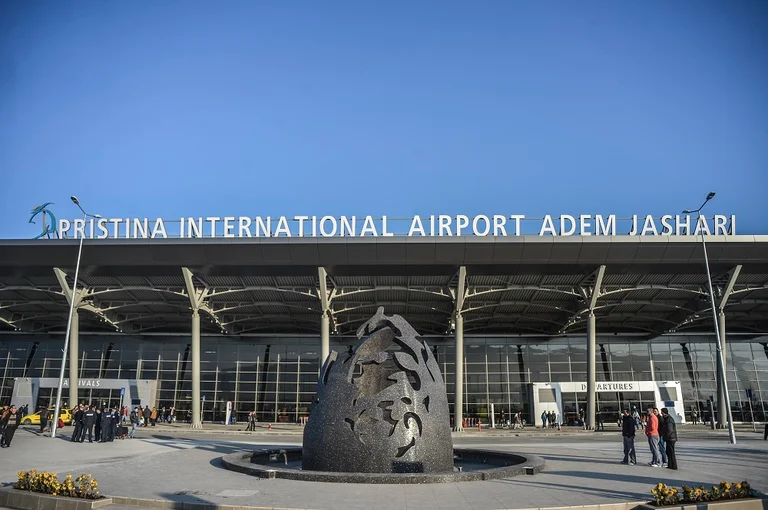
The complete details of the allocation of funds have not yet been made public in the form of the document, but according to the Government's public declarations, airlines will be able to apply for these funds if they are preserved or increased operations by Pristina International Airport “Adem Jashari”.
Acting Finance Minister Iron Murati in an interview for television Channel 10, said airlines would benefit from 3 euros per passenger at the summer season of flights.
To benefit these funds, companies must meet certain criteria. According to Murati, the measure applies to airlines if “maintains flight frequency for over 85 percent of the 2026” plan.
Also, according to Murati, each flight should have over 80 percent of the seats filled.
The 3 euro fee, according to him, will be made in co-operation with Pristina Airport. Therefore, the Government will pay 2.10 euros, while the rest of the airport, Murati said.
He confirmed that airline companies often reduce the number of flights when facing cost increases, uniting travellers in fewer lines, and that the move aims to prevent this.
Murati argued this would affect the number of passengers at Pristina Airport and, therefore, in revenues generating for the state of Kosovo.
However, it did not become known which lines in particular would be divided, and how much of the 2m-euro fund could end up with individual operators.
Germany, Switzerland considered among the top destinations from Coming Kosovo diaspora. According to data from the Kosovo Civil Aviation Authority (AAC), flights to Kosovo during 2025 are mostly launched by these two Western states.
What companies can benefit?
At Pristina International Airport, planes currently arrive, including GP Aviation, EasyJet, Eurowings, Edelweiss, Chair Airlines, Austrian Airlines, Lufthansa, Turkish Airlines and Wizz Air.
So far, neither of the companies has publicly confirmed whether to apply for subsidies.
Radio Free Europe (REL) contacted some of them to see if they were informed about the programme.
GP Aviation, one of the operators that has expanded the network of destinations from Pristina in recent years, including Germany and Switzerland, did not answer REL questions about the scheme.
In 2025, according to AAC statistics, GP Aviation was the company that had the most passenger traffic at Pristina Airport. About 1.4 million.
Swiss company Edelweiss said it has not yet been announced by Kosovo authorities on the subsidies programme.
We have not yet been informed of this programme, nor have we been contacted by the Government. Therefore, we cannot answer your questions”, says the company's response to RELU.
Meanwhile, Cair Airlines, also Swiss company, refused to comment.
“
Air companies did not even answer questions about whether they would cancel flights this summer and how this could affect the danger.
The number of passengers from flights to Pristina Airport has gone up, adding annually, except 2020, when COVIDD-19's pandemic broke out.
Pristina Airport did not answer questions as to whether there has been indicators that there is expected to be a decrease in the number of flights or highlights this year.
Popular Practices in Europe
Subvention of airlines is not unusual in Europe.
In recent years countries such as Italy, Slovenia, Sweden and Norway have used similar schemes to preserve airlines, promote tourism, or support regions that depend on air transport.
In 2024, Italy A 30m-euro scheme approved for opening new lines towards Sardinja, while another programme of 120m euros It was used to boost air ties with the Kalabria region.
In the Balkans, North Macedonia has for several years used subvention schemes by airline companies to increase flights and promote tourism.
However, not all agree that aviation subsidies are the best solution.
The aviation subsidies debate is also taking place at the level of the European Union (BE).
In May 2026, the European Commission proposed Reviewing the rules for state assistance in the air sector, limiting support for airports, and proposing gradual removal of aid to open new lines, with the argument that “financial risk must be carried by airline companies themselves”.
The European Transport & Environment Organisation (T&E), which deals with transport and climate policies, argues that subsidies for airports and airlines “are not the most efficient use of public money for regional development”.
In a document handed down during a review of EU regulations for state aid in aviation which T&E has shared with REL ) the organisation estimated that any revision allowing such assistance to continue should ensure full compliance with the EU target for climate “neutrality and the European Green Agreement”.
For example, strict green conditioning should be attached to any support given [subvention] ”, the T&E document says.