6 minutes ago
Eternal Prison: Are you stopping crime?
Periskopi(24 days ago)
(24 days ago)No judicial decision in the world brings Liridon” back to life...
This sentence, uttered by her brother Leonard Ademiy, sets the line of justice: She may punish, but she cannot restore life.
However, in a country where long-term pain remains unanswered, the decision of life imprisonment for murderers and Liridona Adrimaj is seen as a small but important step towards some kind of justice.
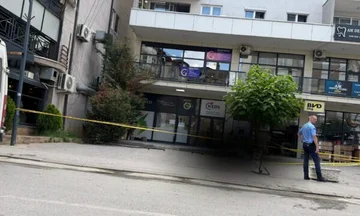
On the evening of November 29, 2023, on a street in the village of Brnica in Pristina, Liridona Ademiaj was killed in the presence of her two children.
The case shocked public opinion and became a symbol of extreme violence and demand for justice.
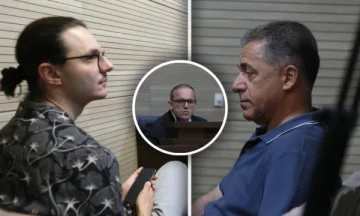
On April 21, 2026, the Constitutional Court in Pristina convicted three people of this murder: her husband, Naim Murseli, as well as Granit Plav and Cocall Concert.
The first two were sentenced to life imprisonment, while the third to 30 years in prison.
“As low as the family's suffering has eased”, Ademiaj tells Radio Free Europe.
But he knows the process does not end here. The defence has warned complaints, and the case is expected to pass to the Court of Appeals and the Supreme One.
We hope that even the highest instance confirms this decision. Only such sentences can stop the killing of our mothers and sisters”, Ademiaj says.
Severe Punishment - Not Always Final
Eternal imprisonment is the most severe punishment in Kosovo's penal system.
Since the introduction of the Criminal Code in 2013, it has been pronounced on 13 occasions.
According to the Kosovo Judiciary Council data (KGJK), provided by Radio Free Europe, in the overwhelming majority ʹ 12 cases serious killings, while only one case is linked to terrorism.
The law envisions this sentence for 36 criminal acts committed under serious circumstances, including genocide, crimes against humanity and treason against the state.
However, the practice shows that the road to a final decision is long and uncertain.
The first life sentence, pronounced in 2015 for serious murder, was later softened by the Court of Appeals and Supreme in 25, respectively, 22 years in prison.
According to Flamur Kabashi from the Kosovo Institute for Justice (IKD), the use of this sentence has increased in recent years.
After our monitoring, we've recently seen an increase in life sentence. But decisions only take a sharp turn when confirmed by the second instance”, Kabashi tells Radio Free Europe.
In some cases more than one person is sentenced to life imprisonment in the same process.
Three such sentences were pronounced during the past year alone.
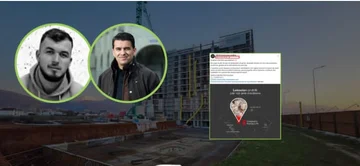
In May 2025, the Constitutional Court in Pristina sentenced the brothers to life imprisonment, and Nexhat Vlasaliu, charged with killing businessman Bedri Rexhepi.
The verdict was also confirmed by the Court of Appeals in April of this year.
This same April, the Constitutional Court in Pristina sentenced Naim Mursel and Granit Plav for killing Liridona Ademiaj to life in prison.
In late April, the Constitutional Court sentenced Blagoje Spasojevich and Dusan Maksimovich to serve the terrorist work, linked to violating Kosovo's constitutional order and security.
Justice Under Pressure and Dilemma
Despite these developments, former Supreme Court Chairman Fejzullah Hasani estimates that life imprisonment has rarely taken its final shape.
“for today, only one case can be considered cut off -- the case of Dardan Krivaqas”, he says, adding that even this case remains legally open to the challenge.
Dardan Krivaqa was found guilty of the murder of Marigona Osmani in 2021, on all three steps of the judicial system.
The Supreme Court has confirmed the verdict, however, according to the procedure, the case may still be the object of a demand for protection of legitimacy.
This confirms for Radio Free Europe and Krivaq's defence lawyer, Skender Musa, who says such a request is being prepared.
“We are preparing the request for protection of legitimacy, which is primarily related to the sentence of life imprisonment, pronounced by the Court of the First Scale and confirmed by the second and Supreme court”, Musa explains.
He says procedures in legal expertise have been violated during the process, and adds that if the Supreme Court does not turn the case into retrial, defence will be addressed by the Constitutional Court.
Kabashi, from the IKD, explains that the demand for protection of legitimacy constitutes an extraordinary instance, which may affect changing the final decision if legal violations are found.
The same judicial instance can be exploited by the Vladsaliu”, he says.
In other cases, life sentences have been eased by the Court of Appeals, or Supreme Court, by replacing them with sentences of up to 35 years in prison.
Of 13 cases registered with life imprisonment, only one has ended with the release of the accused.
In April 2023, the Supreme Court acquitted Naser Pajazit, who was originally sentenced to life in prison for the murder of Donjet Pajazit in 2015.
Will Life in Prison Stop Crime?
In theory, any criminal sentence is aimed at preventing both the individual and society as a whole. But, in practice, the effectiveness of life imprisonment remains controversial.
Kosovo Police data, provided by Radio Free Europe, shows that 411 murders of all kinds have been recorded between 2013 and 2025. If the years leading up to this sentence are involved, the total number of killings in 25 years totals 1,558.
Just one day last week, two murders were reported in Pristina, one in South Mitrovica.
For experts, these figures show no clear preventative effect.
The fact that in the past five years such sentences have increased does not necessarily testify to the preventative effect. The perpetrators continue to commit serious crimes”, Kabashi says.
Hasan shares the same position: “I have not noticed any concrete effect from this sentence in practice”.
The Effect of Public Opinion
In the courtrooms, decisions should depend solely on evidence and law. Outside, however, another voice often becomes undeniable - public opinion.
Former People's Avocacy, Hilmi Jashar, says that cases that receive great media and public attention often create a kind of silent pressure even on the justice system.
We have the impression that whenever such cases dominate public opinion, this is reflected in the approach of the judicial system. There is increased concern and special attention to cases of public interest. Thus, it should not be”, Jashar says, stressing that courts should act independently and impartially.
In the same line, former Supreme Court Chairman Fyzullah Hasani acknowledges that the influence of public opinion and media is not always avoidable.
“I am convinced that in some cases there was an impact of media and public opinion”, he says, but adds that this does not necessarily imply injustice in decision making.
For lawyer Musa, this pressure is mostly felt on the defence side. He says that processes for serious criminal acts, especially those that could end up in life imprisonment, take place in an atmosphere that is burdened not only by law but also by social.
In the first place, the lawyer has to fight himself. It must avoid any subjective element and focus only on evidence, legal provisions and legal doctrine. It's extremely challenging”, he points out.
In addition to public pressure, these processes are marked by their duration.
According to Musa, the cases differ in complexity, but on average a murder process that could end up in life imprisonment last between 12 and 36 months. While completing all procedures, including possible complaints and retrials, could last up to five years.
A System That Requires More Than Punishment
Beyond the debate on punishment, the problem seems to be deeper. According to Jashar, the lack of harmonisation of punitive policies creates inequality and undermines judicial security.
In practice, various courts may issue various sentences for similar acts, undermining citizens' trust in justice.
In a normal state, these situations do not dare happen because they threaten one of the fundamental principles of the justice system, which concerns what is known as judicial security”, says Jashar.
Hasan, on the other hand, stresses that the fight against crime cannot only be based on severe penalties.
Other factors -- social, economic, and educational -- play an equally important role in preventing crime.
Legal Framework
Kosovo's Penal Code predicts that life imprisonment cannot be pronounced to persons under the age of 21 at the moment of performing the work.
Also, convicted persons thereby earn the right to bail after at least 30 years of imprisonment.
To date, no convict has used that right, mainly for procedural and time reasons.
And as the system continues to seek the balance between punishment and prevention, the Ademij family remains with a constant reality.
The children of Liridona will no longer see their mother”, says Leonard Ademiaj, writes RELEL, broadcast Periscope.