12 minutes ago
Who with? Clear Attitudes but Markets Still Far Away
Periskopi(a day ago)
(a day ago)After a year and a half institutional instability, the June 7th elections have opened a new political phase in Kosovo, but not immediately the process of forming institutions.
For the latter, political parties signal that time will still be needed.
The Vetevendosje (LVV) movement, which has emerged the first political force, says there will be no formal negotiations for possible coalitions before the outcome of even counting candidates' votes for MPs.
The “is important to finally know what the composition of the new Parliament, of the 11th legislature”, tells Radio Free Europe Arberie Nagavci from this party.
At this stage, only the Alliance for the Future of Kosovo (AAK) expresses clear stance on a coalition without the LVV, while other political subjects leave open the possibility of co-operation between them.
Recognisors of political developments estimate that delays in starting negotiations could affect the functioning of new institutions.
According to them, they can also be done before the official certificate of results, as the division of political forces, to a large extent, is already clear.
When are the results expected?
The Central Election Commission has announced that the final results are expected to be announced on 26 June, while their Certificate is scheduled to be completed by 6 July.
As the data on the CEC website currently stands, the Vetevendosje Movement has emerged first with 42.47 per cent of the vote, followed by the Democratic Party of Kosovo (PDK) with 21.43 per cent, the Democratic League of Kosovo (LDK) with 16.96 per cent, the Alliance for the Future of Kosovo with 7.51 per cent and the Serbian List with 6.76 per cent.
By 1500 on June 11th, nearly 90 per cent of the votes of candidates for MPs have been counted, while diaspora votes, conditional ones and persons with special needs have not yet been counted.
The ruling party or coalition needs at least 61 parliamentary mandates of 120 as long as Kosovo's Assembly.
LVV: Talks Only Behind the Full Mirror of the Parliament
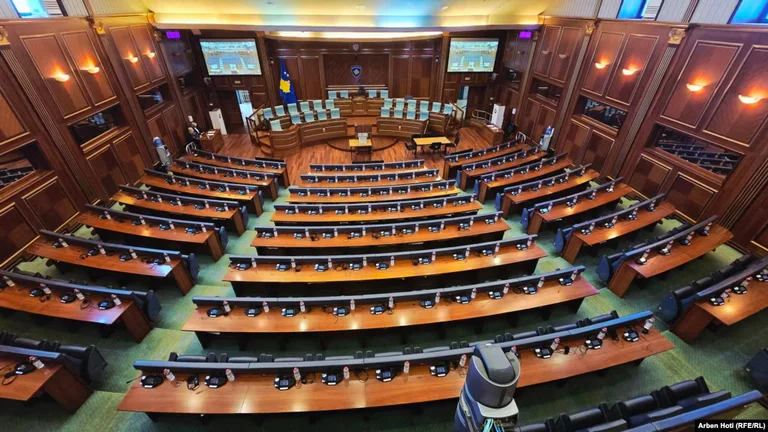
From the Vetevendosje Movement emphasises that any formal discussion about forming the new Kosovo government should wait for the outcome of the vote counting for MPs to have a full mirror of the composition of the Assembly.
Arberie Nagavci, former head of the LVV parliamentary group and currently candidate for deputy, does not rule out the possibility of informal contacts with other parties, but stresses that serious negotiations can only begin after the counting process is completed.
According to her, it is necessary to know the final composition of the Assembly, including MPs from non-partisan communities, before any political agreement is made.
It is important to have the composition of the new legislature clear, and then continue with forming the Government and, without wasting time, even with the election of president or president”, Nagavci tells Radio Free Europe.
The failure of the Parliament to elect the new president of the state in line with a Constitutional Court decision led automatically to its distribution of midnight on April 28th and to hold new elections on June 7th.
The political system in Kosovo is such that a number of important decisions, including the election of the president, require a two-thirds majority in the Assembly.
This makes co-operation between parties necessary and achieving political agreements.
Nagavci says a unifying president, who is not close to political parties, would be a favourable solution to institutional stability.
PDK: Agreements must be reached before the constitution is binding
The Democratic Party of Kosovo expresses readiness for co-operation with other political subjects and did not put red lines in relation to any party - including Vetevendosje Movement - in the function of reaching an eventual agreement on the formation of new institutions.
Free Europe radio failed to get in touch with the leaders of this party to take a detailed stance on how they view such an agreement.
But, president of The PDK, Bedri Hamza, told the media on June 8th that his party is open to talks with all political subjects, without excluding even the LVV, with which, in the past, there have been pronounced political differences and harsh rhetoric.
I think that to have quick and stable institutions, there should be political agreements right now, still without the start of the constitution, forming the Government and then electing President”, Hamza said.
He added that his preference would be to establish a government by parties that in the past legislature have been in opposition.
LDK: Delay undermines political process
In the Democratic League of Kosovo, they say they are ready for co-operation and agreement for new institutions, but, according to them, the initiative should come from the winning party, LVV.
LDK Deputy Chairman Lutfi Haziri says the talks should start immediately and that there is no reason to expect the certificate of results.
I call any delay, every day lost and every day short of co-operation. It's a bad signal”, Haziri says.
He adds that all political subjects, including the LDK, should understand that interparty co-operation is not only a matter of political will, but also part of the constitutional spirit.
The moment the LDK sits at the table for talks, it will be ready to discuss both the president's election and the formation of the Government as the” institution, Haziri points out.
In the June 7th elections, the LDK has competed with Vjosa Osmani as presidential candidate and Lumir Abdixhiku as candidate for prime minister.
After announcing the first results, Osmani has said that the Vetevendosje Movement has no reason to refuse its candidacy, but, in a Facebook post next day, he wrote that its name “as was neither, nor would it be an obstacle to the creation of” institutions.
AAK: Without LVV in Government and pending certificate
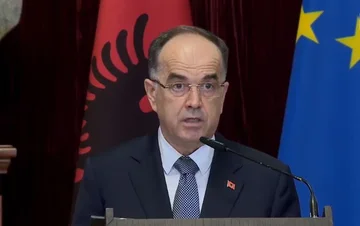
The Alliance for the Future of Kosovo takes a more firm stance, stating it will not enter into agreement with Vetevendosje Movement.
AAK Chairman Ardian Gjini says that initially, the process of certificate results must be completed, and then options for forming new institutions are discussed.
“Must be expected and then see how we will move further”, he says, adding that the AAK prefers a coalition of parties that have so far been in opposition.
According to him, the LVV must switch to the opposition, due to “damage” caused to the country.
The AAK's criticism of the LVV government has been ongoing - whether for economic stagnation or for breaking relations with international allies - but they have not been ignored by the ruling party.
Without political agreement, country risks new elections
Analyst and Professor of Journalism at the University of Pristina, Nundman Pacarizi, estimates that the launch of official talks between political subjects for reaching an agreement that would lead to consolidation of new institutions should not necessarily expect the Certificate of election results.
However, he does not expect the talks to begin without a clearer mirror of the new composition of the Assembly, which will be completed after counting all votes - including diaspora ones, on condition and persons with special needs, totaling about 130 thousand.
The diaspora's “Votates may change the number of deputies, but not the ranking of political parties”, says Pajarizi.
According to him, political parties expect these results to make final calculations, especially the Vetevendosje Movement as the first force.
He says that if the LVV provides over 50 deputies, it would significantly change the political balance, enabling the formation of institutions with non-Serb communities, which have ten seats in the Assembly, with no major difficulties.
We'll see how serious LV is for co-operation when we approach forming the government. If it goes without a coalition and without agreement in the package for the Speaker of the Parliament, the prime minister and president, it is very difficult to secure 80 votes for President”, he points out.
If the president is not elected, Pajarizi warns of the possibility of new elections, while the political race among parties sees him oriented towards the prime minister's post.
He estimates that the Constitutional Court's decisions thus far leave no room for deliberate procrastination of political processes, but does not rule out the possibility of using procedure vacuums for political calculations.
“issues as the order of electing institutions can be misused. Currently, whether the government or the president should be elected after the Parliament's institution. But any action without an agreement on the package for key positions could lead the country to the election”, says Pajarizi.
“cule console” as the legal excuse for procrastination
If political parties clash around the formation order of institutions - whether the Government or the president should be elected first - such debate can be used as “extinguishable cause” for sending the issue to the Constitutional Court, estimates Volnet Bugakku, a legal expert at the Kosovo Democratic Institute.
According to him, such an approach would have no real legal basis and would serve primarily for procrastinating processes and gaining time from political subjects.
To have a constitutional case, the “must have a decision or procedure violations in the Parliament. I don't believe that the Court would accept it as a question of whether the government or President” should be elected first, Bugakku says of Radio Free Europe.
He adds that space for interpretation could be created only if political subjects fail to meet the deadline for the constitutionalisation of the Assembly, which should be completed within 30 days of the certificate of results.
In such a case, he says, situations may arise that require institutional clarification.
And, to avoid a new cycle of institutional blockades and political consequences, he says the quickest and most functional solution remains reaching a political agreement between parties.
The June 7th elections were third in less than a year and a half, following regular elections on February 9th 2025 and another early process on December 28th.
The first elections failed to produce functional governments, while the second -- even though they secured Vetevendosje Movement over 51 per cent of the vote -- failed to lead to agreement on the president's election.