 2 minutes ago
These are companies that are winning billions from the war in Iran.

Periskopi(2 months ago)
(2 months ago)As families around the world are facing US war costs in Iran, some companies are marking big profits.
The uncertainty caused by the conflict and effective closure of Iran's Hormuz Strait is increasing the cost of living and is burdening the budgets of companies, families and governments.
But while some have been pushed to the border, others whose businesses benefit in wartime or energy price fluctuations have registered record profits, reports BBC, broadcast Periscope.
The following are some of the sectors and companies that are gaining billions as the conflict in the Middle East continues:
1. Oil and Gas
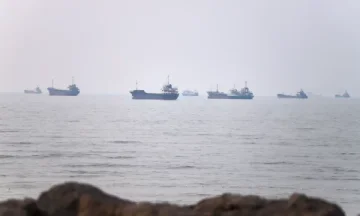
The greatest economic impact of the war so far has been the rising energy prices. About a fifth of the world's oil and gas is transported through the Strait of Hormuz, but these shipments have effectively been halted in late February.
This has caused major fluctuations in energy markets, favouring some of the world's largest oil and gas companies.
The main beneficiaries have been European oil giants, who also have trading sectors and have benefited from severe price change.
The BP profits, the oils company, doubled to $3.2 billion for the first three months of the year, following an extraordinary “performance” in its trading division.
2. Large Banks
Some of the largest banks have also seen increased profits during the war in Iran.
JPMorgan Chase's trading branch realised record $11.6 billion in the first three months of 2026, helping the bank reach its second largest quarterly profit ever.
In the group of “Big Six” banks including Bank of America, Morgan Stanley, Citigroup, Goldman Sachs and Wells Fargo (U.S.) profits rose significantly in the first quarter of the year.
In total, banks reported $47.7 billion in profits for the first three months of 2026.
The high trading allegations have benefited investment banks, especially Morgan Stanley and Goldman Sachs, said Susannah Streeter, the main investment strategy at Weekly Club.
3. Protection
One of the most immediate beneficiaries in any conflict is the defence sector, according to Emily Savicz, senior analyst at RSM UK.
“The conflict has highlighted gaps in air defence capacities, accelerating investments in missile defence, anti-dance systems and military equipment in Europe and the US”, she told the BBC.
4. Renewable Energy
The conflict has also stressed the need to reduce dependence on fossil fuels, Streeter said.
This has significantly raised interest in the renewable energy sector”, even in the US, where the Trump administration has promoted the slogan “drill, baby, Dril” to increase oil and gas extraction.
According to Streeter, the war has made investment in renewable energy increasingly viewed as essential to stability and resistance to economic shocks. /Periscope/









![Infraco with automatic washing on Kosovo Fushe line: Do not approach the tracks less than 10 feet [3 m]](/cnt/019f223c-db35-796e-8465-caa488405a08__s.webp)