15 minutes ago
IKD call the Parliament: Do not avoid procedures for the Bureau Bill
Periskopi(3 months ago)
(3 months ago)The Kosovo Institute for Justice (IKD) has called on the Kosovo Assembly not to avoid procedures related to the review of the State Bureau for Verification and Confiscating of Inexistable Riches. According to the IKD between the two parliamentary readings, it should be possible to avoid any eventual irregularities of the Bureau Bill, so that [...]
According to the IKD, between the two parliamentary readings, it should be possible to avoid any eventual irregularities of the Bureau Bill, so that the same one can overcome a evental test at the Constitutional Court.
Initially, in relation to this bill, the IKD long ago stressed that the Government of the Republic of Kosovo, contrary to its rule, has avoided the process of public consultations. This by adopting and proceeding to the Parliament the Bill for the Bureau, without conducting any process of public consultations.
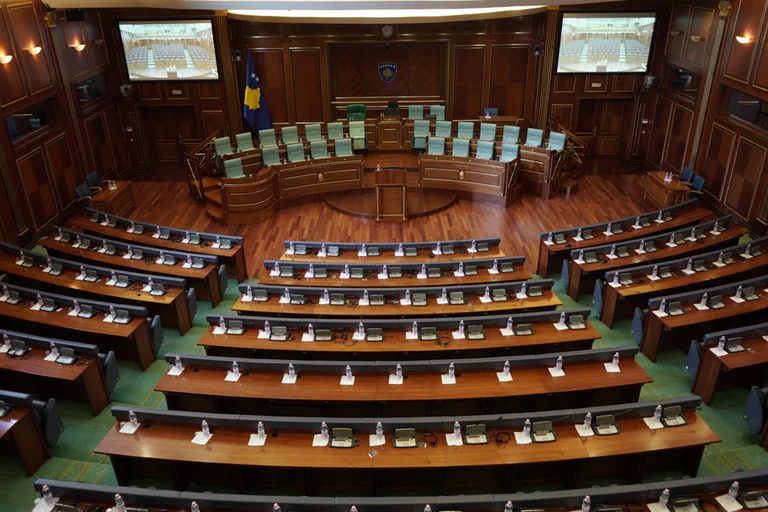
The IKD after reviewing the Bill for the Bureau, which is expected to be reviewed this Friday in the Assembly, has found that, in principle, the majority of the Constitutional Court's provisions have been addressed. However, there are still some remaining issues that can easily be addressed between (2) readings, so that there are no areas that endanger the Constitution of the Bill for the Bureau.
The first point to be discussed is the necessary majority for the election of the Bureau's Director General. Despite the Article 80.1 restriction. of the Constitution, that, in principle, all decisions are made in simple majority of votes, there are practices when the Venice Commission has highlighted the possibility of a higher majority of voting in certain cases. This commission in an opinion on Bulgaria (where this issue is adjusted to the constitutions as well as in Kosovo) has stressed that a national constitutional court usually intervenes when there is a lack of guarantees, not when the common law envisions a stricter guarantee, as in the concrete case, which would reinforce independence and the representative character of [the competent authority for the start of civil seizure].” Therefore, in the concrete case, the Venice Commission recommended “the return of the legal determination of the qualified majority in Article 4 [of the Law]. On the basis of that, between the two (2) readings, the possibility must be considered to be determined by the Law that the election of the Director and Commission members be done with the majority of votes of all MPs.
Another issue to address is the lack of a specialised Division at the Court of Appeal for handling these cases, while one is determined to be established on the first scale.
Also, an issue to be addressed is compensation to the parties in the procedure. The Constitutional Court, in its judicial act, referring to the Venice Commission's first opinion, has recalled that the law should ensure compensation for damages suffered by the side in cases when the seizure procedure eventually results unsuccessful. Although the Bureau's Bill deals with this issue in Article 64, it only generally, referring to implementation of obligations relations legislation, without clearly specifying the responsibility for damage or kind of damage to be compensated for. Hence, between the two readings, the possibility of this provision being clarified further so that the right to compensation will not remain only declarative, but will be clearly and effectively regulated in the Bureau's own Bill.
A matter that needs to be further clarified is also the burden of testing the judicial procedure. Although the Bureau's Bill for the Bureau envisions that the Bureau, before presenting the proposal for seizures, must reach the civilian standard of assessment of the odds and to the Court present evidence in support of its proposal, the current formula allows space for the burden of evidence to be understood as almost automatically passed over to the side once the proposal is formally submitted to the Court. The standard should be that before the burden of proof passes to the side, the Bureau will at least testify to the existence of unjustified property. For this reason, between two readings, the possibility must be considered for the Bureau's Bill to clearly establish that the burden of testing on the side does not automatically go solely with the presentation of its proposal and formal completion, but only after the Court finds that the Bureau has fulfilled its initial burden to justify its application. This would strengthen judicial security and make the balance between the effectiveness of the procedure and protection of the parties' rights more clear.
The General Director's right, not the Commission, to adopt the Order Code for Bureau Officials is also an issue to be carefully considered between readings.
A matter that needs to be further clarified is also the definition of confidential buyers. The bill for the Bureau's current formula relates this status primarily to the paid price and to the fact that the buyer knew or had to know that wealth is unwarranted. However, this formulation remains not clear enough. Thus, between the two readings, the possibility of this provision being reformed more clearly should be considered so that there is no space left for broad or unstable interpretations and that protection of the three trusted parties is more precisely and applicable in practice.
Given the fact that this Bill has been dropped twice (2) at the Constitutional Court, once for its merits and once for the procedure followed, that it is under consideration for the third time in the Assembly, as well as that it concerns a highly potential Law on human rights violations, the Parliament under no circumstances should pass this bill with accelerated procedure. All dilemmas raised should be thoroughly handled between the two (2) readings in the Assembly.