15 minutes ago
Artemis's crew reaches the moon, approaches a record distance from Earth
Periskopi(3 months ago)
(3 months ago)The four astronauts of NASA's Artemis II mission have entered the realm of the moon's gravitational influence in the early hours of Monday, as they were traveling along a path that would soon lead to the dark and invisible side of the moon, becoming the people who have flown farther [...]
Artemis II's crew, flying the Orion capsule from the beginning of Florida last week, is expected to wake up on Monday for their sixth day of flight. By 7:05 p.m., they will reach the maximum distance from Earth of about 252,757 miles, 4,102 miles more than the record held by Apollo 13's crew for 56 years.
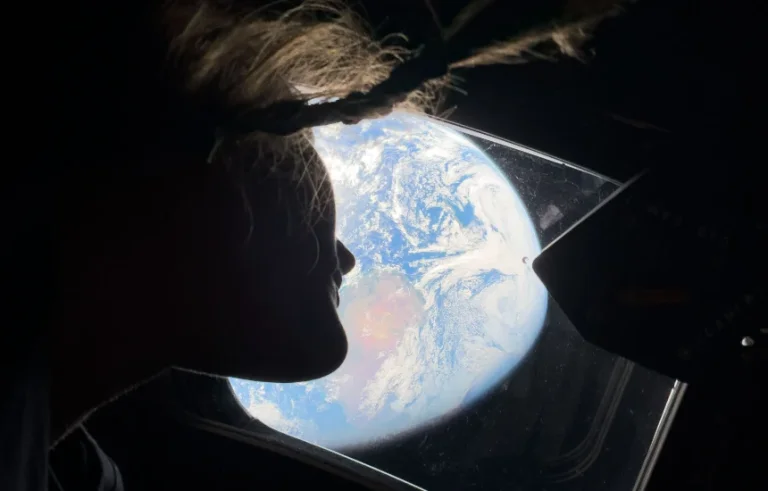
While NASA astronauts Reid Wisman, Victor Glover and Christina Koch, along with Canadian astronaut Jeremy Hansen, approach this remote record, they will sail around the far side of the moon, seeing it from about 4,000 miles above its dark surface, while it covers Earth that looks like a basketball ball in the background.
This moment marks a peak point in the nearly 10-day Artemis II mission, NASA's first test flight with crews of Artemis programme. This billions of-dollar series of missions aims to restore astronauts on the surface of the moon until 2028, in front of China, and create a long-term American presence there over the next decade, building a lunar base that will serve as proof of future missions toward Mars.
The flight next to the moon, which officially begins at 2:34 p.m. with the U.S. time, will plunge the crew into darkness and short communication breaks, as the moon will be blocked by the Deep Space Nightwork network, a global network of large radio antennas NASA uses to communicate with its crew.
This crossing will take about six hours, during which astronauts will use professional cameras to take detailed photos through the Orion's window, grasping a rare and scientific view of sunlight running through the edges of the moon, a effect similar to a lunar eclipse.
They will also have the opportunity to photograph a rare moment when their planet, small compared with the record distance in space, will be born from the lunar horizon as the capsule exits from the other side, a heavenly view that resembles the birth of the moon when viewed from the earth.
A team of dozens of lunar scientists, at the Science Rating Room at the Johnson Space Center Center in Houston, will take notes while astronauts, who have studied a series of lunar phenomena during training describe their images in real time.