a few seconds ago
Even the best American planes face risks: Lessons From Iran's F-15 Incident
Periskopi(3 months ago)
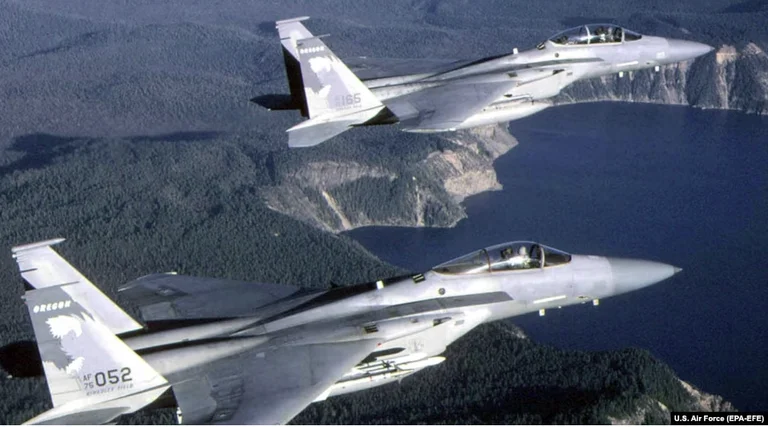
(3 months ago)The incident with American fighter F-15 aircraft in Iran is raising concerns about the dangers facing American equipment when operating in heavily protected areas, and highlights this reality: that even the most successful aircraft in the world are not immune to contested environments. For decades, F-15 has been a symbol [...]
For decades, F-15 has been a symbol of American air superiority. In various conflicts, this plane has committed over 100 deaths in air-air terrain and has never lost in an air-air fight.
This record still stands. However, recent developments, along with several losses caused by land protections, are adding a new context to the long history of this type of aircraft in conflict areas.
In March, three US F-15E planes were reportedly crashed into an incident involving Kuwait's fighter planes, United States Allied country, in the early stages of Operation Epic Anger, which is still continuing in Iran.
This episode, which is still under investigation, has not resulted in casualties, since all crew members have managed to leave safely.
However, this was a rare incident for the American Air Force and is expected to be analysed closely.
Beyond these incidents, a small number of F-15 planes have been lost in war zones mainly because of land defense systems, not because of enemy planes.
During operations in Iraq in the 1990s and 2000s, several F-15 planes have crashed from ground-air air systems, noting a vulnerability that continues to be relevant today.
Investments in advanced “”
The United States has invested in advanced technology electronic attacks and spatial communications that help it take advantage of other air forces”, retired US Air Force General Houston R said. Cantwell, now senior researcher at the Institute for Space Studies, Mitchell, in some response to Radio Free Europe.
This, combined with careful planning and precise intelligence against the enemy, has minimized the losses of the fighter plane”, he said.
This investment has markedly reduced the risk over time. The last fighter plane to have reportedly crashed has been the type A-10 in Iraq's 2003 war.
Since then, technological advances especially on radar have improved the survival rate.
However, Cantwell has said that even these priorities have limits especially when planes are above the territory of a state like Iran.
“States like Iran have very advanced air protection systems”, he said.
This system has been degraded in the last month, but this does not mean 100 percent was destroyed”.
Iran has several missiles that are directed at the aid of infrared radars and radiation, and it has antiaircraft artillery. Even its very size complicates efforts to neutralise threats.
“Iran is a great state. The United States cannot hope to eliminate any air threat based on its size”, Cantwell said. As long as there are combat missions over Iran, there will be threats to air equipment”.
Even advanced planes like F-15 depend on protective countermeasures to increase the chance for survival.
Even these systems are not 100 percent effective”, he said.
Adaping to Growing Threats
The risks that have been highlighted through the F-15 incident reflect the changes that US enemies have made while preparing for war.
I'm going to say that the preferences of the United States [and Israel] for fighting from the sky and avoiding land troop delocation have probably increased the capacities of potential enemies for conflict with the US”, retired American Colonel Amos Fox, researcher at Arizona University's Future Security Initiative, in some response to Radio Free Europe.
They understand how the U.S. wants to fight air force with long-range attacks and thus invest in that direction”, he said.
Fox has also mentioned increased cooperation among American rivals and increased military technology.
“Sic we have seen in Ukraine and now in Iran, our enemies see us as an enemy country and work together to see us fail”, he said.
“The spread of information on weapons systems and defence systems should not serve as a surprise to anyone since we may be looking only at the tip of the ajberg”.
Lessons From Past Conflicts
Historically, significant losses have been recorded in American air campaigns for various reasons. In the Gulf War in 1991, coalition forces had lost dozens of planes.
The coalition has lost nearly 100 planes in the Desert Storm, but the campaign has had completely different targets compared to the Epicqueric Service”, Cantwell said.
Since then, the American strategy has focused on neutralising enemy air defence since the beginning of the conflict.
Technology and the Future of Fighting
To reduce the risks for pilots, the United States is advancing more and more pilot-free systems like MQ-9 Ready and RQ-170 Sentinel.
“The advantage of pilotless assets like MQ-9 and RQ-170 allows for attacks without risking people”, Cantwell said.
The MQ-9 devices have been very efficient in searching for mobile targets and destroying them without risking deep teams in Iran”.
The concepts of the next generation, including co-operative aircraft (CCA), aim to further take this approach by pairing pilot-free systems with crews. Records but Warnings
For pilots on enemy lines, risks are significant.
“Avoidance and health are priority”, has been praised by Cantwell.
“Should try to make sure they're taking care of their health for food, water and shelter. They must leave until they find a suitable location where they can go to get”.
Rescue operations have become more complex with air defence advancement.
These missions require a combination of air capabilities”, he said.
“Helicopter carries the rescue team, but it also requires support from ships, air coverage and intelligence”.
The F-15 air-aircraft record continues to be intact. However, his history and recent incidents disseminate a reality of more shades - the dominance of the air does not eliminate danger from the earth, human errors, and the advancement of enemy tactics.
As Cantwell has said, as long as planes operate in highly protected territory “threats will be evident”. /Periscope