15 minutes ago
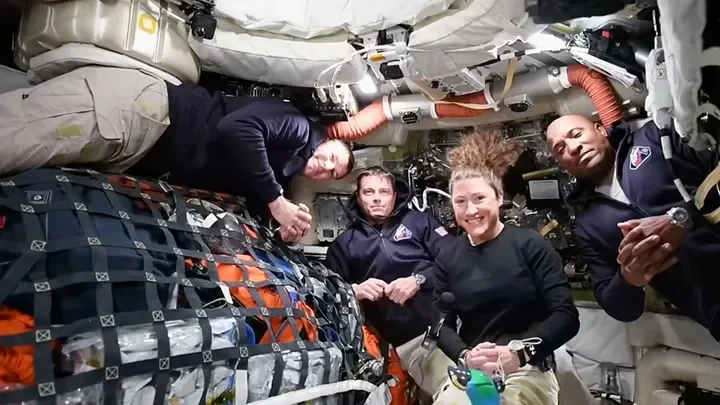
It's going to be 40 minutes alone in space, without any contact with Earth, what will happen to Artemis II's crew?
Periskopi(3 months ago)
(3 months ago)As Earth shrinks further into their rear window, and the crew of Artemis II has had constant contact with the control of the mission in Houston, Texas, has drawn ever closer to the moon. Words from the team NASA has given the crew a comforting “connection to the house. But the connection is [...]
But this relationship is about to lose.
As astronauts pass past the moon, radio and laser signals allowing round-the-clock communication between space shuttles and Earth will be blocked by the moon itself.
For about 40 minutes, the four astronauts will be alone, each with their own thoughts and feelings, traveling through the darkness of space. A moment of deep loneliness and silence.
The pilot of Artemis, Victor Glover, said he hoped the world would use time to unite.
When we are behind the moon, without contact with everyone, let's use it as an opportunity”, he told BBC News before the mission.
Please, let's hope, send your good thoughts and feelings back to the crew. ”
More than 50 years ago, Apollo astronauts also experienced isolation from the loss of the signal during their missions in the moon.
In 1969, while Neil Armstrong and Buzz Aldrin made their first steps on the lunar surface, Collins was alone in the command module, orbiting the moon.
As his ship passed behind the dark side, contact with the double on the lunar surface, as well as with the mission's control, disappeared in 48 minutes.
He described the experience in his 1974 memoirs, “Carrying the Fire”, saying he felt that the <x2 really lonely> and “isolated from every known life”, but that he felt no fear or loneliness.
In later interviews, he described the peace and tranquillity of silence on the radio, saying it offered a break from constant requests from mission control.