a few seconds ago
Council of Europe report says media freedom in Kosovo on the decline
Periskopi(4 months ago)
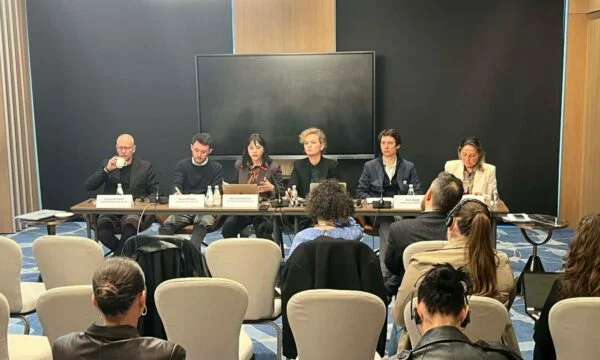
(4 months ago)The Fat collection mission of the Council of Europe's Council for Journalists Security has held a media conference where it has also unveiled the two-day worker's findings with media representatives where media freedom is worse than it did in the past years. Media jurist Butter Kusari has stressed that they have met [...]
The Fat collection mission of the Council of Europe's Council for Journalists Security has held a media conference where it has also unveiled the two-day worker's findings with media representatives where media freedom is worse than it did in the past years.
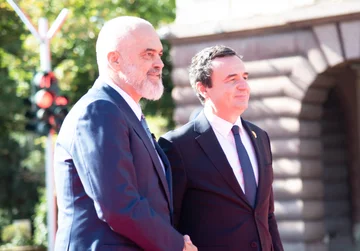
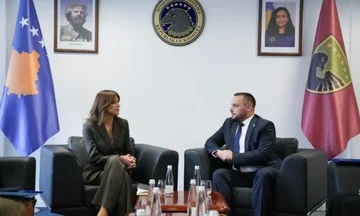
Media lawyer Butter Kosari has stressed that they have met with Kosovo Prime Minister Albin Kurti and that his office has expressed will for co-operation in the law on the Independent Media Commission.
Our main find, as mentioned, is that after the mission we had about 2022 so far, there is a decline in media freedom in Kosovo, so there is a deterioration of the situation. And the main reasons are many, but we've focused on these two days of mission in three areas, which we believe has affected the situation to deteriorate.
The first concerns non-religious law for the Independent Commission for Media; the second concerns political pressure on Kosovo Radio Television and problems with public television financing; and the third concerns verbal attacks. I am briefly focusing on the legal aspect and aspect related to the work of prosecution and courts.
In our statement, you will find more details, but what we hope to be, if we want to be a little more constructive in terms of looking forward, is that we very much hope that the KPM law, which is in the legislative agenda, will be drafted in consultation and with the involvement of all interest groups, with particular focus of civil society and journalists.
After meeting with the prime minister, we also had an equally brief meeting with the staff of the prime minister's office, who for me were very constructive and left the door open with their cooperation, and expressed the will that, especially in terms of the law on the Independent Commission for Media as the most fundamental law, there would be another procedure compared to what we had three years ago, and which falls with the sweeping involvement of all the acts. I hope what was discussed will happen in reality. On our part, we expressed our interest that we will co-operate, offer expertise and also work together on the draft”, Kusar said.
Ricardo Gutierrez, from the Federation of European Journalists, said the situation is very bad and that Prime Minister Kurti's approach to the media is disturbing.
He, he said that Prime Minister Kurti has asked to condemn public statements against journalists, but that the latter has declined.
“We met with the prime minister yesterday for nearly two hours, the prime minister and some of his office officials. And from my point of view, the most disturbing conclusion from this meeting is that the prime minister is not recognising this hostile climate; rather, he is justifying it. Prime Minister Albin Kurti was asked to condemn public statements against journalists, but he declined.
You know, if journalists get attacked, maybe this is because sometimes politicians get attacked. So it's like justifying this kind of thing and he refused clearly to condemn, because we asked him, asked him to condemn any public statement against journalists. He refused to do so, and from my point of view, this is one of the most disturbing conclusions of this meeting. Why would I say that? Because I see this as a total lack of political will to improve the situation. We asked him several times about his proposals to improve the situation nothing came from him, despite the official statement he published after the meeting, saying he was ready to co-operate with us and consider the proposals. I can tell you that during the meeting there was no proposal to improve the situation.”, Gutierrez said.
James Wiesman from the International Press Institute recommended that Government initiate a dialogue with journalists' associations.
Wisman, said they are concerned about the direction media freedom is taking in Kosovo.
” This is my second mission here in Kosovo in just over two years. As you heard from my colleagues, we are really concerned about the direction media freedom is taking in Kosovo. What has hit us most during these two days is the level of distrust and polarisation between the government and the media community.
During our meeting with the prime minister yesterday, we noticed a lack of willingness to accept the legitimate concerns journalists have about their safety and the regulatory environment. Instead of engaging in the substance of our criticism, we saw a tendency to dismiss them as politically motivated.
As a network that monitors freedom of the press globally, we know that when dialogue between authorities and the media breaks down, this creates a vacuum that often fills with hostility and self-defence. We call on the government to resume a meaningful dialogue with journalists' associations and ensure that every new law, particularly the one for the KPM, is in line with the highest European standards.
We will continue to monitor the situation closely and our full report will detail our specific recommendations to change this negative trajectory”, Wisman said. /EO/