12 minutes ago
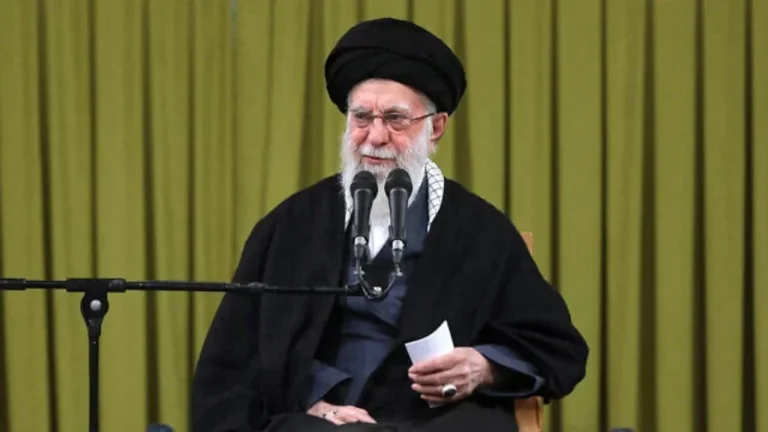
Ali Khamenei in power since 1989, which means Khamene's death for Iran
Periskopi(5 months ago)
(5 months ago)The American Israeli attacks on Iran reported that Supreme Leader Ali Hamene has been killed. American President Donald Trump has confirmed that Iran's Supreme Leader, Ali Khamene, as he named it “one of the worst people in history”, is dead. “This is not only justice for the people of Iran but also for [...]
Ali Khamenei (86) has dominated Iran since 1989, when, after Ruholah Khomeni's death, he assumed the eternal post of Supreme Leader. As the highest authority in the political and religious system, he controlled the armed forces, security services, judiciary and key political decisions.
During the three decades in power, he has faced students in 1999, massive riots in 2009, the wave of rebellions in 2019 and the “Groe, Life, Freedom” in 2022 and 2023, following Mahsa Amin's death in custody. Each time, the regime responded with pressure.
His leadership has been characterised by strong control, reliance on Revolutionary Guard and continuing confrontation with the United States and Israel. He has not recognised Israel and supported Allied groups throughout the Middle East.
Born in the northeastern town of Mashhad in 1939, the son of a religious scholar, Ali Khamenei, joined the opposition religious movement of Aytothalla Khomeni against Shah Mohammad Reza Pahlav in 1962.
After the Islamic Revolution in 1979, Ali Khamenei became deputy defence minister and helped organize the Islamic Revolutionary Guard Forces (IRGC).
After Khomein's death in June 1989, the Council of Experts (a council of clerics) chose Ali Khamene as the new supreme leader, even though he had failed to reach the required rank among the Shiite clergy the constitution envisioned.
To resolve this situation, the constitution was changed by saying that the Supreme Leader had to show the Islamic “knowledge”, which allowed Ali Khamenei to become ajatolah and be elected supreme leader.
He has maintained strong control over Iran's politics and its armed forces, and has suppressed challenges to the governing system, sometimes even with violence.
He has remained suspicious of relations with the West, especially with the US, and has repeatedly publicly sought the elimination of Israel's State, as well as questioned whether the Holocaust occurred.
During Khamene's rule, seven presidents have served in Iran, and he has six children.
The War That Reveals Weaknesses
During the 12-day war in June 2025, when Israel carried out the deepest attacks within Iran, Hamene was forced to hide. The war revealed major security weaknesses and insight into foreign intelligence within Iranian structures.
In public speeches, however, he stressed that Iran will not surrender. In the case of the 47th anniversary of the Islamic Revolution, he said the revolution “kept Iran out of foreign influence” and that the country's strength remains united.
Who holds power?
If his death is confirmed, the main question is who will replace him. Under the constitution, the Council of Experts appoints the new leader. There are speculations about his son, who works behind stage and has strong support.
Revolutionary Guard can play an important role in transition. The CIA has estimated that in the event of Khamene's death, Iran's Islamic Revolutionary Guard could consolidate power.
The Iranian Parliament in January warned that any attack on the Supreme Leader would be “declaration of war on the Islamic world” and could spur jihad.
Trump spoke with the leaders of Saudi Arabia, Qatar and the United Arab Emirates and with NATO Secretary Mark Rutte, following Iranian attacks on US bases.
If Hamene is really dead, Iran enters a deep stage of uncertainty and destabilisation. There is danger of internal fighting, the clash of ruling factions and the passage of conflict with Israel and the United States.
For a regime that has hung 36 years above a picture, this may be a changing moment. /Periscopi