2 minutes ago
Regional transport blockade continues at borders with EU
Periskopi(6 months ago)
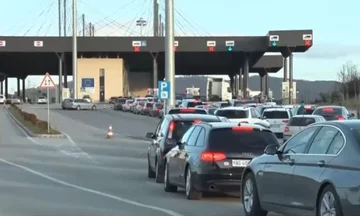
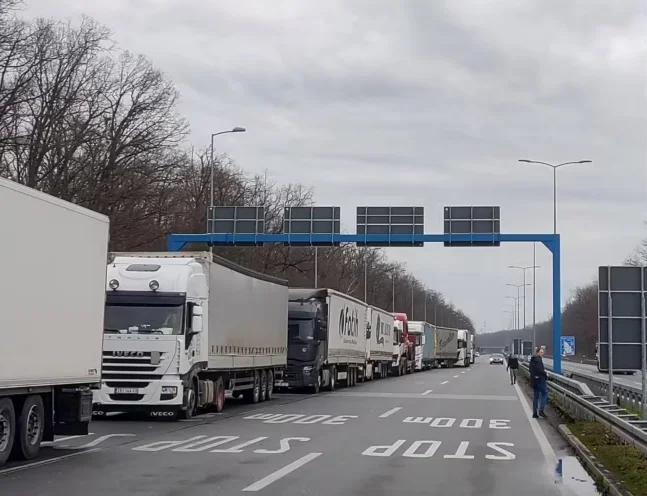
(6 months ago)Drivers of transport companies from Northern Macedonia, Serbia, Montenegro and Bosnia and Herzegovina are continuing their blockade through border points for goods traffic on 27 January. After blocking the exits a day earlier, carriers have now blocked access to the Western Balkan border points with the European Union. [...]
After blocking the exits a day earlier, carriers have now blocked access to the Western Balkan border points with the European Union.
Drivers are blocking terminals for goods due to the rigging of procedures to enter the Schengen Zone. They say the procedures are now more complicated and could shorten their time of stay in European Union countries.
They are demanding that their stay in the European Union increase in four months, compared to three now, within six months.
Transport companies have warned that blockades will last for seven days, unless a solution is found.
European Commission spokesman Markus Lammert has said on January 26th that European institutions are working on finding opportunities to allow workers of some professions, including truck drivers, to stay in the Schengen Zone longer than do current regulations.
“We are aware that a number of third-state workers, who are not cross-border workers, may need to stay in the Schengen Zone for more than 90 days within the 180-day period. This involves high-powered professions, like truck drivers, but even athletes and artists”, Lammert said among other things.
According to him, the European Union is aware of concerns expressed by transport operators in the region and is closely monitoring the situation, as well as in contact with Western Balkan partners.
The impact of blockades on Kosovo market
As importer of many goods through Serbia and Northern Macedonia, Kosovo is expected to feel the consequences of protests in the flow of transport vehicles.
The chairman of the Kosovo Chamber of Economics (OEK), Lulzim Rafuna, at the same time head of the Western Balkans' Economic Odays, says Kosovo does not participate in the protest, as the country does not yet have logistical companies that conduct regular transport with EU countries.
But, it warns, its effects will also be felt in Kosovo.
Because of the blockade of borders, Kosovo will neither be able to export nor import goods”, Rafuna tells Radio Free Europe.
According to Kosovo Customs data last year, the country has imported products worth over 7 billion euros in total, or about 20m euros a day, a large amount through Serbia and Northern Macedonia.
The value of exports, meanwhile, was around 942m euros last year, or about 2.6m euros a day.
Kosovo's Chamber of Commerce and Industry called on the country's institutions to contact the EU for finding a solution.
Free Europe Radio contacted Kosovo's incumbent Government on this issue and is awaiting the response.
The deputy chairman of the Kosovo Association of Communicators, Besnik Aliu, tells Radio Free Europe that the transporters in Kosovo face similar challenges with their colleagues in the region because of the EES system.
According to him, although about 2,000 trucks for cargo transport are licensed in Kosovo, the sector remains weak in international transport, as most imports and exports are realised by regional and EU companies.
It is not easy to find drivers for the EU market, as they are for transportation inside Kosovo or the region”, he says. /rel/