5 hours ago
Trump trusts Blair, others can't he rule Gaza?
Periskopi(8 months ago)
(8 months ago)As prime minister of the United Kingdom for more than 10 years, Sir Tony Blair was a master of political compromise. He was seen as a skilled centre negotiator, portraying his way out of the traditional left-right policy ring, broadcasts the newspaper Express. But if there was peace in Gaza [...]
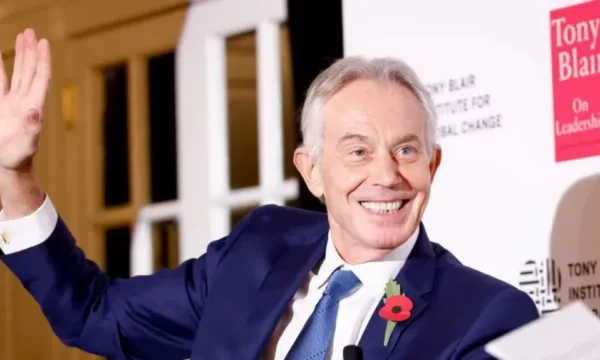
As prime minister of the United Kingdom for more than 10 years, Sir Tony Blair was a master of political compromise.
He was seen as a skilled centre negotiator, portraying his way out of the traditional left-right policy ring, broadcasts the newspaper Express.
But if there was peace in Gaza and he was called to help govern what was left of it, would there also be Teuflon Tony as once known political tricks to keep all sides happy and silent weapons?
His supposed role is not yet clear. Donald Trump's 20-point peace plan envisions an international transitional body that would oversee the post-war Gaza government.
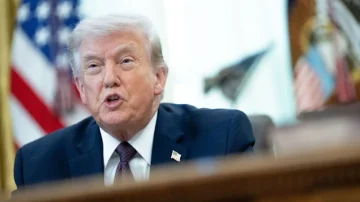
The American president would lead this so-called “Peace Board” and Sir Tony, 72, would be a member. He is a good “, a very good man”, Trump told reporters.
Sir Tony's presence in this hypothetical organ would not be a surprise.
The former prime minister has been closely involved in drafting peace proposals in Gaza for months. He worked with Jared Kouchner, Trump's son-in-law, and Ron Dermer, a key adviser to Israeli Prime Minister Benjamin Netanyahu.
In August, Sir Tony attended a summit with Trump at the White House to discuss a post-war strategy for the Gaza Strip.
A month ago he also held talks with Steve Witkoff, the president's chief envoy to the White House.
In a statement, Sir Tony not surprisingly appreciated Trump's plan, describing it as the courageous and intelligent “” and the best “as to end two years of war, misery and suffering”.
He said the proposals created the possibility not only “for Israelis and Palestinians to find a way to peace”, but also “a broader regional and global alliance to oppose the forces of extremism and promote peace and prosperity among nations”.
And this is the key point: this is what Sir Tony has been pushing for decades in different roles.
As prime minister since 1997, he backed the Clinton Administration's efforts to find peace in the region.
The very day he left office in June 2007, he was appointed a special envoy for the so-called Quartet representing the US, Russia, the EU and the UN designed to co-ordinate peace efforts, a role he held until 2015.
Since then, his business and other interests including his Tony Blair Institute for Global Change have kept him firmly linked to the region.
Diplomats say this is what makes Sir Tony unique; he enjoys the trust of the Trump Administration, he has an unprecedented network in the Middle East and has long experience in dealing with Israeli and Palestinian leadership.
Nick Hopton, director general of the Middle East Association, said the former prime minister of the United Kingdom was the only Western leader who could imagine taking that role. “It has credibility and experience being involved in the Middle East for 24 years,” he said.
But it will only work if he is able to have Donald Trump's trust and also if he is not seen as manipulated by Benjamin Netanyah. It must also show that it has the confidence of the Palestinian Authority's leadership. ”
But it's a big “but” Sir Tony would come into this role with lots of luggage.
To some, he is a divisive figure, to others even worse.
The role in the invasion of Iraq has not been forgotten
His role in joining Iraq's 2003 invasion has been based on inaccurate reports of the country's weapons of mass destruction still undermines its reputation in the region and has some accuse him of war crimes.
Francesca Albanese, special UN rapporteur for rights in the occupied Palestinian territories, was direct. “Tony Blair? No. Get your hands off Palestine,” it posted to social media. “A we will meet at The Hague perhaps?”, a reference to the location of the International Criminal Court.
Sir Simon Fraser, former head of the United Kingdom Foreign Ministry, said Sir Tony had shown genuine interest in the Palestinian issue and was trusted in Washington, Israel and Gulf. “But the Arab road has not forgotten Iraq,” he said.
Gaza's future subx0> needs a broader base and cannot look like an American/British company. ”
Hamas, for example, did not look thirsty. Husam Badran, a member of the group's political bureau, said this week that Sir Tony must stand trial for the American invasion of Iraq, not for managing Gaza. “Every plan connected to Blair is a bad omen”, he said.
Some Palestinians and others also view Sir Tony as historically very close to Israeli and American positions. Nomi Bar-Yaacov, a former international peace negotiator, said: “I don't think Palestinians believe them at all. I think they see it as a colossal failure during the time he was the messenger of the Quartet”.
Even UK Prime Minister Sir Keir Starmer, who used his speech at the Labusist Party conference Tuesday to praise Trump's peace plan, chose not to mention the key role his predecessor could play.
As a peace envoy to the Middle East for eight long years, Sir Tony had to help build the Palestinian Authority so that one day he would be in a position to run a Palestinian state. But few would argue that this is where the Palestinian Authority is today.
Palestinians also argue that he did not do enough to oppose illegal settlements and column violence. Some have claimed he should have made a stronger argument for Palestinian citizenship, focusing instead on economic development.
The interesting question is why Sir Tony still feels the need to get involved in trying to end the fighting in the Middle East. He has long viewed himself as a peacemaker, following his success in negotiating the Great Friday Agreement that helped reduce the conflict in Northern Ireland.
But as political correspondents during the 1990s and 2000s, and so a close observer of Blair's years of power has always impressed me with his steadfast refusal to admit that he may have failed to convince someone about his view. That upset him. To this extent, the Middle East can be viewed by Sir Tony as an unfinished task.
Health Secretary Wes Streeting told the PA Media that Sir Tony's role would be <x0 “raised surprise” due to the war in Iraq and said he had a “extraordinary heritage” in Northern Ireland for building lasting peace. “If he can use this ability in the Israeli-Palestinian conflict, with the support of Israelis, Palestinians and other regional powers, then much better”, said Mr. Streeting.
Actually, Blair's role is a second-hand issue. He will have a job to do only if this peace plan succeeds and survives, and there is no guarantee of that. Much more important are the differences between the two sides and details that have not yet been resolved by the framework specified by the White House. Sanam Vakil, director of the Middle East programme in the expert group Chatham House, said: “The focus on Tony Blair and his legacy of Western intervention in Iraq mask the real challenges of this peace framework that lack details, deadlines and results, and still has no support for Palestinians or Israelis, let alone leadership.
There will be considerable work to get across 20 points to a piece of paper, this plan will be another version of cosmetic diplomacy that instills structural injustice and deprive Palestinians of the agency and sovereignty. ”
So maybe what really matters isn't probably the psychodrama of Sir Tony Blair and the conflicting thoughts people have about him. A more important question may be more about what role any passing authority in Gaza can play and whether Sir Tony has the skills and experience needed to play an important role.
If his job was to coordinate with Gulf leaders and the White House, that's one thing. But if he was to be effectively required to govern Gaza, overseeing the reconstruction, security and economic development of Belfer, that is quite different. “ >Blir. ” sent me a message. “This will never be washed. ”/Periscopi/