3 hours ago
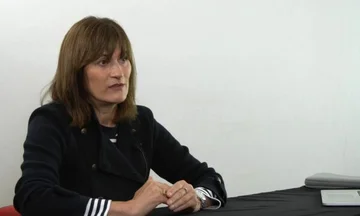
Toby Vogel: The way the dialogue ended, the US sent signal that “distance with Kurtin”
Periskopi(9 months ago)
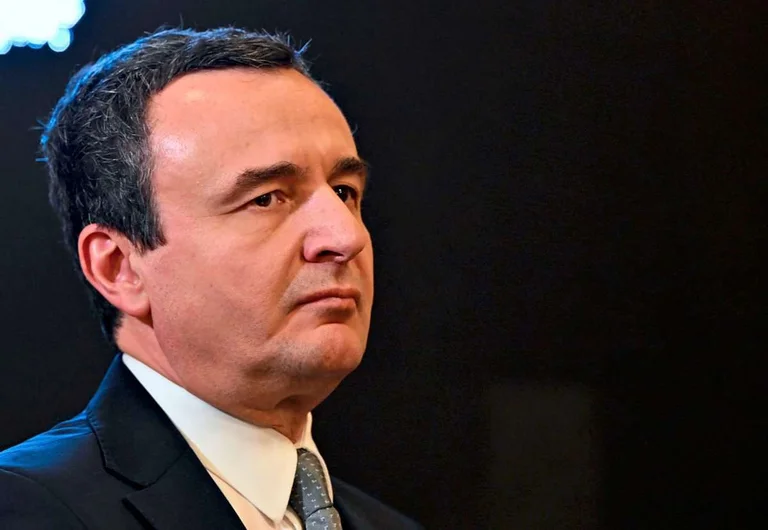
(9 months ago)Dating from incumbent Kosovo Prime Minister Albin Kurti, as well as warning to his Government that international support is fading. This is how they see the suspension of planned strategic dialogue between the United States and Kosovo, Toby Vogel from the Berlin Democratic Policy Council, and Gezim Visoka, professor at the University Law Faculty. [...]
This is how they see the suspension of planned strategic dialogue between the United States and Kosovo, Toby Vogel from the Berlin Democracy Policy Council, and Gezim Visoka, professor at the University of Dublin Law Faculty, at the department for peace studies and conflict.
The United States has indefinitely suspended the planned strategic dialogue with Kosovo due to concerns over the government's actions in office, the US Embassy in Pristina announced on Friday.
She has argued this decision with concern over the actions of the incumbent government and the prime minister in office, Albin Kurti, which, reportedly, “raises tensions and instability”.
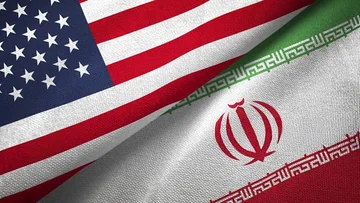
The American flag beside that Kosovar.
“Unfortunately, the recent actions and statements of incumbent Prime Minister Kurti have presented challenges for the progress achieved over the years”, the Embassy said, without explaining exactly what statements and actions are meant.
Kosovo and the US were scheduled to finalise the strategic dialogue agreement this year, as Kosovo President Vjosa Osmani had announced in January the agreement reached between the two countries.
The United States' decision comes at a time when the leaders of Vetevendosje Movement (LVV) are criticising the Constitutional Court's decisions regarding the constitution, calling the country's highest court “political shadow of the opposition to LV”.
On the other hand, the incumbent Kosovo Government has rejected US criticism, praising that its actions have been in line with Kosovo's laws and Constitution, “in the function of eliminating the sources of instability in order to ensure lasting long-term stability”.
While Kosovo President Vjosa Osmani has expressed deep regret over the US decision to temporarily suspend strategic dialogue.
Vogel: Cutting off strategic dialogue, sign that US will be distanced from Kurti
Toby Vogel of the Berlin Democratic Policy Council, in a statement for Radio Free Europe, estimates that by the way the dialogue is cut off on strategic issues, the United States sends signals that “wanted to create a distance with Kurti”.
He adds that the decision also came at a significant moment, when Albin Kurti is trying to form a new Kosovo government, and that it is no coincidence.
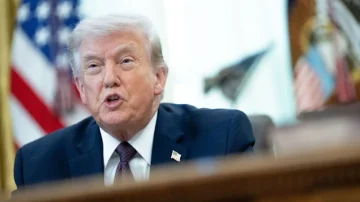
The United States, especially the first administration of [President Donald] Trump, have a story with Albin Kurti and a story of involvement in Kosovo politics. Once it was enough for the American president, or German Chancellor, when she was Angela Merkel, to pick up the receptor, call someone like Hashim Thaci, and tell them what to do, and he did it. This doesn't work with Albin Kurt. If you feel that this is good or bad, it is insignificant; the fact is that Kurt is not. And that's why they don't want it either in Washington or in Brussels”, Vogel points out.
According to him, for worsening Kosovo's relations with the US or the EU, Kurti himself is responsible because “has not carefully cultivated these relations”.
But, at the same time, this is also due to the discontent of decision-making centres, as “can no longer command the prime minister or president in Pristina what to do”.
I believe that everything should be seen in this context, will have the desired effect, so will it unite the opposition to create an alternative government. Honestly, I don't think they have the numbers. So I'm not sure what is targeted at this”, Vogel says, voicing doubts Washington hopes for early elections.
Because it's clear that whoever manages to form the government now won't have a strong mandate. It's good to be the biggest party, but that's not enough. Allies needed, coalition partners needed. So, I think everything should be seen in this” context, it ends.
Visoka: Cutting off strategic dialogue must be taken seriously
Gezim Visoka, professor of studies for peace and conflict at the University of Dublin Faculty of Jurydical, estimates to Radio Free Europe that the break-up of US strategic dialogue with Kosovo is “also a warning sign for Kosovo Government that international support for the country is fading”.
This should be taken seriously, but does not mean the end of bilateral relations. Also, it is of crucial importance to note that Kosovo has never had a formalised strategic dialogue with the United States, though it has been seeking this for years. Even when relations have been very good, the US has avoided shaping a strategic partnership with Kosovo, aiming not to antagonise Serbia and maintain a balance in the region”, Visoka points out.
He adds that in the past there have been elements of strategic dialogue about security and international recognitions, but that “dynamics of dialogue under the direction of the EU and Kosovo's efforts to extend sovereignty to the country's north have dictated this process, which now appears to function only in the security field”.
The US decision to interrupt strategic dialogue also comes at the time of an institutional and political crisis in Kosovo.
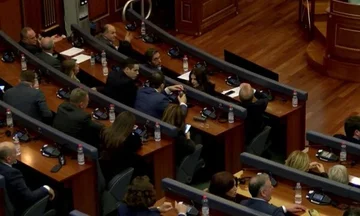
Currently, the Constitutional Court's decision is expected to determine whether Kosovo's Assembly is constitutionalised, as the largest Serbian party in Kosovo, the Serb List, has turned to this institution with the request to assess whether the newly elected chairman of the Assembly, Dimal Basha, has violated the Constitution by separating the voting process for vice-presidents from non-resident communities and the Serb community.
Basha, meanwhile, unilaterally announced the completion of the Parliament's constitution, even though he had not been elected fifth deputy chairman from the ranks of the Serb community.
On September 10th, the Vetevendosje Movement asked the Constitutional Court for the request of the Serbian List to be declared unacceptable.
Even President Osmani has estimated that the Assembly should not be blocked on this issue and has voiced expectations that the Constitutional Court will not make a decision in favour of the Serbian List, thus confirming that the Assembly has been constitutionalised even though it has not been elected fifth vice president of the Serb community.
Meanwhile, on September 7th, the Vetevendosje Movement has nominated its leader, Albin Kurtin, for mandated composition of the new government. On that occasion, Kurti has voiced criticism of the Constitutional Court, accusing him of partiality, respectively, of acting in favour of Albanian parties that in the past legislature were in opposition.
Western countries and the European Union have criticised Kurt's stance. /Periscope