3 hours ago
Five Ways to Speed Your Way to Swiss Citizenship
Periskopi(9 months ago)
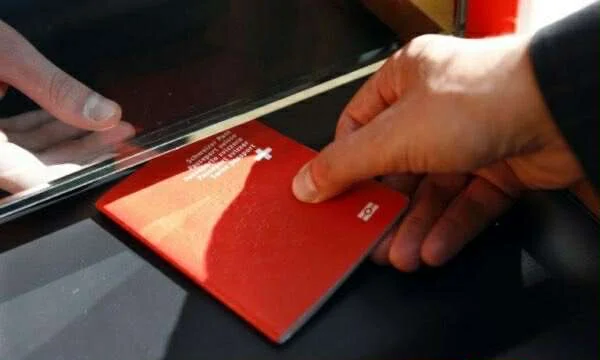
(9 months ago)Swiss citizenship is very difficult to deal with not only for people born abroad but sometimes for those born in Switzerland by foreign parents. But there are ways to speed up the process. In Switzerland there are two kinds of naturalization procedures: common or accelerated procedures, also known as [...]
In Switzerland there are two kinds of naturalization procedures: common or accelerated procedures, also known as facilitated or simplified.
In fact, there is nothing easy or simple about the last option, although it is generally less problematic than standard procedures.
However, there are strict criteria for who can and who cannot be accelerated (even though you should not be influenced by the word quickly) because it usually lasts at least a year).
Who can use this option?
This group includes five categories of people, as defined by the Federal Act on Swiss Citizenship:
The Third Generation
Unlike many other countries, being born in Switzerland does not automatically mean that the person is Swiss.
If their parents were born abroad and still held foreign passports, a person would not get Swiss citizenship in the east.
Since February 2018, Swiss - born foreigners under the age of 25 whose grandparents had already settled in Switzerland may require accelerated naturalization.
That sounds pretty simple, but it's not.
The reasons are the conditions that the State Secretariat for Migration (SEM) has set for this group:
At least one grandfather was born in Switzerland and may prove to have earned the right to stay here.
At least one parent has acquired a permanent residence permit, lived for at least 10 years in Switzerland, and attended mandatory schooling in Switzerland for at least five years.
The applicant is born in Switzerland and maintains a permanent permit.
The applicant has completed mandatory schooling for at least five years in Switzerland.
The applicant has been successfully integrated.
Request is submitted before the 25th birthday. If the application is submitted after the 25th birthday of the applicant, but otherwise meets all requirements, it can apply for simplified naturalisation by February 15th 2023, provided it is still under 40 years of age on that date.
If this does not sound complicated enough, there is more: administrative burden.
The difficulty that many potential applicants in this group have is finding documentation related to grandparents, especially if they are dead and cannot find family records, theological writes, broadcast albinfo.ch.
And many parents who arrived in Switzerland later in life did not meet the criteria of five years of compulsory schooling, so the right to citizenship under this rule is another obstacle to accelerated naturalization.
Marriage
If your spouse is a Swiss/ Swiss citizen (not just to be permanent/resident), you also qualify for citizenship.
It doesn't matter how your spouse has obtained his/her Swiss citizenship whether it's by birth or by naturalization. It's also not important if you yourself come from an EU country/ EFTA or third criteria for marriage naturalization are the same for all.
The foreign mates of Swiss citizens must have lived for a total of five years in Switzerland, passed the year before the application was submitted to Switzerland, and must have been married and lived with Swiss nationals for three years, according to the SEM.
In addition, the person who wants to be naturalised must be the “successfully integrated” in Switzerland.
That basically means subjectives and can vary from one Swiss region to another.
In general, however, <x0intrim” is the ability in the canton language where you live, the knowledge of the region, as well as the assimilation, cultural and otherwise, in your community.
Be careful, though, that simplified naturalization through marriage may not be simple after all.
If you marry a Swiss citizen just to get your passport, your marriage (or citizenship) may not last long.
Such a recent example includes a Moroccan woman married to a Swiss man 15 years older than her. After being naturalized through the relief process, she separated from her husband just a few months later.
The authorities decided that this was a clear case of an interested marriage and stripped the woman of Swiss citizenship.
Swiss Parents' Children
This is true of the descendants of foreign parents who were naturalized, but the child was not naturalized at the same time.
You can look for an accelerated process if you were under 18 years of age at the time of your parent's naturalization; apply for naturalization before the age of 22; you can prove that you have lived for five years in Switzerland, including three years before applying.
Also, “if you are a foreign citizen and child of a Swiss mother and a foreign father, and your mother gained Swiss citizenship before you were born or owned by her in your birth, you can apply for simplified naturalisation provided you have successfully integrated into Switzerland” according to the SEM. This is true in cases where a mother married to a foreign citizen cannot pass her Swiss citizenship to her child, regardless of how she gained Swiss citizenship”.
The only obstacle to this simplified naturalization would be “if your mother lost her Swiss citizenship before you were born”.
If you have a Swiss father and you were born before January 1, 2006, you can apply for simplified naturalization, provided you are successfully integrated into Switzerland, according to the SEM.
It's only valid if your father was Swiss citizens at the time of your birth and not married to your mother.
Selection
You could also go through an accelerated naturalization if you were adopted by a Swiss parent.
According to the SEM, this could only happen if you were legally adopted before you turned 18.
Above are the most conventional ways of simplified naturalization.
But there are also few less standard ways.
Let's just say you grew up believing you were Swiss citizens, but later it turns out you're not.
While this situation may not be very common, it should happen from time to time, because the SEM lists this scenario on its website under the title <x0).
The SEM does not specify under which circumstances such confusion can occur and pass unnoticed by authorities for a long time, especially since any person who lives officially in Switzerland is registered in his or her home municipality, and Swiss officials are good at keeping track of people.
If it turns out you're not Swiss after all, then you can apply for accelerated naturalization, but your test load will be heavy.
“You must have been really completely unaware that you are actually not a Swiss citizen”, the SEM points out.
Your belief that you are Swiss citizens must have been born or confirmed by the conduct of a cantonal or municipal authority towards you. Such behavior should not be open to interpretation. This arises especially if authority has issued identity documents that claim you are Swiss citizens, even though you're not currently”.
Do as you like.
Are there other extenuating circumstances that allow quick naturalization?
Perhaps you hope to speak fluently one (or more) of national languages, or “feel Swiss”, or possess the art of indignity and playing in the allhorn would make you a good candidate for quick citizenship.
No. However, there is at least one example of a stranger who received his Swiss passport without much noise, administratively.
In 1901, a former German state named Albert Einstein received his Swiss passport, two years after applying and with no indication he had to cross proverbial barriers or prove his integration (though he had the required language skills).
Can you do the same? Maybe, but only if you're a Nobel Prize-winning physicist with a history of developing innovative theories.